






















































What Is Business Analytics in Retail? and Why It Matters
Learn how retail analytics helps businesses understand customers, manage stock, optimise pricing, marketing and improve operational performance.

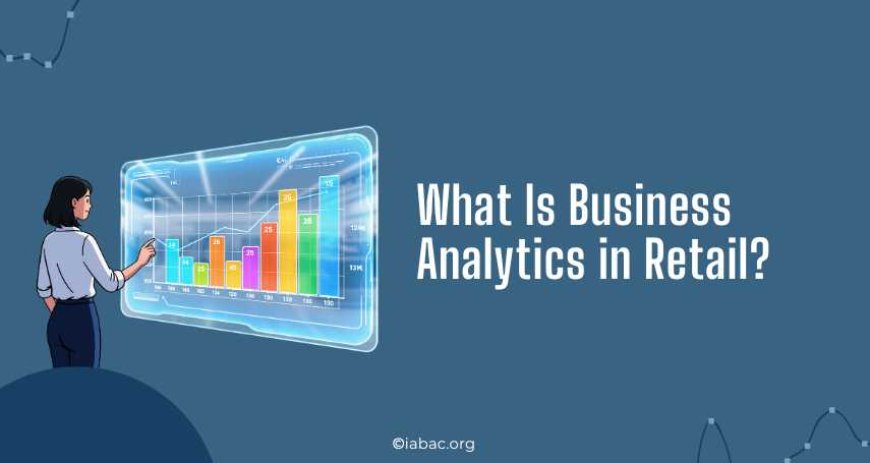
Businesses that use data to better understand their customers, streamline operations, and make more informed decisions are the ones that do well. Business analytics can help with it. In simple terms, I will explain what business analytics in retail is, how it functions, why it is important, and how retailers are utilizing it.
What Is Business Analytics in Retail?
Let's discuss it in detail.
Business analytics means using data (numbers, facts, records) about how a business is doing, and then using tools and methods to analyse that data in order to make better decisions. In the context of retail, this means looking at things like what products sell, when they sell, which customers buy, which don’t, how much stock is left, how many returns happen, and more.
In other words, retail business analytics is all about gathering the right data, analysing it, and using the insights to improve how a store (online or physical) works.
For example:
-
A retailer might look at which product lines sold best during the last quarter.
-
They might then look at which customers bought them, and where (region/online/offline).
-
They might ask: Why did these products sell better?
-
Based on the answer, they might decide to stock more of those lines, run a promotion, or change pricing.
The Core Components of Retail Analytics
To understand how this works in practice, here are the main building blocks.

1. Data Collection
Retailers collect a variety of data:
-
Sales data (what sold, when, where)
-
Customer data (who bought, how often, by what channel)
-
Inventory data (stock levels, reorder times)
-
Marketing/promotion data (which campaigns ran, what response)
-
External data (market trends, competitor activity, maybe weather or events)
2. Data Cleaning & Integration
Raw data often comes from multiple sources (online store, physical POS, CRM, loyalty programme, etc). Before analysis, the data must be cleaned (fix errors, fill missing values, ensure consistent format) and integrated (bring together into a unified view). Without this step, insights may be misleading.
3. Analysis & Insight
This involves using tools (dashboards, charts, statistical methods) to answer questions like:
-
What happened? (Descriptive)
-
Why did it happen? (Diagnostic)
-
What might happen next? (Predictive)
-
What should we do? (Prescriptive)
4. Action & Decision‑Making
Only when insights result in action are they beneficial. In the retail industry, this might involve stocking more of a product that sells quickly, modifying a store's layout, focusing on customers with a particular offer, altering prices, or moving inventory between locations.
5. Monitoring & Feedback
Once actions are taken, it’s important to monitor the results: Did sales improve? Did customers respond? Were costs reduced? This feedback loop helps refine the analytics process and ensures continuous improvement.
Why Business Analytics Matters for Retail
We'll now discuss the specific advantages of it and why retail companies should be concerned about them.
Better Understanding of Customers
It is easier to customize your services when you know who your clients are, what they want, and how frequently they make purchases. For example, more focused marketing is possible when consumers are divided into groups (regular buyers, occasional buyers, and discount-seekers).
Smart Inventory & Stock Management
Stocks sitting on shelves cost money (storage, spoilage, missed opportunity). It helps forecast demand (how much product to stock, when) and avoid both over‑stocking and stock‑outs.
Improved Operational Efficiency
Analytics helps find inefficiencies and improve operations in everything from supply-chain logistics to retail layout, employee scheduling, and delivery. These result in reduced expenses, improved service, and more profit.
For example, it may help in determining whether stores require additional employees during busy hours. Which delivery routes are not being used enough?
Dynamic Pricing and Promotions
Using analytics, retailers can adjust pricing based on demand, competition, and seasonality. They can also evaluate which promotions worked (and which didn’t) more scientifically.
Competitive Advantage
Data-driven retailers are better able to adapt to change in a congested environment. Analytics provides quicker, better visibility, whether it's new customer behaviour, e-commerce disruption, or shifting patterns.
Better Customer Experience & Loyalty
Happy customers come back. Analytics helps identify what makes customers happy (or unhappy), personalise their experience, and build loyalty. For example, recommending products they might like and offering relevant discounts.
Real-World Applications & Use Cases
Let's learn about the practical application of retail analytics.
Product Assortment & Merchandising
Retailers use basket analysis to determine which product combinations are purchased together, which sizes and colours are popular, and which products sell best in certain retailers. They choose what to stock and where based on this.
Demand Forecasting & Inventory Optimisation
Using historical sales, seasonality, promotions, weather and other factors, retailers forecast future demand. That helps them plan procurement, decide how much stock to keep in each store/warehouse.
Personalized Marketing
Retailers can send personalized offers by analyzing customer behaviour, including previous purchases, web browsing, and reactions to promotions. For example, a one-time buyer may receive a re-engagement offer, while an ongoing customer may receive an early-access discount. As a result, marketing spending is more effective.
Store Performance & Layout
Retail analytics helps evaluate store performance (sales per square foot, foot‑traffic data, conversion rates). It also helps with store layout decisions, product placement, and staffing. For example, a store may reposition high‑demand products in high‑traffic zones to boost conversions.
Online + Offline Integration
In omni-channel retail, analytics can integrate online and in-store behaviour. For example, customers who browse online may pick up in-store or purchase after looking online. Data may facilitate these hybrid flows and adjust experiences accordingly.
Pricing & Promotion Effectiveness
Retailers can analyse which promotions drove increased sales, which didn’t, and why. They can analyse competitor pricing and market conditions to adjust pricing dynamically.
Loss Prevention & Fraud Detection
Analytics are used for both sales and risk. By using analytics to spot suspicious patterns (fraud, theft, and returns), retailers may stop losses.
How Retailers Can Begin with Business Analytics
If you’re a retail manager or part of a retail business and you want to start using it, here’s a simple roadmap.
-
Define your business questions
What do you want to improve? For example: “Can we reduce stock‑outs on product X by 20% next quarter?” or “Which customers are likely to churn in the next 90 days?”
-
Gather the right data
Identify relevant data sources (sales, customer transactions, inventory, promotions, online behaviour). Ensure you can access and consolidate them.
-
Clean and integrate your data
Make sure the data is accurate, complete and pulled together into a coherent format.
-
Analyse and generate insights
Use simple dashboards or reports, e.g., sales by product by region, customer purchase frequency, and inventory turnover. Then dig deeper: Why are some stores performing better? Which customers are most valuable?
-
Act on the insights
Based on what you see, make decisions: adjust inventory, run a targeted campaign, change layout, adjust staff scheduling.
-
Monitor results
After your action, track how the metrics changed. Did stock‑outs reduce? Did sales rise? Did marketing ROI improve?
-
Refine and scale
Learn from the first use‑case, refine your process, then scale analytics to other areas of the business.
A good starting point is to pick one or two use‑cases, implement them well, show success, then expand.
The connection between what happened in your retail company, why it occurred, and what you should do next is known as business analytics. Retailers can better understand customers, manage inventories, enhance operations, personalize marketing, and stay competitive by collecting good data, analyzing it effectively, and acting on it.
If you want to improve your skills & certified in this area, you might want to look into earning the Business Analytics–Retail Certification to improve your credentials and gain a hands-on understanding of how to use analytics in the retail industry.