
























































What Skills to Add to a Business Analytics Resume
A strong business analytics resume highlights data skills, business impact, tools used, and clear results to attract hiring managers and recruiters.

Writing a Business Analytics Resume can feel confusing, especially when you have learned many things but are unsure what really matters to employers. You may have completed a course, practiced tools, and worked on projects, yet still wonder how to put everything together in one clean document.
A resume is not just a list of skills. It is a short story about what you know, how you think, and how you can help a business make better decisions using data. When written well, it speaks for you even before the interview starts. This article explains how to build a strong Business Analytics Resume in a simple and friendly way. It covers which skills to add, which tools to mention, how long your resume should be, and whether coding is really needed.
Why a Business Analytics Resume Is Important
Recruiters do not spend much time reading resumes. They scan them quickly to see if a candidate fits the role. A clear and well-organized Business Analytics Resume helps them understand your strengths without effort.
A good resume shows:
- Your understanding of business and data
- Your ability to work with tools
- Your problem-solving approach
- Your readiness for real work
When your resume is easy to read, your chances of getting shortlisted increase.
What Business Analytics Really Means
Business analytics focuses on using data to support business decisions. It helps companies understand what is happening, why it is happening, and what steps can improve results.
Business analytics connects numbers with business goals. That is why your resume should not look too technical or too basic. It should show balance.
Key Skills to Add to a Business Analytics Resume
Let’s go through the most important skills step by step.
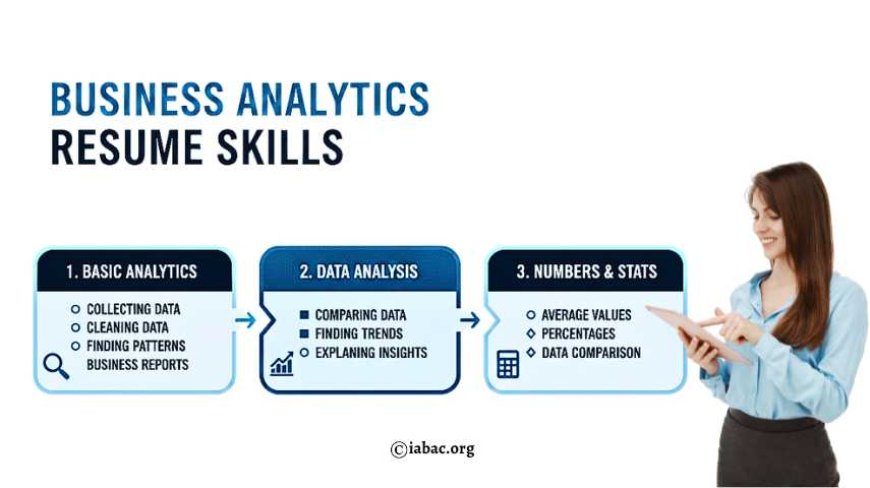
1. Basic Business Analytics Skills
These are the foundation of your resume.
Include skills such as:
- Collecting data from different sources
- Cleaning and organizing data
- Studying data to find patterns
- Preparing business reports
- Understanding business measures
These skills show that you can work with real data and not just theory.
2. Data Analysis Skills
Data analysis skills tell employers that you can turn numbers into meaning.
Mention skills like:
- Comparing data
- Finding trends
- Identifying reasons behind results
- Explaining insights clearly
These skills are useful in almost every business role.
3. Understanding Numbers and Basic Statistics
You do not need advanced math, but you should be comfortable with simple calculations and comparisons.
Useful topics include:
- Average values
- Percentages
- Data comparison
- Simple relationships between values
These skills help you make correct conclusions from data.
Which Tools Should Be Mentioned in a Business Analytics Resume?
Tools show how prepared you are for real work. It is better to mention fewer tools clearly than list many without depth.
Excel
Excel is widely used in business analytics.
You can mention:
- Pivot tables
- Charts
- Lookup functions
- Data formatting
SQL
SQL is important because most business data is stored in databases.
Mention skills like:
- Writing queries
- Filtering data
- Combining tables
- Extracting useful information
Data Visualization Tools
These tools help explain data visually.
Common tools include:
- Power BI
- Tableau
Mention your ability to create dashboards and reports.
Programming Tools (Optional)
Languages like Python are useful but not required for all roles.
If you know Python:
- Mention data analysis tasks
- Mention automation if applicable
If you do not know coding, focus on other strengths. Many business analytics roles do not require heavy coding.
Is Coding Required for a Business Analytics Resume?
This is a common worry.
The simple answer is: No, coding is not required for every business analytics role.
Business analytics focuses more on:
- Business understanding
- Data interpretation
- Communication
Coding helps in advanced roles, but many analysts work successfully using Excel, SQL, and visualization tools.
If you know coding, include it.
If you do not, do not panic—focus on your strengths.
Business Knowledge Skills (Often Missed but Very Important)
Many resumes focus only on tools and forget business thinking.
Add skills like:
- Understanding business goals
- Customer behavior analysis
- Market understanding
- Performance tracking
These skills show that you understand why data is being analyzed.
Communication Skills Matter More Than You Think
Business analytics is not only about working with data. It is also about explaining results.
Mention skills such as:
- Report writing
- Presenting insights
- Explaining data in simple words
- Working with teams
Clear communication makes your analysis useful.
Projects Section: A Must-Have Part of Your Resume
Many resumes miss this section, but it is very important.
Your projects section should include:
- The problem you worked on
- Tools you used
- Type of analysis
- Outcome or insight
Projects show how you apply what you learned.
Business Analytics Certifications Add Value
Certifications help prove your skills.
They show:
- Structured learning
- Serious effort
- Industry-ready knowledge
Adding Business Analytics Certifications from recognized organizations like IABAC strengthens your resume and builds trust with employers.
How Long Should a Business Analytics Resume Be?
Keep it short and clear.
- Freshers: 1 page
- Experienced professionals: 1 to 2 pages
A clean resume is always better than a long one filled with unnecessary details.
Simple Resume Structure That Works
A good structure makes your resume easy to read.
Recommended order:
- Summary
- Skills
- Tools
- Projects
- Certifications
- Education
- Experience (if any)
This helps recruiters find important information quickly.
Common Resume Mistakes to Avoid
Many good candidates miss opportunities because of small mistakes.
Avoid:
- Listing too many tools
- Adding skills you cannot explain
- Using complicated language
- Making spelling mistakes
- Copying content from the internet
Honest and clear resumes stand out.
How Learning Supports Resume Building
A structured learning path helps you:
- Understand concepts clearly
- Practice with tools
- Work on real examples
- Gain confidence
Learning combined with practice makes resume writing easier.
Career Roles You Can Apply for
With a strong Business Analytics Resume, you can apply for:
- Business Analyst
- Junior Data Analyst
- Reporting Analyst
- Business Intelligence Analyst
- Analytics Associate
Each role values both business thinking and data skills
Why IABAC Helps Strengthen Your Resume
The International Association of Business Analytics Certifications (IABAC) focuses on skills that businesses actually need.
Through iabac.org, learners gain:
- Recognized certifications
- Practical learning focus
- Career-oriented programs
- Global acceptance
Adding IABAC certifications improves the credibility of your resume.
A Business Analytics Resume is more than a document. It is your introduction to employers. It shows how you think, analyze, and explain information. By adding the right skills, choosing the right tools, keeping the resume clear, and supporting it with trusted certifications, you improve your chances of success. When your resume is honest, simple, and focused, it speaks clearly—and the right opportunities listen.