
















































Are Recruiters Ignoring You Due to a lack of Data Science Qualifications?
Lack of data science qualifications may reduce recruiter attention. Build skills in analytics python statistics and machine learning to improve career chances.

You applied. You waited. Nothing. Again. If this feels familiar, your resume may be missing the one thing recruiters are scanning for first — recognised data science qualifications.
Let’s be real. Rejection hurts, especially when you know you can do the work. You’ve spent weeks or even months applying for jobs, editing your resume again and again, writing cover letters… and still, no response. It’s frustrating. Here’s something many people don’t realise: getting a job is not only about how much effort you put in. It’s about what your resume clearly shows in a few seconds. Recruiters usually spend around 7 seconds looking at a resume. In that short time, they look for quick proof that you have the right skills.
If your resume doesn’t clearly show recognised data science qualifications, it might be getting rejected before anyone actually reads it properly.
The Brutal Truth About the Data Science Job Market
Data science is growing fast. That’s great news. But there’s another side to it—competition is also growing just as fast.
|
36% Projected job growth in data roles by 2031 |
11.5M New data science jobs expected |
7 sec Average recruiter screen |
At first glance, this sounds exciting. More jobs should mean more chances, right?
Yes… but also more applicants.
Today, companies receive a huge number of applications for every open role. Hiring managers don’t have the time to study each one in detail. So what do they do? They filter. Quickly.
And the first thing they check is simple: credentials.
A college degree can help, but it’s not the only path anymore. Many people don’t have a computer science background—and that’s completely fine.
What matters more now is this: Can you clearly show that you have the right skills?
This is where recognised data science certifications make a real difference. They act as proof that you understand the tools, concepts, and practical work needed for the job.
Without that proof, your resume may not even get a second look.
|
Credentials aren't just paper. They're a shortcut that tells a recruiter: this person is serious, prepared, and ready. |
What Recruiters Actually Look For (And How to Give It to Them)?
After speaking with dozens of hiring managers in tech, finance, and healthcare, the pattern is clear. Here's what actually gets you through the first round:
- A clear job title that matches the role (e.g., "Data Scientist", not "Analyst with data skills")
- A recognised certification listed prominently — not buried at the bottom
- Quantified achievements: "improved model accuracy by 18%" beats "worked on ML projects"
- Familiarity with modern tools: Python, SQL, Pandas, ML frameworks
- Evidence of continuous learning — courses, certifications, blog posts, contributions
- The resume isn't a life story. It's a sales document. And your credential is the headline offer.
Choose the Right Signal: Get Internationally Recognised with IABAC
Not all qualifications create impact — the right certification does.
If you want to stand out in the job market, choosing the Best Data Science Certification can make a big difference. Recruiters are not only checking your skills; they also want proof that your knowledge meets global standards and can be trusted.
This is where the International Association of Business Analytics Certifications (IABAC) certifications help.
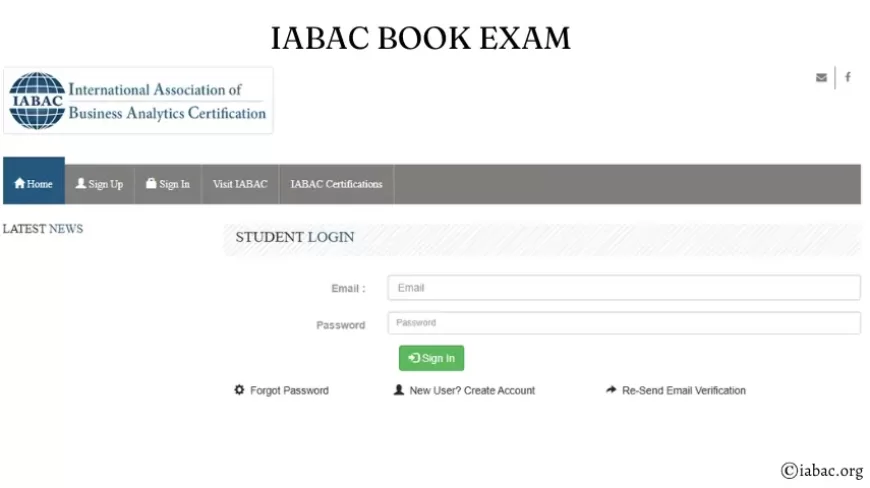
When you register through the official exam portal of the International Association of Business Analytics Certifications, you gain access to certifications designed based on real industry requirements. These programs focus on practical knowledge and are recognized by employers in many countries. This shows that you are ready to handle real work, not just theory. Whether you are starting your career or want to validate your current skills, IABAC offers a clear and trusted certification path. It helps you build credibility, strengthen your professional profile, and move ahead with more confidence.
Take the next step. Choose a globally recognized option and work toward the Best Data Science Certification to make your profile stand out and get noticed faster.
Why Data Science Certifications Matter More Than Ever?
Let's break down why credentials are now a non-negotiable in data science hiring:
- Recruiters use ATS filters — Applicant Tracking Systems scan for keywords like "certified," "data science," and specific tool names before humans ever see your resume.
- Certifications prove learning intent — They signal that you didn't just dabble — you committed, studied, and passed a standardised evaluation.
- They level the playing field — No traditional degree? A recognized certification bridges that gap more powerfully than self-taught projects alone.
- Global recognition matters — International certifications carry weight across industries and borders, especially for remote and global roles.
- They show reskilling commitment — In the age of the future of work, employers reward professionals who invest in themselves.
Worldwide Data Science Salaries (2026)
In 2026, Data Science is still a well-paid career around the world. Companies need people who can understand numbers and make sense of messy datasets, so the pay is quite good.
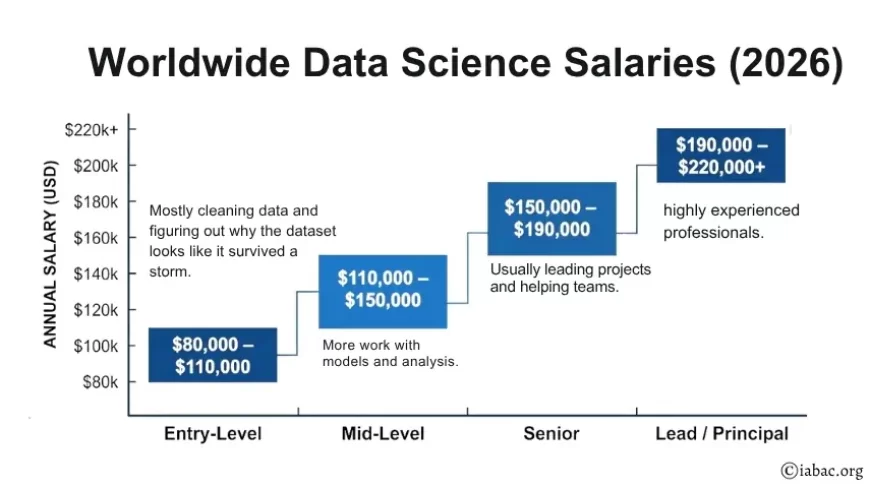
- Entry-Level Data Scientist: about $80,000 – $110,000 per year worldwide. Mostly cleaning data and figuring out why the dataset looks like it survived a storm.
- Mid-Level Data Scientist: around $110,000 – $150,000 per year worldwide with a few years of experience. More work with models and analysis.
- Senior Data Scientist: about $150,000 – $190,000 per year worldwide. Usually leading projects and helping teams.
- Lead / Principal Data Scientist: $190,000 – $220,000+ per year worldwide for highly experienced professionals.
Simple summary: In 2026, Data Scientists worldwide usually earn between $80,000 and $220,000+ per year, depending on experience. Not bad for people who spend half the day talking to datasets and the other half convincing them to behave.
From "Data Curious" to Machine Learning Expert: The Upskilling Path
Here's the good news: becoming a Machine Learning Expert doesn't require going back to university for four years. The modern upskilling economy has made world-class education accessible, affordable, and fast.
Step 1 — Know where you are
Are you a complete beginner? A working professional pivoting careers? Someone who knows the basics but lacks a credential? Your starting point determines your path.
Step 2 — Choose the right certification
Not all certifications are equal. Look for programs that offer industry-recognized credentials, practical projects, and updated curriculum that covers modern tools like Python, TensorFlow, scikit-learn, and cloud platforms.
Step 3 — Build while you learn
Certifications are most powerful when paired with a portfolio. As you learn, build projects. Solve real problems. Upload to GitHub. The combination of credential + portfolio is almost impossible for recruiters to ignore.
Step 4 — Signal everywhere
Add your certification to LinkedIn, your resume header, and your email signature. Make the credential visible. You did the work — now let the world see it.
The Reskilling Revolution in Data Science Is Now
Work is changing faster than most people expected. Companies are using automation, changing how teams work, and focusing more on decisions based on data and insights. Because of this shift, data science has become one of the most important skills across industries. Many roles are evolving, and some are slowly disappearing. Waiting too long to learn new skills can create challenges later.
People who start early in data science, build their skills step by step, and stay updated are the ones who move ahead with confidence.
Career growth in data science does not happen overnight. It grows step by step, like climbing a ladder. Each new skill makes you stronger, and each certification becomes a step that helps you move higher. The stronger your foundation, the easier it is to reach better opportunities and long-term career stability.
Why IABAC is the Certification Partner Serious Professionals Choose?
Anyone can say, “I know data science.”
But not everyone can prove it.
That’s where the International Association of Business Analytics Certifications (IABAC) walks in like,
“Relax… we’ve got the certificate for that.”
Thousands of professionals across the world have already used IABAC certifications to boost their careers — and yes, impress recruiters too.
Whether you're just starting or looking to validate your expertise as a Machine Learning Expert, IABAC offers:
- Globally recognised certifications in Data Science, AI, and Machine Learning
- Structured learning paths for all experience levels
- Industry-aligned curriculum built with real-world hiring standards
- Flexible, self-paced learning that fits around your life
- A trusted credential that stands out to recruiters worldwide
- A growing community of certified professionals across 50+ countries
Certified Data Scientist – HR (Yes, HR People… This is for You )
Think HR is only about interviews and paperwork?
Not anymore.
With the Certified Data Scientist – HR program, you can:
- Use data to make smarter hiring decisions
- Understand employee performance better
- Plan workforce strategies like a pro
- Actually predict things (yes, like who might leave )
Check it out here:
https://iabac.org/data-science-certification/certified-data-scientist-hr
Check Your Eligibility Before You Start
“Wait… Am I Even Eligible?”
Good question.
Before you jump in, take a quick look here:
https://iabac.org/eligibility
No surprises. No confusion. Just clear info.
Stop Waiting. Start Signalling.
The gap between where you are and where you want to be isn't always about skills. Sometimes it's about proof. About credentials. About showing up in a way that makes it easy for recruiters to say yes.
You've already done the hard part — developing curiosity, building interest, taking the first steps. Now it's time to make that invisible work visible. Add the certification. Update the profile. Apply again — this time, with the signal that gets you through the door. Your next opportunity isn't waiting for you to be more talented. It's waiting for you to make your talent undeniable.
"The best time to get certified was last year. The second-best time is today."