




























































How Does AI Know What You Want to Buy?
AI doesn't read your mind; it reads your data. Here's exactly how algorithms track your habits, predict your next purchase, and what you can do about it.

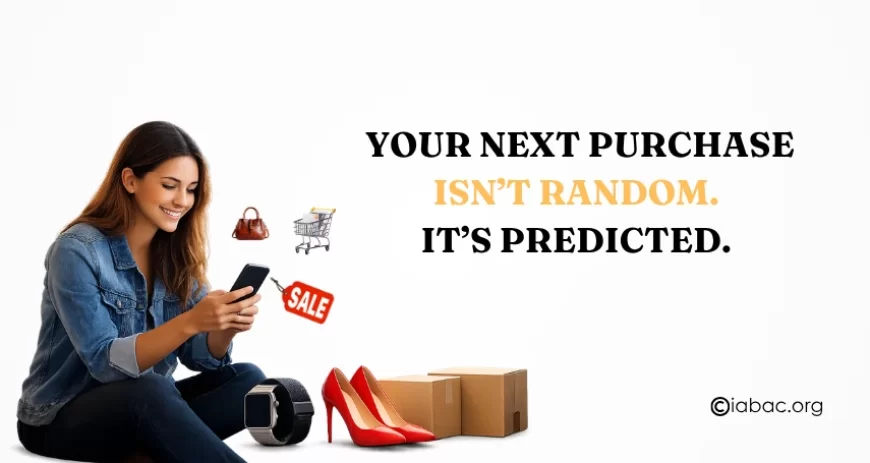
You searched for a new pair of trainers last Tuesday. By Wednesday, they were everywhere in your Instagram feed, on the sidebar of a news site, even in your email. You didn't sign up for anything. You didn't click 'yes' to any tracking pop-up. And yet, the ads found you.
So how does AI know what you want to buy? In short: it doesn't read your mind; it reads your data. Every search, click, scroll, and pause leaves a trail, and AI systems are built to follow that trail and predict your next move with startling accuracy. This guide explains exactly how it works, which companies are doing it, and how you can limit what they know.
What Data Does AI Actually Collect About You?
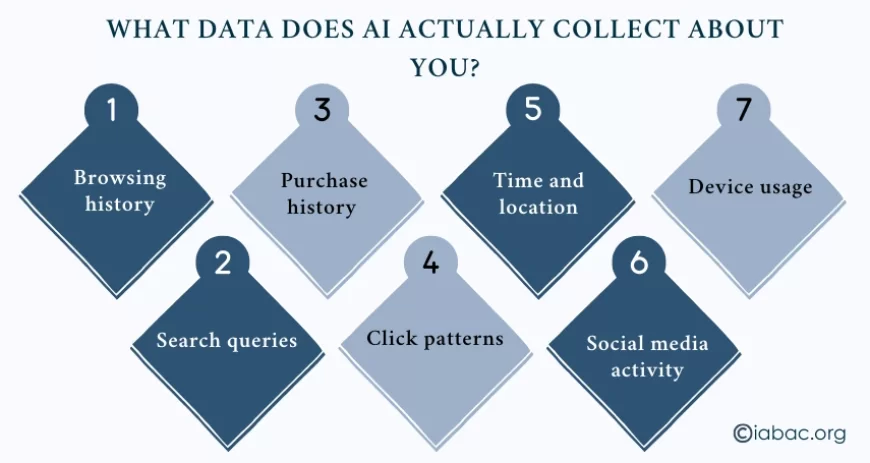
Before AI can predict anything, it needs raw material. That raw material is your behaviour, and the amount of it collected every day is staggering. Here is what AI-powered systems are typically working with:
-
Browsing history — every page you visit, how long you stayed, and what you clicked on
-
Search queries — the exact words you type into Google, Amazon, or any search bar
-
Purchase history — what you have bought before, and what you returned
-
Click patterns — which results you clicked, which you skipped
-
Time and location — when and where you are shopping (commuting, at home, late at night)
-
Social media activity — posts you liked, accounts you follow, content you lingered on
-
Device usage — what device you are using, and how you switch between them
The difference between first-party and third-party data
Not all data is collected the same way. First-party data is gathered directly by the company you are interacting with — Amazon knows your order history because you placed those orders. Third-party data is collected by brokers and ad networks that track you across websites you may never have heard of. A data broker might know that you browsed baby products on five different sites, combining that signal to infer you are expecting a child — without you telling a single company that directly.
What your phone and apps share without you realising
Your phone is one of the richest data sources available. Apps that request location access can track where you go in the physical world — a sports retailer can infer you run regularly if your phone regularly pings from a park at 6 am. Many free apps share data with ad networks as a condition of their business model. The permissions screen you tapped through during setup likely included consent buried in several layers of text.
Real-time behavioural signals → Real-time signals: how AI decides you're ready to buy
Collecting data is step one. The more interesting question is what happens next — how does a system go from 'this person browsed running shoes' to 'show them this specific ad at this exact moment'? There are three main mechanisms at work.
Collaborative filtering: the 'people like you' engine
This is the algorithm behind 'customers who bought this also bought…' It works by finding patterns across millions of users. If 10,000 people who bought a running vest also bought compression socks within a month, the system learns that connection. When you buy a running vest, it predicts you will want compression socks — even if you have never searched for them. The AI is not making a guess about you specifically. It is applying a pattern it learned from an enormous group of people who behave like you.
How natural language processing reads your searches
When you type 'comfortable shoes for standing all day at work', the AI does not just match those words to a product category. Natural language processing (NLP) breaks down the meaning: this person needs comfort, they stand for long periods, and this is a professional context. That maps to specific product types, price ranges, and even brands associated with those needs. Your phrasing tells the algorithm far more than the keywords themselves.
Real-time behavioural signals
Beyond what you buy, Artificial Intelligence watches how you behave while shopping. How long you hover over a product image. Whether you add something to your cart and then remove it. Whether you read reviews carefully or scroll past them. Whether you abandoned checkout at the delivery cost screen. These micro-behaviours are treated as strong signals of intent. A user who spends 90 seconds on a product page and then leaves is more valuable to target than one who bounced after 5 seconds — the system knows the former is genuinely considering it.
Key insight: AI is not just reading your explicit actions. It is interpreting your hesitations, your pauses, and the paths you didn't take as much as the ones you did.
Why Your Ads Seem to Read Your Mind (It's Not Magic)
The most common question people ask is: 'Is my phone listening to me?' The honest answer is almost certainly not — at least not in the way people imagine. Microphone access would consume battery and data at a rate that would be easily detected. The much simpler explanation is that the data trail you leave is so rich that it can appear psychic even without any listening involved.
How retargeting pixels follow you across websites
Almost every commercial website embeds a tiny piece of code called a tracking pixel — often from Facebook, Google, or an ad network. When you visit a page with a pixel, it drops a cookie in your browser. When you later visit a completely different site that hosts ads from the same network, that cookie is recognised. The ad network knows you were on the trainer website, and now it can show you trainer ads on an unrelated news site. This is retargeting, and it explains the feeling of being followed around the internet.
Cross-device tracking: from your phone to your laptop
If you browse on your phone and then open your laptop, companies can often link those sessions together. The methods include logging in with the same account (Google, Facebook), being on the same Wi-Fi network, or using a technique called probabilistic matching that infers device relationships from shared data patterns. The result is a unified picture of your behaviour across devices — your phone session browsing trainers at lunch shows up as context for the ads served to your laptop at home.
Which Companies Are Actually Doing This?
Purchase prediction AI is not limited to one or two tech giants. It is a core feature of the modern digital economy, deployed at scale by several major platforms.
-
Amazon — its recommendation engine is estimated to drive around 35% of all sales on the platform. It combines purchase history, viewed items, and behavioural patterns from hundreds of millions of users.
-
Google Shopping — uses your search history, location, and browsing behaviour to surface products before you have even committed to searching for them.
-
Meta (Facebook and Instagram) — builds detailed interest profiles from posts, likes, group memberships, and third-party data purchases. Advertisers can target by income bracket, life events, and purchasing behaviour.
-
TikTok — its recommendation engine moves faster than most. It learns your content preferences within minutes of opening the app, and its shopping integration applies the same logic to products.
Is AI Shopping Prediction Accurate — or Just Lucky?
It is easy to assume AI prediction is near-perfect. It is not. There are well-documented failure modes that are worth understanding.
The cold-start problem affects new users. When you have no history, the system has nothing to work with and defaults to broad, generic recommendations that feel irrelevant. This is why a new Amazon account surfaces bestsellers rather than personalised picks.
Filter bubbles mean the AI gets progressively narrower over time. If you buy a lot of running gear, the system may stop surfacing hiking equipment even though you would enjoy it — it is optimising for what it thinks you want, not what you might discover you want.
Over-personalisation can also backfire. If you buy a baby gift for a friend, you may be served baby product ads for months despite having no personal need. The AI saw the purchase but lacks the context to interpret it correctly.
Worth knowing: AI prediction is impressive but probabilistic. It works well at scale across millions of users but is frequently wrong about any individual in any given moment.
How to Limit What AI Knows About Your Shopping Habits
If you would rather browse without being tracked quite so comprehensively, there are practical steps you can take. None of them are perfect, but each reduces the data available to ad systems.
-
Use private or incognito browsing mode — this prevents local storage of your browsing history and reduces some cookie tracking, though it does not make you invisible to websites themselves
-
Clear cookies regularly — most browsers offer a setting to clear cookies weekly or on close
-
Opt out of ad personalisation — Google allows you to turn off personalised ads at myaccount.google.com/data-and-privacy; Meta has a similar setting under Ad Preferences
-
Use a browser extension like uBlock Origin or Privacy Badger — these block many tracking pixels and third-party scripts before they can load
-
Avoid logging into sites unnecessarily — shopping while logged into Google or Facebook gives those platforms visibility into your purchases
-
Use a separate email address for shopping — this limits the ability to link your shopping behaviour to your broader online identity
Faqs
Does my phone listen to my conversations to show me ads?
Almost certainly not. Continuous microphone access would drain battery and data in ways that would be easily detected by security researchers — and it has not been. What feels like 'listening' is actually the result of your browsing, search, and location data being combined by AI. The data trail you leave is so detailed that predictions can feel eerily accurate without any audio involved.
How does Amazon know what I want before I search for it?
Amazon uses a combination of your purchase history, viewed items, wish lists, and the behaviour of millions of users who share similar profiles to yours. Its recommendation engine uses collaborative filtering to identify patterns across large groups — if people who bought what you bought also tend to buy a certain product next, Amazon surfaces that product to you before you think to look for it.
Can AI predict what I'll buy next?
Yes, with meaningful accuracy at scale — though not perfectly. AI is good at predicting broad categories (you are in a running phase, likely to buy running-related products) and timing (you tend to buy around payday). It is less reliable at predicting the exact product or brand. Think of it as a well-informed guess rather than a certainty.
Why do I see ads for things I only thought about buying?
Likely because you searched for related terms, visited relevant websites, or paused on similar content in a social media feed. Each of those actions creates a signal. Combined, they paint a clear picture of your intent — one specific enough for an ad network to confidently target you, even if you never committed to a search.
Is AI shopping prediction legal?
In most jurisdictions, yes — provided companies disclose their data practices in a privacy policy and obtain consent where required. In the EU, GDPR places stricter requirements on tracking consent. In the US, rules vary by state, with California's CCPA offering the strongest consumer protections. Most of what you experience as 'AI knowing what you want' operates within current legal frameworks, even if it feels intrusive.
How do I stop AI from tracking my shopping behaviour?
You cannot eliminate tracking entirely, but you can significantly reduce it. The most effective steps are: opting out of ad personalisation on Google and Meta, using a browser extension to block tracking pixels, clearing cookies regularly, and shopping in private browsing mode. Using a VPN adds another layer by masking your IP address, though it does not prevent tracking when you are logged into accounts.
Understanding how AI knows what you want to buy puts you back in control of your data and your decisions. The systems built to read those signals are sophisticated, fast, and operating at a scale that makes individual prediction feel personal even when it is purely statistical.
Understanding how this works does not require a computer science degree. The core idea is simple: your behaviour is data, data is valuable, and AI is very good at finding patterns in it. Whether you find that reassuring or unsettling, knowing the mechanism gives you the ability to make informed choices about the trail you leave.
The tools to limit tracking exist and are not difficult to use. Whether you use them is a personal decision — but it should be an informed one.