



















































Can AI Certification Improve Your Salary Potential?
An AI certification can enhance your career growth and boost your salary potential. Explore its impact on skills, jobs, and opportunities.

Artificial intelligence (AI) is becoming a part of many industries. Companies use AI to make better decisions, improve customer experiences, and save time on repetitive tasks. As AI grows, professionals are looking for ways to show they have the right skills. One option is getting an AI certification.
But the big question is: Can AI certification actually help you earn more money? Here we explore how AI certification can affect salary, what benefits it brings, and what to keep in mind before investing your time and money.
What is AI Certification?
AI certification is a structured program that teaches you specific AI skills. Unlike a full degree, a certification is usually shorter, focused, and practical.
Certifications can cover topics like:
-
Machine learning: Teaching computers to find patterns and make predictions
-
Deep learning: A type of machine learning for complex problems like image or speech recognition
-
Natural language processing (NLP): Understanding and generating human language
-
Computer vision: Analyzing images or videos using AI
-
AI in business: Applying AI to solve real-world problems
-
AI ethics: Using AI responsibly and safely
Certifications are usually designed for different levels. Beginners can start with basic courses, while professionals with experience can take advanced programs that focus on strategy or large projects.
Why AI Skills Are in Demand
AI is being used in finance, healthcare, retail, manufacturing, and many other industries. Companies need people who can:
-
Analyze large amounts of data quickly
-
Build AI models that predict outcomes
-
Improve customer experiences using AI
-
Automate repetitive tasks
-
Innovate products and services using AI
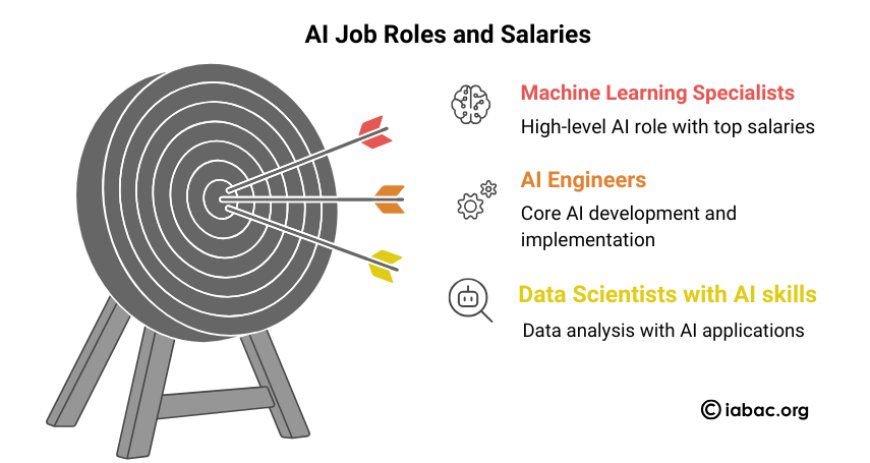
Because of this, AI-related jobs are growing fast. Roles like AI engineer, machine learning specialist, and data scientist are in high demand. Salaries for these roles are often higher than average because there aren’t enough qualified professionals.
AI certification can help professionals stand out in this competitive job market.
How AI Certification Can Affect Salary
While a certification alone does not automatically increase your pay, it can help in several ways:
1. Shows Employers You Have Skills
A certification is proof that you have learned AI concepts and know how to use them. Employers see this as a sign of commitment and competence.
2. Demonstrates Applied Knowledge
Many certifications include projects or exercises. Completing these shows employers that you can apply what you’ve learned in real situations.
3. Helps Career Transitions
If you want to move from a non-technical role into AI, a certification can make that transition easier. Moving into a specialized AI role often comes with higher pay than your previous job.
4. Gives You a Competitive Edge
When multiple candidates have similar backgrounds, a certification can make your resume stand out. This can indirectly affect your salary by helping you land better offers.
5. Builds Credibility for Advanced Roles
Even for experienced professionals, certification can add credibility when managing AI projects or leading teams. This recognition can impact promotions and long-term salary growth.
How Much Can AI Professionals Earn?
Salaries vary depending on location, experience, and job role. Here’s a general idea:
-
AI Engineers: $110,000–$140,000 per year
-
Data Scientists with AI skills: $95,000–$125,000 per year
-
Machine Learning Specialists: $120,000 or more per year
While a certification doesn’t automatically guarantee a higher salary, it can make you eligible for these roles. The real benefit comes when the certification helps you qualify for a job with a higher salary.
Types of AI Certifications
AI certifications can be grouped based on experience and focus:
1. Entry-Level Certifications
-
Introduce basic AI concepts and skills
-
Good for beginners or those exploring AI as a new field
-
May cover basic programming, data handling, and simple AI projects
2. Intermediate Certifications
-
Focus on applying AI techniques and solving real-world problems
-
Suitable for professionals with some technical background
-
Often include hands-on projects
3. Advanced Certifications
-
Cover AI strategy, large-scale project management, and leadership in AI
-
Designed for experienced professionals or managers
-
Focus on strategic thinking and decision-making in AI projects
Choosing the right certification depends on your career goals, experience, and the type of role you want.
Cost and Return on Investment
Certification costs vary:
-
Entry-Level: $300–$1,000
-
Intermediate: $1,000–$3,000
-
Advanced: $3,000–$10,000+
Return on investment depends on whether the certification helps you qualify for higher-paying roles, complements your experience, and allows you to apply new skills in your job.
For someone changing careers into AI, even a modest salary increase can cover the cost of certification. For those already in tech roles, certification can help with specialization or advancement.
Benefits Beyond Salary
Salary isn’t the only reason to get certified. AI certification can also:
-
Open New Career Paths: Makes it easier to move into AI-focused roles
-
Validate Your Skills: Shows you have verified knowledge in AI
-
Build a Portfolio: Many programs include projects you can showcase to employers
-
Provide Networking Opportunities: Access to professional communities and peers
These benefits can help your career in the long term, even if your immediate salary doesn’t change much.
Limitations to Consider
-
Experience Still Matters
Employers often value hands-on experience more than a certificate alone.
-
Recognition Varies
Not all certifications carry the same weight. Some are more respected than others in certain industries.
-
AI Changes Fast
AI is evolving quickly. Certification knowledge may become outdated if not followed by continuous learning.
-
Salary Is Not Guaranteed
Certification improves job prospects but does not automatically increase pay. Salary growth depends on experience, skills, and the role you get.
Real-Life Scenarios
-
Early Career Professional: A recent graduate gets a basic AI certification. It may not immediately increase salary but helps them qualify for entry-level AI roles.
-
Mid-Career Professional: A software engineer completes an intermediate AI certification. They can transition into a machine learning role, which often comes with higher pay.
-
Manager or Business Professional: A manager completes a strategic AI certification. While salary may not rise immediately, their understanding of AI can improve leadership credibility and open doors for promotions.
Measuring the Impact
Before investing in certification, ask yourself:
-
Does it align with your career goals?
-
Is there demand for this certification in the job market?
-
Can you apply the skills in real projects or your current job?
-
Does it complement your existing experience?
Answering these questions will help you make an informed decision about the value of AI certification for your career and salary growth.
AI certification can improve career opportunities and, in many cases, salary potential. Its effectiveness depends on how well it aligns with your career path, how relevant it is to the roles you seek, and how you apply the skills gained.
While certification alone does not guarantee higher pay, it can be an important tool when combined with experience, practical application, and ongoing learning.