












































How to Become an HR Analyst – Skills and Certification
Learn how to become an HR analyst. Explore essential skills, top certifications, and career paths to excel in HR analytics and workforce management.

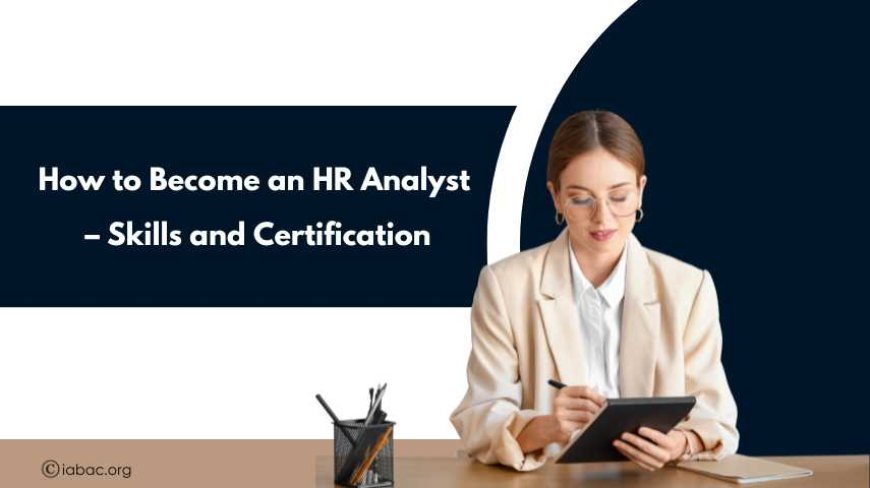
The workplace of 2025 is no longer only about people management. It is about data that tells the story of people. Every decision — hiring, promotions, retention, employee satisfaction, and salary planning — is shaped by data. This is where the role of a Certified HR Analytics Professional becomes important.
An HR Analyst connects human resources and data. They look at workforce data, analyze trends, and give insights that help leaders make smarter decisions. From tech companies to healthcare and finance, many organizations rely on HR Analysts to guide important workforce strategies.
What is an HR Analyst?
An HR Analyst works with employee data to help HR teams and leaders make data-driven decisions. Instead of depending on guesswork, they use analytics to improve hiring, retention, and overall workforce planning.
Main Responsibilities of an HR Analyst
- Collecting and Analyzing Data
- Collects workforce data from HR systems such as Workday or SAP.
- Finds trends in hiring, promotions, retention, and pay.
- Reports and Dashboards
- Creates dashboards using Power BI, Tableau, or Excel.
- Explains data in a way that managers and leaders can easily understand.
- Strategic Input
- Works with HR managers to turn insights into actions.
- Helps in areas like employee engagement and workforce planning.
- Compliance and HR Policy
- Ensures that HR data and policies follow labor laws.
- Studies market data for fair and competitive salaries.
- HR Systems Management
- Maintains HR software and ensures accurate records.
Why HR Analysts are Important in 2025
The future of work is shaped by AI, digital systems, and workforce analytics. Organizations don’t rely only on experience or assumptions anymore. They look at data to predict and plan.
Research shows:
- Companies that use people analytics make hiring 80% faster.
- Businesses that use data insights are 23 times more likely to improve employee satisfaction and retention.
HR Analysts are not just support staff in 2025 — they are key partners in building stronger businesses.
Skills You Need to Become an HR Analyst
|
Skill Area |
Key Skills |
Why It Matters |
|
Data Analysis |
Statistics, predictive analysis, data modeling |
Finds insights from large datasets |
|
Technical Skills |
Excel, SQL, Tableau, Power BI, Workday, SAP |
Needed for data handling and building dashboards |
|
Communication |
Reports, presentations, data storytelling |
Makes data clear and useful for managers and leaders |
|
Business Knowledge |
HR processes, workforce planning, strategy |
Ensures insights fit company's needs |
|
HR Understanding |
Recruitment, labor laws, and employee engagement |
Adds meaning to data insights |
|
Attention to Detail |
Data accuracy and compliance |
Builds trust in HR reports and decisions |
Begin with Excel, move on to visualization tools like Power BI, and then learn HR systems such as Workday.
Certifications That Help You Grow as an HR Analyst
To shine in the job market, a recognized certification is essential. Employers want HR professionals who can work with both people and data.

Here are some popular certifications, including IABAC’s globally trusted ones:
- Certified HR Analytics Professional
- Focused on HR analytics skills.
- Helps you apply data insights to recruitment, retention, and employee management.
- Data Analytics Foundation
- Beginner-friendly certification.
- Covers data collection, interpretation, and visualization basics.
- Certified Data Analyst
- Builds strong skills in managing and analyzing complex datasets.
- Perfect for HR professionals moving into analytics.
- Data Analytics for Managers
- Designed for HR managers and business leaders.
- Helps in using analytics for strategic workforce planning.
- Certified Finance Analytics Professional
- Focused on pay and compensation planning.
- Important for HR roles linked to finance.
- Certified Healthcare Analytics Professional
- Specialized for healthcare industries.
- Addresses staffing, compliance, and workforce challenges.
Certifications give you both credibility and practical skills that employers look for.
Career Growth Path for an HR Analyst
The HR Analytics career grows step by step:
- Education: Degree in HR, business administration, or data analytics.
- Entry Level: HR Assistant, Junior HR Analyst (works with data entry and reports).
- Mid-Level: HR Analyst (focus on workforce analysis, dashboards, and predictions).
- Senior Level: Senior HR Analyst, People Analytics Specialist (advises leaders, manages projects).
- Leadership: HR Manager, HR Director, Director of HR Technology.
HR Analyst Salary Expectations
|
Experience |
Average Salary (U.S.) |
Notes |
|
Entry Level |
$55,000 – $65,000 |
HR Assistants, Junior Analysts |
|
Mid-Level |
$70,000 – $90,000 |
HR Analysts |
|
Senior Level |
$95,000 – $110,000+ |
Senior Analysts, Specialists |
|
Leadership |
$120,000 – $150,000+ |
Directors, Heads of HR Analytics |
Salaries are usually higher in finance, tech, and healthcare sectors, especially in large cities.
Who Should Choose This Career?
Becoming a Certified HR Analytics Professional is right for you if:
- You enjoy working with data and numbers.
- You like solving problems and spotting patterns.
- You care about employee experience and HR strategy.
- You want a career that connects business decisions with people insights.
Whether you are an HR professional, a Certified Data Analyst moving into HR, or a student aiming for a future-focused career, HR Analytics is a strong choice.
HR Analytics Trends in 2025
HR Analysts in 2025 will see these trends:
- AI-based workforce planning.
- Employee sentiment analysis through Natural Language Processing (NLP).
- Data for diversity, equity, and inclusion (DEI).
- Real-time HR dashboards for leaders.
- Integration of HR, finance, and healthcare analytics.
The role of a Certified HR Analytics Professional is not just about tracking numbers. It is about shaping better decisions for people and businesses. With the right mix of skills, certifications, and updated knowledge, you can grow your career and make a strong impact in HR.
In 2025 and beyond, organizations will continue to look for HR Analysts who can connect data with people insights. Suppose you are ready to combine your interest in HR with your ability to work with data. In that case, this is the right time to start your journey with certifications like Certified HR Analytics Professional or Certified Data Analyst.