






















































Boost Your Career with Data Scientist Certification
A data scientist certification can open doors to better roles, higher salaries, and industry recognition. Learn why it’s worth the investment.


Data science is not just about working with numbers. It is about turning large amounts of data into useful information that helps people and businesses make better decisions. Through Data Science Certifications, learners understand how to collect data, clean it, and prepare it in a proper way so it can be used effectively. These programs also introduce important concepts like machine learning and deep learning. These help in building models that can study data, find patterns, and make predictions. These skills are useful for improving business performance and solving real problems. Another important part of learning Data Science is presenting results in a simple way. These courses teach how to convert complex information into easy charts, graphs, and visuals so that anyone can understand the findings clearly.
You also get hands-on knowledge of tools like Python, R, and SQL, which are widely used in the industry to work with data efficiently.
Building a Career with data scientist skills becomes easier when you have the right training and practice. Cities like Bangalore offer many learning and networking opportunities. It has a strong community of learners, professionals, and experts where you can gain knowledge, share ideas, and grow your career. Taking Data Science Career Certification programs in Bangalore can improve your learning experience. It also gives you a chance to apply your skills in real situations and build confidence for future job roles in Data Science.
What is data science?
A data scientist is a professional who analyzes and interprets complex data to help organizations make informed decisions. They use a blend of statistical analysis, machine learning, and data mining techniques to extract meaningful insights from large and varied datasets. Data scientists are skilled in programming, data visualization, and data manipulation, and they often use tools like Python, R, SQL, and data visualization software.
Data scientist role involves:
-
Data Collection and Cleaning: Gathering data from various sources and ensuring its quality and accuracy.
-
Data Analysis: Applying statistical methods and algorithms to understand data patterns and trends.
-
Model Building: Creating predictive models and machine learning algorithms to forecast future trends or behaviors.
-
Visualization: Presenting data insights through charts, graphs, and dashboards to make findings accessible to non-technical stakeholders.
-
Problem-Solving: Using Information based on data to address business challenges and support decision-making processes.
Data scientists play a crucial role in helping organizations use data to improve operations, improve strategy, and achieve business goals.
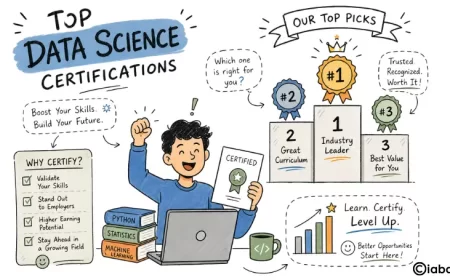
Key Benefits of Data Scientist Certification
-
Career Advancement
Promotions and Higher Salaries: Data Scientist Certification can significantly boost your career track. Certified professionals are often considered for higher-level positions, such as Senior Data Scientist or Lead Data Analyst, and typically enjoy higher salaries. The certification validates your expertise and can make you a more attractive candidate for promotions and salary increases within your current organization or at new companies.
-
Skill Enhancement
Master Advanced Techniques: Achieving certification provides a structured learning path to master advanced data science techniques and tools. You'll gain hands-on experience with complex algorithms, machine learning models, and data visualization methods, enhancing your ability to tackle complex data challenges and contribute valuable insights to your organization.
-
Increased Job Opportunities
Wider Career Paths: A certification opens doors to a broader range of job openings and career paths in data science. With data being a critical asset for businesses, certified professionals are in high demand across various industries, including tech, finance, healthcare, and more. This certification can provide access to different roles, from data analyst positions to strategic data science roles, expanding your career options and potential growth.
Why Data Scientist Certification Matters
-
Credibility and Validation
-
Skill Assurance: Certification serves as formal validation of your skills and knowledge in data science, demonstrating your proficiency in key areas such as data analysis, machine learning, and statistical modeling.
-
Professional Competence: It confirms your ability to apply advanced data science techniques effectively, giving employers confidence in your capabilities.
-
Industry Recognition
-
Employer Trust: Certified data scientists are recognized for their expertise, making them more attractive candidates for job opportunities and promotions.
-
Peer Acknowledgment: Certification enhances your standing within the data science community, earning respect from peers and establishing you as a credible professional in the field.
Certification Programs Overview
-
Certified Data Scientist (CDS)
Overview: The Certified Data Scientist (CDS) credential demonstrates proficiency in data science concepts, including data analysis, machine learning, and data visualization. It typically involves comprehensive training and a strict exam covering various data science methodologies and tools.
-
Data Science Professional Certification (DSPC)
Overview: The Data Science Professional Certification (DSPC) focuses on practical skills and real-world applications of data science. This certification places a focus on practical experience with data processing, statistical modeling, and machine learning algorithms, preparing professionals for complex roles based on data science.
Comparison of Certifications

1.Scope and Content: Consider what each certification covers and how it matches with your career goals. If you are focused on practical applications and real-world problem-solving, the Data Science Professional Certification may be a better fit. If you want to work specifically with Azure could be more relevant.
2.Prerequisites: Check the prerequisites for each certification. Some may require prior knowledge or experience in data science or related fields, while others might be suitable for beginners.
3.Recognition and Credibility: Evaluate the recognition and credibility of the certifying body. Certifications from well-known organizations like IABAC might carry more weight in the job market compared to lesser-known programs.
4.Cost and Duration: Compare the cost and time commitment required for each certification. Consider your budget and how much time you can dedicate to completing the certification.
5.Career Goals: Make your choice with your career goals. If you aim for a broad data science role, a general certification like CDS might be ideal. For specialized roles or specific technologies, certifications like DSPC or Azure Data Scientist Associate could offer targeted advantages.
Preparing for Certification Exams
Study Resources
-
Official Guides
-
Use official study guides and practice exams from certifying bodies for comprehensive preparation.
-
Online Courses
-
Enroll in courses on platforms like Coursera or Udacity that offer targeted exam prep and hands-on practice.
-
Books
-
Read industry-recommended books such as "Data Science for Business" or "Python Data Science Handbook" for in-depth knowledge.
-
Practice Exams
-
Take practice exams to familiarize yourself with the exam format and question types.
-
Study Groups
-
Join study groups or online forums to discuss topics and share resources.
Exam Tips
-
Know the Format
-
Understand the exam structure and question types.
-
Make a Study Plan
-
Create a structured study schedule covering all exam topics.
-
Focus on Key Areas
-
Prioritize critical topics highlighted in the exam syllabus.
-
Practice Regularly
-
Use sample questions and mock exams to build confidence.
-
Review and Revise
-
Regularly review key concepts and practice problems.
-
Stay Calm
-
Manage stress and stay confident for optimal performance.
Obtaining a data scientist certification offers numerous benefits, including enhanced career advancement opportunities, skill enhancement, and access to a wider range of job opportunities. This certification not only validates your expertise but also positions you for higher-level roles and increased earning potential.
Investing in a data scientist certification is a strategic move towards advancing your career and achieving long-term success in the data science field. By acquiring this credential, you demonstrate your commitment to mastering advanced techniques and staying relevant in a rapidly evolving industry. Consider certification as a valuable investment in your professional growth and a key step toward reaching your career goals.