



















































Challenges in Learning Machine Learning and Deep Learning
Learning machine learning and deep learning can be challenging due to math concepts, coding demands, data complexity, and model tuning hurdles.


Let’s be honest. The first time many students hear the words machine learning and deep learning, their brain quietly asks, “Is this going to be hard?” The second thought is usually, “Do I really need this for a job?” The third thought is checking the phone.
The good news is that machine learning and deep learning are not magic spells or secret codes meant only for geniuses. They are skills built step by step, just like learning to ride a bike—except the bike occasionally crashes because of missing data or wrong formulas.
If you are planning a career in artificial intelligence, data science, or automation, understanding these topics is not optional anymore. Companies want people who can teach computers how to learn, think, and improve without calling humans every five minutes.
Machine Learning Explained Without Headaches
The meaning of machine learning is actually simple. It is a way for computers to learn from past data and make better decisions next time.
Think of it like this. If you watch the same type of movie again and again, a streaming app starts suggesting similar movies. You did not tell the app what you like. It figured it out by watching your behavior. That is machine learning doing its job quietly in the background.
Machine learning is widely used in areas like email filtering, sales prediction, fraud detection, and customer analysis. For careers such as Machine Learning Associate or Data Analyst, this knowledge is the basic entry ticket.
Deep Learning: When Computers Start Acting a Bit Too Smart
Deep learning is a part of machine learning, but it goes a few steps further. Instead of needing humans to explain what to look for in data, deep learning systems learn patterns by themselves using neural networks.
This is why deep learning works well for tasks like face recognition and voice understanding. Your phone unlocks by recognizing your face, even when you are half asleep and clearly not ready for the day. That is deep learning being patient and polite. From a job point of view, deep learning skills are useful for advanced roles such as AI Engineer, Computer Vision Engineer, and NLP Specialist.
So, What Is the Difference Between Machine Learning and Deep Learning?
The difference is not about which one is better. It is about how they learn and where they are used.
Machine learning usually needs humans to decide what information matters. Deep learning figures that part out on its own. Machine learning works well with smaller and cleaner datasets, while deep learning prefers large amounts of data. Machine learning models are easier to understand, while deep learning models sometimes feel like they are thinking in a different language.
Knowing this difference helps students choose the right learning path and avoid unnecessary confusion.
How Algorithms Actually Work (Yes, There Is Math)

Machine learning algorithms learn relationships between input and output. A simple example is linear regression, which follows the formula
y = mx + c.
This equation helps predict values such as sales numbers or prices.
Deep learning uses neural networks, where each neuron calculates values using
z = w₁x₁ + w₂x₂ + b,
and then passes the result through an activation function. This sounds serious, but it is just math doing repeated small calculations.
At this stage, a simple diagram showing a neural network with input, hidden, and output layers would help students understand how information flows through the system.
What Challenges Are Faced While Learning "Machine Learning and Deep Learning"?
What challenges are faced while learning "machine learning and deep learning"?
Almost every learner faces confusion in the beginning, and that is completely normal. One major challenge is mathematics. Statistics and linear algebra suddenly appear everywhere, and students start wondering why numbers are following them so closely.
Programming is another hurdle. Writing Python code sounds easy until the program refuses to run because of one missing bracket. Data preparation adds to the struggle, as real-world data is rarely clean and well-behaved.
Deep learning adds extra pressure because models take longer to train and need stronger systems. Waiting for results can feel like watching water boil.
A small infographic comparing training time for machine learning and deep learning models would help students understand why patience is part of the process.
Tools That Turn Learning into Job Skills
Knowing theory alone will not impress employers. Tools make the difference.
Machine learning commonly uses Python along with libraries like Pandas, NumPy, and Scikit-learn. Deep learning relies on tools such as TensorFlow, PyTorch, and Keras.
At this point, a visual chart showing tools and their use cases would help students connect learning with real jobs.
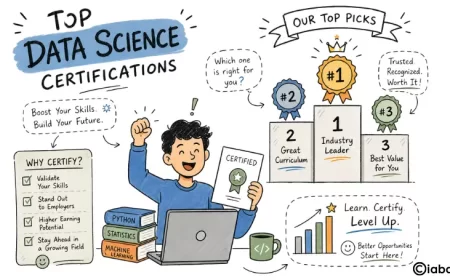
Certification programs that follow industry standards, such as those aligned with IABAC and available through iabac.org, focus on tool-based learning because companies expect hands-on experience.
Career Opportunities That Actually Pay the Bills
After learning machine learning, many students move into roles like Machine Learning Associate, Data Analyst, Automation Analyst, or AI Support Specialist. These roles focus on solving real business problems using data.
Deep learning opens doors to advanced roles where systems handle images, speech, and language. These roles usually come with higher responsibility and better pay because fewer people have these skills.
An Artificial Intelligence Certification helps learners stand out because it proves structured learning and practical understanding.
Why Certification Makes Learning Less Stressful
Learning everything on your own can feel confusing. Certification provides a clear path and removes guesswork.
Credentials such as Certified Machine Learning Associate help beginners build confidence and show employers that their skills are verified. Certification bodies like IABAC focus on job relevance and global standards, which makes learning more meaningful.
Ethics: Teaching Machines to Behave Properly
Machines learn from data, and sometimes data carries human bias. This can lead to unfair results if not handled carefully. Privacy and responsible usage are also important concerns.
A conceptual image showing fairness, transparency, and accountability in AI systems would help students understand why ethics matters just as much as accuracy.
Machine learning and deep learning may feel confusing at first, but confusion is just a sign that learning has started. With clear concepts, steady practice, and proper guidance, these skills become manageable and rewarding. For students starting from the basics, focusing on understanding, practice, and recognized certifications through platforms like iabac.org can turn curiosity into a strong career in artificial intelligence.
Everyone struggles at the beginning. The ones who succeed are simply the ones who keep going.