



















































Future of HR Analytics Course: Trends and Technologies to Watch in 2026
Learn about the future of HR analytics courses and the top trends and technologies shaping HR in 2026, from AI tools to predictive workforce insights.

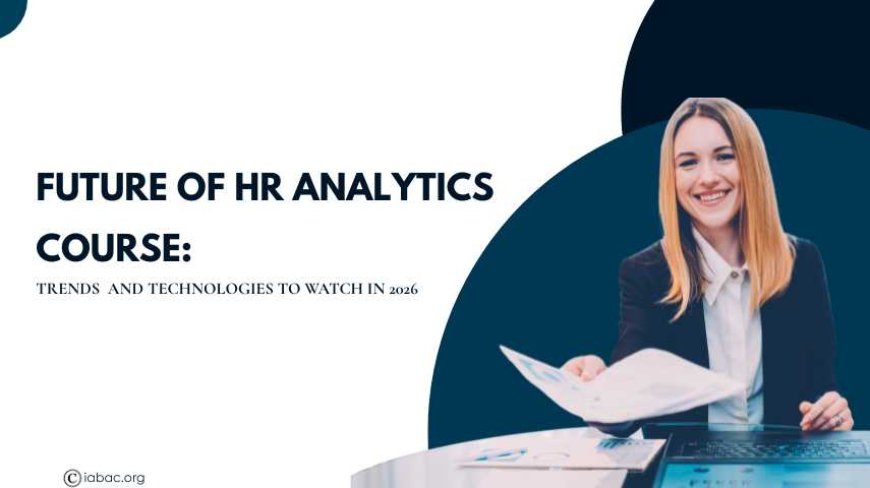
By 2026, Human Resources (HR) will not just focus on hiring or payroll — it will be a key part of how businesses grow and make smart decisions. Today, HR teams use data analytics to understand people better, improve performance, and plan for the future. This change is led by HR analytics, which uses data to study employee behavior, predict future trends, and help organizations make better decisions. With this, HR data analysts and human resources analysts are becoming vital members of every company’s decision-making team. This article looks at what’s coming next for HR analytics — the key trends and technologies in 2026, and why now is the best time to take an HR Analytics Course or a Data Analyst Certification to prepare for the future.
How HR Analytics Is Changing the HR Role
HR analytics, often called people analytics, has turned HR into a data-driven field.
Instead of guessing what works, HR professionals now use facts and numbers to make informed choices.

In 2026, HR professionals are expected to:
- Collect and study workforce data.
- Predict future hiring and training needs.
- Present insights using easy-to-understand visuals.
- Work closely with business and finance teams to plan better.
New job titles are growing from this shift, such as:
- HR Analyst
- Human Resources Data Analyst
- HR Data Analyst
- People Analytics Manager
- Data Analytics for Managers
- Finance Analytics Professional
These professionals use data to connect employee performance with business results, helping companies grow through informed decisions.
Main Trends Shaping HR Analytics in 2026
Let’s look at the main trends that will guide HR analytics in 2026.
Predictive Analytics for Smarter Workforce Planning
Companies no longer wait for problems to appear — they predict them before they happen.
Using predictive analytics, HR teams can plan for future changes in hiring, performance, and employee turnover.
For example, a human resources analyst can use data from past years to see which employees might leave and why. This helps HR act early by improving employee satisfaction or career growth opportunities.
Predictive analytics supports:
- Planning future hiring needs.
- Identifying training gaps.
- Reducing employee turnover.
This data-first approach saves both time and cost.
AI and Automation in Everyday HR Work
Artificial Intelligence (AI) is becoming part of daily HR operations.
It helps automate routine tasks like shortlisting resumes, answering employee questions, and tracking performance.
AI in HR analytics includes:
- Resume screening using machine learning.
- Chatbots helping job applicants with queries.
- Tools that read employee feedback to understand mood and motivation.
- Automated performance reports that are fair and consistent.
By 2026, most HR teams will use AI-based analytics platforms, helping them focus on strategy, growth, and employee experience instead of repetitive tasks.
Real-Time Workforce Insights
Reports are no longer monthly or yearly — HR teams now rely on real-time dashboards that show live updates about employee data. With visualization tools like Power BI, Tableau, and Google Data Studio, a data analyst can track things such as attendance, performance, and engagement instantly.
This helps companies:
- Solve problems quickly.
- Give real-time feedback to employees.
- Make faster and more accurate HR decisions.
Such tools bring HR and business leaders closer to understanding what’s really happening within the workforce.
Data-Driven DEI (Diversity, Equity, and Inclusion)
Fairness and equality are now measurable goals.
In 2026, companies are using data analytics for managers to track how inclusive and fair their workplaces are. HR teams analyze data about hiring, pay, and promotions to ensure there are no hidden biases.
For example, analytics can show if certain groups are less represented in leadership or if there’s a gender pay gap.
This helps leaders take action to create fair, transparent, and equal work environments.
Merging Finance and HR Analytics
Finance and HR are now working more closely together.
By combining financial data with HR data, companies can clearly see the impact of HR strategies on profits and costs.
A Finance Analytics Professional or HR Data Analyst can measure:
- The cost of employee turnover.
- The return on training and learning programs.
- The link between employee engagement and company profit.
This approach helps HR show how its work directly supports business growth.
Data in Learning and Development
Employee training is no longer random.
With learning analytics, HR can measure how effective training programs are and how employees use new skills in real work situations. For example, if employees who complete a Data Analytics Foundation course perform better, HR can focus more on similar programs.
The goal is to make learning personalized and data-based, giving each employee what they truly need to grow. These technologies are turning HR into a data-driven function that supports business goals with evidence, not assumptions.
Important Skills for Future HR Analysts
As HR analytics grows, new skills are needed.
Whether you want to become an HR Analyst, Human Resources Data Analyst, or Data Analytics for Managers, here are the must-have skills for 2026:
- Analytical Thinking – Understanding numbers, data trends, and statistics.
- Data Visualization – Using Power BI or Tableau to present findings clearly.
- Programming Knowledge – Basic understanding of R, Python, or SQL.
- Storytelling with Data – Explaining insights simply to non-technical managers.
- Business and HR Understanding – Linking data insights to company goals.
- Ethical Data Practices – Protecting employee privacy and avoiding bias.
You can gain these skills through programs such as:
- HR Analytics Course
- Data Analyst Certification
- Data Analytics Foundation Program
- Finance Analytics Professional
- Healthcare Analytics Professional
These courses help both HR and business professionals use data confidently and make better decisions.
Why HR Analytics Matters for Business Growth
Companies using HR analytics are seeing big benefits in:
- Better hiring and lower turnover.
- Improved productivity.
- Smarter training investments.
- Stronger leadership development.
- Faster and more accurate decision-making.
For example, a company using analytics can identify which employees are ready for promotions or who may need more support.
This approach keeps employees motivated and reduces the cost of external hiring.
Simply put, HR analytics helps HR become a true business partner that drives results.
Challenges and Future Opportunities
Like any growing field, HR analytics also faces some challenges:
- Ensuring data privacy and following legal rules.
- Connecting multiple HR systems into one platform.
- Bridging the skill gap for HR professionals new to data.
However, these challenges are also career opportunities.
Professionals who take an HR Analytics Course or a Data Analyst Certification will stand out, as companies continue to look for people who understand both people and data.
Organizations that build strong analytics teams will lead in innovation and employee engagement.
What’s Ahead Beyond 2026
Looking ahead, HR analytics will continue to grow smarter.
Future systems will not only report data but also suggest actions automatically to improve results.
We may soon see:
- Predictive dashboards that guide decision-making.
- Emotionally intelligent systems that understand human behavior.
- Data connections between HR, finance, and customer insights for better planning.
By 2030, HR analytics will be the core of business strategy, supporting decisions across every department.
The Best Time to Learn HR Analytics Is Now
Analytics, AI, and human understanding drive the future of HR. Every organization will rely on HR data analysts to make informed, smart, and fair decisions. If you’re an HR professional, manager, or analyst, now is the right time to build your skills.
Taking an HR Analytics Course or Data Analyst Certification will help you understand how to use data to improve both employee and company growth. The future belongs to those who can turn information into action — and HR analytics is the best way to start.