



















































How Companies Use Analytics in Business Every Day
Learn how businesses leverage analytics daily to drive decisions, improve operations, enhance customer experiences, and stay competitive.

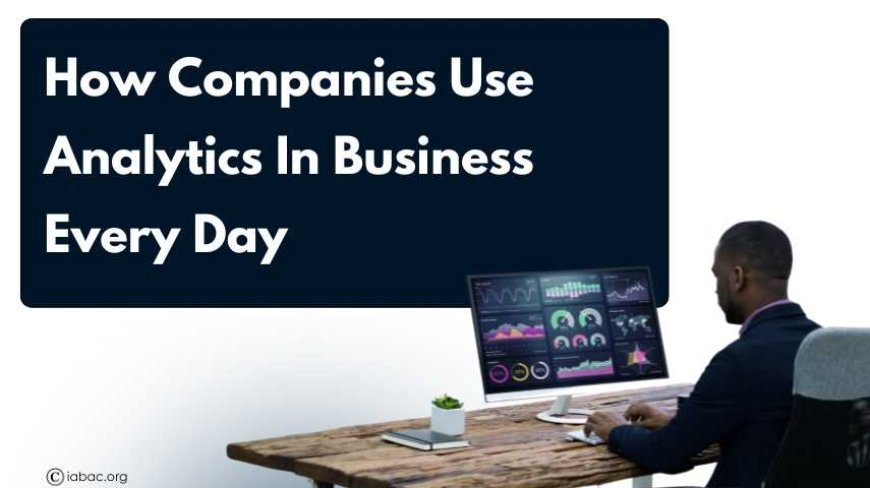
Welcome to the world of analytics in business, where numbers help companies make smart choices, and data works harder than your coffee machine on a Monday morning.
You might think business analytics is just for tech experts who speak in charts and formulas. But the truth? Analytics in business happens around you every single day. From the shoes you see online to the snack offers at your local supermarket, companies are using data to make decisions—quietly, constantly, and cleverly.
In this blog, you’ll get:
- A clear idea of what Analytics in Business means
- Real-world examples you’ll relate to
- Simple charts and tables (the kind that won’t put you to sleep)
- And why getting a Business Analytics Certification might be the best move you make this year
So grab your imaginary data glasses, and let’s get into it.
What is Business Analytics?
"Business analytics" means using data and tools to understand what’s happening in a business and make better choices. Understanding the fundamentals of business analytics helps to connect data insights with business decisions
Think of it like this:
Business Analytics = "What happened?" + "Why did it happen?" + "What should we do next?" + "What might happen later?"
It's a bit like having a smart assistant for your company—but one that speaks in numbers.
Why is Analytics in Business So Important?
Every day, we create huge amounts of data—emails, clicks, orders, reviews, and more. Businesses need help making sense of all this information.
That’s where analytics steps in.
Companies use analytics in business to:
- Improve how things are done (fewer delays, smoother work)
- Personalize customer experience (like Netflix guessing your next favorite show)
- Boost sales (by reaching the right people at the right time)
- Cut costs (no more piles of unsold rainbow socks)
The Four Main Types of Business Analytics
Business analytics has four parts—each one looks at data in a different way. Here’s a quick guide:
|
Type |
What It Does |
Example |
|
Descriptive Analytics |
Tells you what happened |
"Sales dropped 20% in March." |
|
Diagnostic Analytics |
Tells you why it happened |
"Because fewer people bought sunglasses." |
|
Predictive Analytics |
Tells you what might happen |
"Sales may rise if we offer summer discounts." |
|
Prescriptive Analytics |
Tells you what to do |
"Send discount codes to past buyers." |
All these types help companies make better decisions.
How Companies Use Analytics in Business Without You Noticing
Let’s look at how businesses use data in your everyday life:
1. Online Shopping: Your Cart Has a Secret Life
Ever added a shirt to your cart and started seeing it everywhere?
That’s predictive analytics in action.
- You tried the product.
- The system knows you’re interested.
- Now it shows ads and reminders until you either buy it or give up.
2. Banks: More Than Just Money Counting
Banks use analytics to:
- Spot fraud (like a $1,500 pizza order from a village ATM)
- Suggest loans based on your spending habits
- Decide who gets a credit card and who doesn’t
3. Healthcare: Data That Helps Doctors
Hospitals use analytics to:
- Guess patient needs
- Manage staff efficiently
- Track which treatments work best
So yes, numbers in healthcare can actually save lives.
4. Marketing: Ads That Know You Too Well
Marketing teams use analytics to:
- Measure how people respond to ads
- Analyze comments on social media
- Predict what content works best
That weird ad for glow-in-the-dark yoga mats? That’s analytics too.
A Friendly Peek at the Numbers Behind the Scenes
Here are some simple methods used in analytics in business:
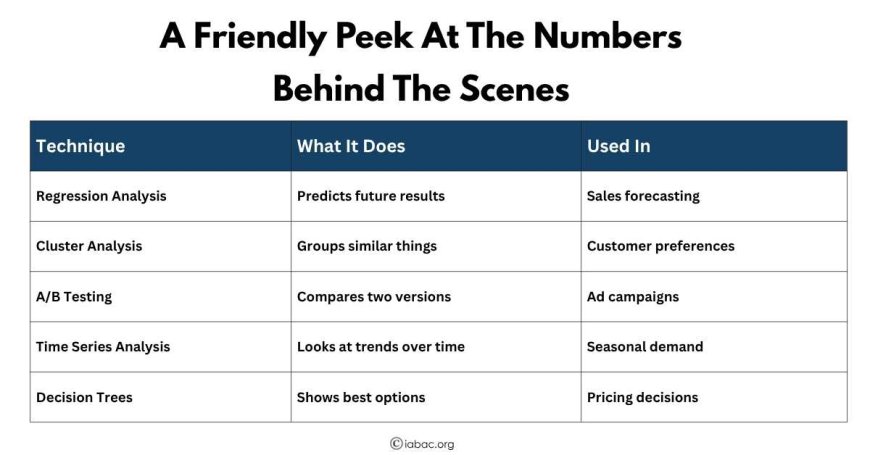
These are just tools that help companies make sense of numbers.
Why You Should Think About a Business Analytics Certification
Having a business analytics certification is like having a golden key for smarter work.
It shows that:
- You understand how to use data
- You can turn numbers into business ideas
- You make better, data-based decisions
What You’ll Learn:
- How to collect and organize data
- Ways to build models and make forecasts
- Tools like Excel, Python, Power BI, Tableau, and SQL
- Real business examples and case studies
And yes, you’ll finally understand what those graphs in meetings really mean.
Jobs You Can Get with Business Analytics
With a business analytics certification, you can apply for roles like
- Business Analyst
- Data Analyst
- Product Analyst
- Marketing Analyst
- Operations Analyst
- Data Scientist (with extra skills)
Businesses of all types need these skills today.
How Companies Train Their Teams
Many companies now send their employees for business analytics certification because:
- It helps staff make smarter decisions
- Teams become more confident with data
- It reduces guesswork and errors
And honestly, nobody wants to depend on old Excel tricks anymore.
A Simple Look at Predictive Models in Action
|
What Goes In |
Type of Model |
What Comes Out |
|
Age, gender, shopping history |
Logistic Regression |
Chance of buying again |
|
Season, offers, past sales |
Time Series (ARIMA) |
Future sales forecast |
|
Reviews, comments, social sentiment |
Machine Learning + NLP |
Public opinion score |
These help companies act before things go wrong.
Some Numbers
- 90% of the world’s data was created in the last 2 years (yes, mostly cat videos)
- Companies using analytics make decisions 5x faster
- Data-focused companies grow 30% faster
So yes, analytics in business is more powerful than you might think.
You Don’t Need to Be a Data Genius
Analytics in business is not just for tech experts. It’s for:
- People who want to understand their customers better
- Teams that want fewer errors and smarter choices
- Anyone looking to grow in their career
You don’t need to love math. You just need curiosity and the right guidance. With a good business analytics certification, you can start making data work for you.
Ready to Get Started?
Check out IABAC’s trusted business analytics certification programs. Whether you're looking to improve your career, help your team, or just finally understand those dashboard charts—this is your moment.
Let data work for you—not against you.