

























































How to Clean Data for Beginners
Learn easy data cleaning! This simple guide shows how to fix errors, handle missing data, and get your data ready for analysis. Perfect for beginners


As someone with years of experience working with data, I can tell you how important data cleaning is for anyone who wants to become a successful data analyst. If you're just starting, learning how to clean data is a key skill you'll need to use every day. Whether you're working toward a Data Analyst Certification or a Data Science Certification, understanding how to clean and prepare data will set you on the right path. Clean, reliable data is the backbone of any meaningful analysis. Cover the basics of data cleaning so you can handle your tasks with confidence and accuracy.
What is Data Cleaning
Data cleaning is the process of finding and fixing (or removing) errors, inconsistencies, and inaccuracies in a dataset. This ensures that the data is correct, complete, and ready to use.
Why is Data Cleaning Important?
Data cleaning is crucial for several reasons:
- Accuracy: Raw data often contains mistakes like missing values, outliers, or duplicates, which can lead to wrong results.
- Efficiency: Clean data makes analysis easier and smoother.
- Better Decisions: Reliable, clean data allows businesses to make informed and effective decisions.
Step-by-Step Data Cleaning Process
Step 1: Understand Your Data
Before you clean the data, you need to understand it. This involves:
- Exploring the dataset: Look at the columns, data types, and what each column means.
- Identifying your goal: Know what you're trying to achieve with the data. This will guide your cleaning process.
Tools like Python (with libraries such as Pandas), Excel, or R can help you get a summary of your dataset.
Example in Python using Pandas:
Python
import pandas as pd
df = pd.read_csv('your_dataset.csv')
print(df.info()) # Summary of data types and missing values
print(df.describe()) # Basic statistics for numerical columns
Step 2: Handle Missing Data
Missing data is a common issue in datasets. It can happen due to errors in data entry or system issues. Here are a few ways to handle it:
- Remove missing data: If there’s a lot of missing data in a column or row, it might be best to remove it. But be careful not to lose important information.
python
df.dropna() # Removes rows with missing values
df.dropna(axis=1) # Removes columns with missing values
- Fill in missing values: If there’s only a small amount of missing data, you can replace it with the mean, median, or mode of the column.
python
df['column_name'].fillna(df['column_name'].mean(), inplace=True) # For numerical data
df['column_name'].fillna(df['column_name'].mode()[0], inplace=True) # For categorical data
- Flag missing values: Sometimes, it’s useful to create a new column that shows whether data was missing, so you can track it.
Step 3: Handle Duplicates
Duplicates can distort your analysis, so it’s important to remove them.
Find duplicates:
Python
duplicates = df.duplicated()
print(duplicates.sum()) # Prints the number of duplicate rows
Remove duplicates:
python
df.drop_duplicates(inplace=True)
Step 4: Deal with Outliers
Outliers are values that are much higher or lower than the rest of the data. They can affect your analysis, so you need to handle them carefully.
Ways to handle outliers:
- Remove outliers: If the outlier is a mistake, it’s best to remove it.
- Cap outliers: Instead of removing them, you can limit them to a maximum or minimum value.
- Transform data: Use techniques like log transformation to reduce the effect of extreme values.
Example (removing outliers using the Interquartile Range in Python):
Python
Q1 = df['column_name'].quantile(0.25)
Q3 = df['column_name'].quantile(0.75)
IQR = Q3 - Q1
df = df[~((df['column_name'] < (Q1 - 1.5 * IQR)) | (df['column_name'] > (Q3 + 1.5 * IQR)))]
Step 5: Standardize Data
Standardizing data means ensuring consistency in your dataset. For example, if you have a "Country" column, you want to make sure the country names are consistent (e.g., always using "USA" instead of "United States").
Correct data types: Make sure each column has the correct data type, such as integers for numerical data or DateTime for date columns.
python
df['column_name'] = pd.to_datetime(df['column_name']) # Convert to DateTime
- Fix formatting issues: Ensure text is formatted consistently, and that numeric values are stored as numbers.
- Handle categorical data: Make sure categories are labeled correctly and are consistent.
Step 6: Validate Your Data
After cleaning, it’s important to check that everything is correct. This includes:
- No missing or duplicate values.
- Correct data types in each column.
- Data is within the expected ranges.
You can also use simple visualizations like histograms or scatter plots to confirm that the data looks clean and ready for analysis.
Is Data Science and Analytics a Good Career
Data analytics and data science play vital roles for businesses that want to stay competitive, improve decisions, and drive growth. Careers in these fields are in high demand, offering strong salaries, a variety of roles, and growth opportunities. Here’s a look at the benefits, skills, challenges, and paths within data science and analytics.
1. Understanding Data Science vs. Data Analytics
Though related, data science and data analytics have different focuses:
- Data Science deals with predicting outcomes and insights using techniques like machine learning, data modeling, and statistical analysis.
- Data Analytics focuses on analyzing historical data to find trends, insights, and patterns for making informed decisions. It’s often divided into types like descriptive, diagnostic, predictive, and prescriptive analytics.
2. Growing Demand for Data Science and Analytics Careers
The need for skilled professionals in data analytics and data science is rapidly growing due to:
- Data Explosion: Companies collect more data than ever, creating a need for those who can organize and analyze it.
- AI and Machine Learning: Businesses need data experts to improve operations and customer experiences with AI.
- Data-Driven Decisions: Organizations now rely on data insights to shape their strategies and boost efficiency.
The U.S. Bureau of Labor Statistics projects a 36% job growth in this field between 2021 and 2031, and it spans industries like tech, healthcare, finance, and retail.
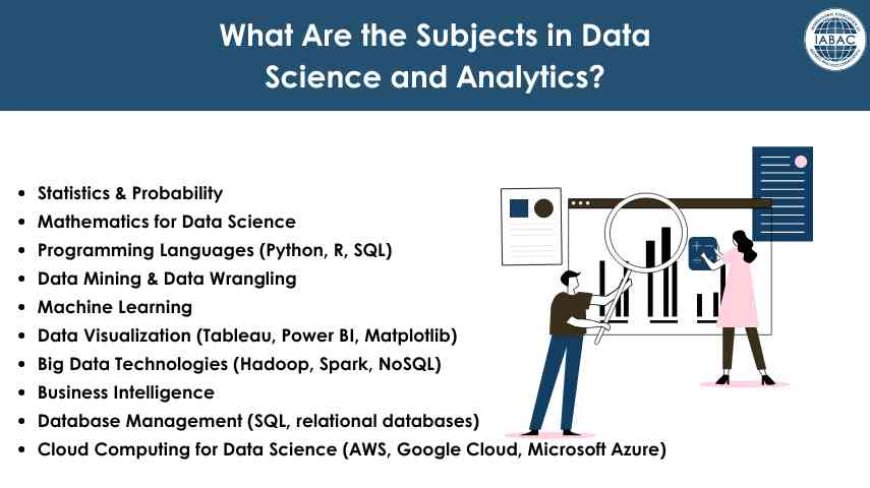
3. Key Skills for Data Science and Analytics Careers
Data science and analytics require a mix of technical and soft skills:
- Programming: Skills in Python, R, and SQL are essential.
- Statistics: Strong statistical knowledge ensures reliable data interpretation.
- Machine Learning: Data scientists benefit from knowing ML techniques like supervised learning and neural networks.
- Data Processing: Cleaning and prepping data is a must for meaningful analysis.
- Data Visualization: Tools like Tableau and Power BI help make complex insights clear.
Staying updated is crucial, as new tools and methods are introduced frequently.
4. Career Paths in Data Science and Analytics
Data science and analytics offer varied roles with unique responsibilities:
- Data Analyst: Analyzes data to create reports and visualizations.
- Data Scientist: Builds predictive models and runs experiments.
- Machine Learning Engineer: Focuses on applying machine learning models in real applications.
- BI Analyst: Develops reports to support business decisions.
- Data Engineer: Manages and optimizes data pipelines and storage systems.
- Chief Data Officer (CDO): Leads a company’s data strategy at an executive level.
These roles have growth opportunities and options for specialization.
5. Advantages of a Data Science and Analytics Career
Here are some reasons why data analytics and data science make appealing careers:
- Good Pay: Entry-level data analysts earn about $60,000, while data scientists can make over $100,000.
- Job Security: Demand continues to grow, so there’s strong job security.
- Flexibility: Opportunities span various industries, offering flexibility and diverse options.
- Impactful Work: Data insights influence important business decisions and strategies.
- Remote Work: Many data roles offer flexible or remote options, ideal for work-life balance.
6. Challenges in Data Science and Analytics
Though rewarding, these careers come with challenges:
- Continuous Learning: Technology advances quickly, so constant upskilling is needed.
- Complex Data: Real-world data often requires intensive cleaning and preparation.
- Multidisciplinary Skills: Combining technical, analytical, and communication skills can be demanding.
- Result Pressure: Companies expect data initiatives to drive results, often with tight deadlines.
- Ethical Considerations: Privacy and ethical concerns are crucial, especially in sensitive data areas.
7. Future of Data Science and Analytics
The future of data analytics and data science is bright, with trends like:
- Automated Machine Learning (AutoML): Making ML easier and more accessible.
- Explainable AI: Emphasizing transparency to build trust in AI.
- Data as a Business Asset: Companies see data as a valuable strategic resource.
- Specializations: Opportunities are growing in areas like cybersecurity, IoT, and blockchain.
8. Steps to Start in Data Science and Analytics
If interested in this field, here are steps to get started:
- Learn Basics: Start with Python, SQL, and statistics.
- Take Courses: Online platforms and bootcamps offer structured learning.
- Build a Portfolio: Work on projects to showcase your skills.
- Get Experience: Internships or part-time roles provide hands-on practice.
- Network: Connect with others in the field on LinkedIn and attend events.
- Earn Certifications: Certifications in data science or machine learning can enhance your resume.
A career in data analytics and data science offers solid opportunities, good pay, and interesting work. While the field requires a commitment to learning and adapting, it provides a rewarding path for those interested in data, statistics, and technology. As data continues to shape decision-making, data science and analytics professionals will play a key role in helping businesses succeed.