























































Looking to Build a Career in Data Science? Start Here
Looking to build a career in data science? Start here with guidance on skills, tools, and industry knowledge to begin your path in this expanding field.


Every time you shop online, watch a show, or use a fitness app, data is being generated. Businesses depend on this data to understand customer needs, improve services, and make better decisions. The people who make sense of this data are called data scientists.
Over the past few years, data science has become one of the most sought-after careers. Companies across industries are hiring professionals who can use data to solve problems. If you want to enter this field, the journey may seem overcome at first. But with the right roadmap, you can start building your career in data science step by step.
What is Data Science?
At its core, data science is the practice of turning raw information into useful knowledge. It combines three main areas:
-
Mathematics and Statistics – to analyze data and find patterns.
-
Programming – to handle and process data using tools like Python, R, and SQL.
-
Domain Knowledge – to apply insights to a specific area such as finance, healthcare, or retail.
In simple words, data science allows organizations to make informed decisions instead of relying on guesses.
Everyday Uses of Data Science
-
Entertainment: Platforms like Netflix recommend shows based on your viewing habits.
-
Banking: Banks track transactions to detect fraud in real time.
-
Healthcare: Hospitals use predictive analytics to improve patient care.
-
E-commerce: Online stores suggest products that match your preferences.
These examples show how data science has become part of our daily lives.
Why Choose a Career in Data Science?
The demand for skilled professionals in this field is growing rapidly. Here are a few reasons why many people are choosing data science as a career path:
-
High demand across industries: Almost every sector now relies on data to make decisions.
-
Variety of roles: From data analyst to machine learning engineer, there are many paths to explore.
-
Growth opportunities: The field continues to evolve, opening doors to advanced positions.
-
Flexibility: Many data science jobs can be done remotely, creating global opportunities.
Career Opportunities in Data Science
A career in data science is not limited to a single role. Depending on your strengths and interests, you can pursue different paths.
Common Job Roles
-
Data Analyst – Works with data to create reports, dashboards, and insights.
-
Data Scientist – Builds models to predict future trends and behaviors.
-
Machine Learning Engineer – Develops algorithms that power AI applications.
-
Business Intelligence Analyst – Focuses on turning data into business strategy.
-
AI Engineer – Works on advanced systems like chatbots and natural language processing.
Where You Can Work
-
Healthcare: Early disease detection and patient monitoring.
-
Finance: Fraud detection, credit scoring, and algorithmic trading.
-
Retail & E-commerce: Personalized recommendations and pricing optimization.
-
Marketing: Customer segmentation and campaign analysis.
-
Government: Smart city planning and public policy design.
With so many options, you can choose a path that matches your interests and career goals.
Skills You Need to Succeed
To build a successful career in data science, you need both technical skills and soft skills.
Technical Skills
-
Programming: Learn Python or R for data analysis. SQL is essential for working with databases.
-
Mathematics and Statistics: Understand probability, regression, and hypothesis testing.
-
Machine Learning: Learn how algorithms like decision trees or neural networks work.
-
Data Visualization: Present your insights with charts and dashboards.
Tools You May Use
-
Visualization: Tableau, Power BI.
-
Machine Learning: TensorFlow, PyTorch.
-
Cloud Platforms: AWS, Google Cloud, Microsoft Azure.
Soft Skills
-
Problem-Solving: Identifying business challenges and using data to solve them.
-
Communication: Explaining findings clearly to non-technical audiences.
-
Critical Thinking: Questioning results and ensuring they are accurate.
Employers value professionals who can combine technical know-how with the ability to explain and apply results in practical ways.
Certifications: Why They Matter and How IABAC Helps
Learning skills on your own is possible, but certifications can add structure and credibility to your journey. One certification body that stands out is IABAC (International Association of Business Analytics Certification).
What is IABAC?
IABAC is a global organization that provides certifications in data science, AI, and analytics. These certifications are recognized across industries and are designed to test not just knowledge, but also the ability to apply concepts in real-world situations.
Why Choose IABAC?
-
Global Recognition: Employers across different countries recognize IABAC certifications.
-
Practical Exams: Many certifications involve solving case studies instead of answering only multiple-choice questions.
-
Flexible Entry: You don’t always need prior experience to get started.
-
Digital Badges: After completing, you get a verifiable badge to share on LinkedIn or your resume.
Popular IABAC Certifications
-
Certified Data Scientist (CDS) – Covers core data science skills.
-
Certified Machine Learning Expert – Focused on machine learning techniques.
-
Certified Data Engineer – Focused on handling and managing data infrastructure.
For someone starting out, pursuing an IABAC certification is a solid way to demonstrate skills and gain confidence.
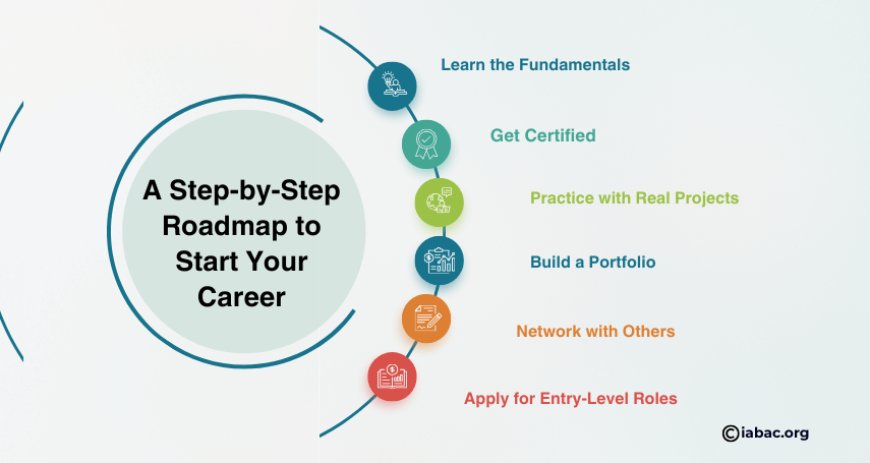
A Step-by-Step Roadmap to Start Your Career
Step 1: Learn the Fundamentals
Begin with programming basics, especially Python or R, and learn SQL for databases. At the same time, revise key concepts in mathematics and statistics.
Step 2: Get Certified
Once you have a foundation, consider taking an IABAC certification. It will give you a clear learning path and a credential to prove your knowledge.
Step 3: Practice with Real Projects
Work on datasets from sources like Kaggle. Try building models to predict sales, classify images, or analyze text reviews.
Step 4: Build a Portfolio
Showcase your projects on GitHub or a personal website. Employers want to see practical work, not just certificates.
Step 5: Network with Others
Join online communities, participate in hackathons, and connect with professionals on LinkedIn. Networking often leads to job opportunities.
Step 6: Apply for Entry-Level Roles
Look for junior positions such as data analyst or business analyst. These roles give you practical experience and help you grow into more advanced roles over time.
Common Challenges and How to Overcome Them
Too Many Learning Resources
It’s easy to get lost among tutorials, courses, and books. The solution is to pick one roadmap and follow it consistently, such as preparing for an IABAC certification.
No Prior Experience
Employers often ask for experience, but you can overcome this by creating personal projects that show your skills. Even small projects demonstrate your ability.
High Competition
The field is popular, so competition is strong. One way to stand out is by specializing in a domain, like finance or healthcare.
Future of Data Science Careers
The future looks bright for data science professionals. Here are some trends that will shape the industry:
-
AI and Automation: Routine tasks will be automated, so professionals will focus on advanced problem-solving.
-
Ethics and Privacy: There will be more demand for responsible data handling and ethical AI.
-
Domain-Specific Roles: Specialists with both technical and industry knowledge will be highly valued.
-
Remote Work: More companies will hire data scientists who can work from anywhere.
Building a career in data science is not about mastering everything at once. It’s about taking one step at a time. Start by learning programming and statistics, then practice with projects. Add credibility to your profile with a certification like IABAC, and build a portfolio that showcases your work.
The journey may feel challenging, but each small step moves you closer to becoming a data professional. Data science is a field with endless opportunities, and with consistent effort, you can make your place in it.