















































Feeling Lost Choosing the Best Data Science Certification? Start Here
Choosing a data science certification can feel overwhelming. Learn what to consider including skills coverage industry value and career goals.

You opened ten tabs. Compared fifteen courses. Watched endlesstop certifications videos. And yet… here you are, still unsure which Data Science Certification is actually worth your time, money, and sanity.
If this sounds familiar, you’re not alone. Choosing the right path in data science can feel like standing in front of a buffet with 200 dishes—everything looks good, but you’re not sure what will actually satisfy your hunger (or your career goals).
Let’s fix that. This guide will walk you through everything—clearly, honestly, and practically—so you can move from confusion to confidence.
Why Choosing the Right Data Science Certification Feels So Hard
Let’s start with the truth:
The problem isn’t you. It’s the overload.
Today, the internet is filled with:
- Hundreds of data science certificate programs
- Conflicting advice from blogs and influencers
- Outdated course content
- Certifications that sound impressive but add little value
Here’s a simple breakdown of why most people feel stuck:
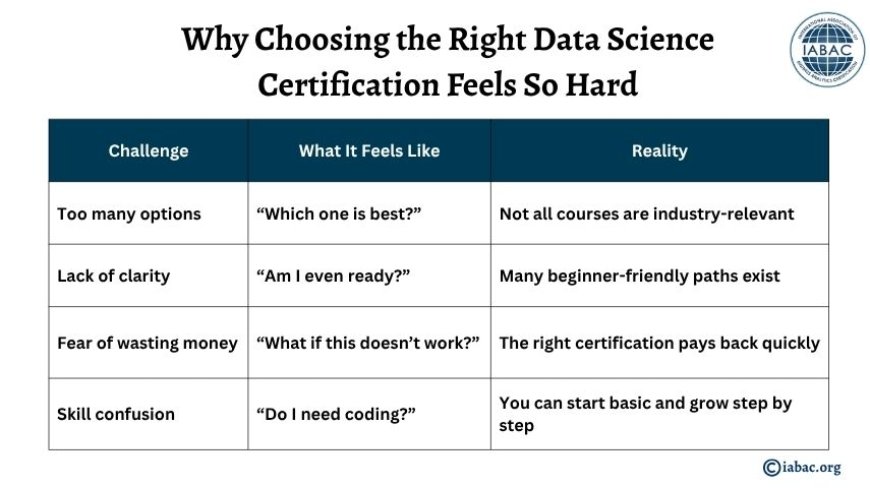
And while you’re thinking about all this, someone else just picked a course and started learning. That’s the only difference.
What is Data Science Certification (And Why It Matters in 2026)
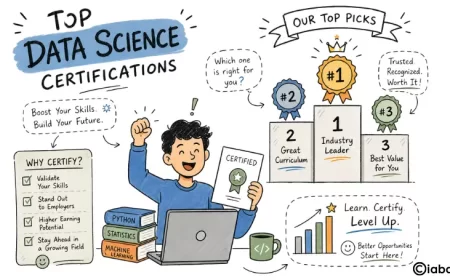
A Data Science Certification is more than just a badge. It’s proof that you can:
- Work with real data
- Build models
- Extract insights
- Solve business problems
In 2026, companies are not just hiring based on degrees—they are hiring based on skills + proof of skills.
That’s where certification comes in.
Why certifications matter now more than ever:
- Over 80% of companies rely on data-driven decisions
- Data-related roles are among the fastest-growing globally
- Certified professionals are often prioritized in hiring
Without certification, your resume says:I learned something.
With certification, your resume says:I can do the job.
The Reality Check: Do You Actually Need a Data Science Certification?
Let’s not pretend everyone needs it. So here’s the honest answer:
You should consider a certification if:
- You’re starting from scratch
- You want to switch careers
- You need structured learning
- You want credibility in the job market
You might not need it if:
- You already have strong real-world project experience
- You’re already working as a data professional
But here’s the catch:
Even experienced professionals are now upgrading their profiles with certifications to stay competitive.
Types of Data Science Certifications (And What They Actually Mean)
This is where most confusion happens. Let’s simplify it.
1. Foundation Level
Best for beginners who are just entering Data Science
What you learn:
- Basics of Python
- Introduction to statistics
- Data handling
- Simple visualizations
Think of it as learning how to walk before running.
2. Developer Level
This is where things get interesting.
What you learn:
- Writing data pipelines
- Building models
- Data processing techniques
This level prepares you for real-world tasks.
3. Data Scientist Level
Now you’re stepping into professional territory.
What you learn:
- Advanced machine learning
- Predictive modeling
- Business problem-solving
This is where you start thinking like a data science manager, not just a learner.
4. Specialized Certifications
These focus on areas like:
- Machine Learning
- AI
- Deep Learning
Perfect if you want to go deeper into specific domains.
Skills You Actually Gain (Not Just What Courses Promise)
Let’s cut through the marketing and talk about real skills.
|
Skill Area |
What You Learn |
Why It Matters |
|
Programming |
Python, SQL |
Core tools for data work |
|
Statistics |
Probability, analysis |
Helps make decisions from data |
|
Machine Learning |
Algorithms, models |
Predict outcomes |
|
Visualization |
Charts, dashboards |
Communicate insights |
|
Problem Solving |
Real-world thinking |
What companies actually need |
A good Data Science Certification ensures you don’t just watch videos—you actually build things.
How to Choose the Right Data Science Certificate Program
Now comes the most important part.
Instead of asking:
Which course is the best?
Ask:
Which course is best for ME?
Use this decision matrix:
|
Factor |
What to Check |
|
Curriculum |
Does it match industry needs? |
|
Practical Work |
Are there real projects? |
|
Certification Value |
Is it recognized globally? |
|
Flexibility |
Can you learn at your pace? |
|
Career Support |
Does it help with jobs? |
If a course fails in 2 or more areas, skip it.
Why IABAC is a Trusted Choice
When exploring data science certificate programs, one name that consistently stands out is IABAC.
The IABAC domain (www.iabac.org) offers certifications designed with industry alignment in mind.
What makes it different:
- Globally recognized certifications
- Structured learning paths from beginner to expert
- Focus on real-world applications
- Industry-relevant curriculum
Instead of overwhelming you, it gives you a clear roadmap.
Career Opportunities After Data Science Certification
Let’s talk about what really matters—jobs.
After completing a strong certification, you can aim for roles like:
|
Role |
What You Do |
Growth Potential |
|
Data Analyst |
Analyze and visualize data |
Entry to mid-level |
|
Data Scientist |
Build predictive models |
High growth |
|
Machine Learning Engineer |
Develop AI systems |
Very high demand |
|
Data Engineer |
Manage data pipelines |
Stable and high-paying |
|
Data Science Manager |
Lead teams and projects |
Leadership role |
Yes, becoming a data science manager is possible—but it takes time, experience, and the right foundation.
Salary Insights (Because Let’s Be Honest, It Matters)
Here’s a general idea of what you can expect:
|
Role |
Average Salary Range |
|
Entry-Level Data Analyst |
₹4L – ₹8L |
|
Data Scientist |
₹8L – ₹20L |
|
ML Engineer |
₹10L – ₹25L |
|
Senior Roles |
₹20L+ |
The gap between certified and non-certified professionals is often significant.
Common Mistakes People Make (Avoid These!)
Let’s save you from regret.
Mistake 1: Choosing based on price: Cheap courses often cost more in the long run.
Mistake 2: Ignoring practical learning: Watching videos ≠ learning.
Mistake 3: Jumping into advanced topics too early: Start simple. Build gradually.
Mistake 4: Not completing the course: Half knowledge = zero results.
A Simple Roadmap to Get Started
Here’s a no-confusion plan:
Step 1: Start with basics: Learn Python + statistics
Step 2: Enroll in a structured program: Choose a reliable data science certificate program
Step 3: Build projects: Apply what you learn
Step 4: Get certified: Validate your skills
Step 5: Apply for jobs: Show your work + certification
What Makes Someone Successful in Data Science?
It’s not just intelligence.
It’s consistency.
People who succeed:
- Practice regularly
- Build projects
- Stay curious
- Don’t quit halfway
And yes, they also felt confused in the beginning.
You’re Not Behind, You’re Just Starting
If you’ve been feeling lost, stuck, or overwhelmed—good.
It means you care.
Every expert in Data Science once sat where you are now—
confused, scrolling, comparing, overthinking.
The difference?
They started anyway.
A good Data Science Certification won’t magically change your life overnight.
But it will give you direction, structure, and confidence.
And sometimes, that’s all you need to move forward.