
















































IABAC Certification Review for US Professionals: 2026 Edition
The IABAC Certification Review for US Professionals 2026 Edition. Learn about benefits, career value, and certification insights.

This IABAC certification review for US professionals cuts through the noise on one of the more unusual credentials in the 2026 data science market. Every working data professional in the US faces the same problem at some point: dozens of certifications claim global recognition, and none make it easy to figure out which ones hiring managers actually care about. That decision gets harder when a credential comes from outside the typical US tech ecosystem. IABAC, the International Association of Business Analytics Certification, is exactly that kind of credential. It is built on the European Commission's Edison® Data Science Framework, which is why the credential deserves a clear-eyed evaluation for US professionals in 2026.
This review covers everything you need to make that decision: what the credential actually is, what US employers think of it, what the exam looks like in practice, what it costs, and how it stacks up against domestic alternatives. No hype in either direction.
What IABAC is and how the Edison® framework sets it apart
The credential architecture behind IABAC
IABAC is not a training company that added a badge to its product lineup. It is a standalone certification body that describes itself as one of the first globally registered organizations dedicated to data science and business analytics credentialing, and its standard maps directly to the EU Edison® Data Science Framework. That framework is a structured, government-backed competency model that defines what a data scientist should know at each professional level, independent of any specific vendor or software platform. In practice, this means the competency standard IABAC uses was not designed around AWS services, Google Cloud products, or any single company's toolset. It was designed around the profession itself.
Why a European framework matters for a US career
A US-centric credential like Google Data Analytics or an AWS specialty certification validates your skills within one vendor's ecosystem. The Edison® framework, by contrast, was built to transfer across borders, industries, and employer types. It organizes data science competency into groups covering analytics, engineering, data management, domain knowledge, and scientific methods, and it aligns with European qualification standards including e-CF and ESCO. For US professionals working at multinational firms, or anyone building a career with global mobility in mind, that structural portability is a real advantage that domestic vendor certs do not offer. It is worth understanding, not overstating.
IABAC certification for US professionals: employer recognition in 2026
What job boards and LinkedIn actually show
The direct answer is that IABAC and the CDS DS2050 designation do not appear as frequent requirements in US data science job postings. Credentials like CAP, SAS, Microsoft Azure Data Scientist Associate, IBM Data Science Professional Certificate, and Google Cloud certifications show up far more consistently on preferred qualification lists in 2026. This is a market familiarity gap, not necessarily a credential quality gap. Job posting data reflects what recruiters already recognize, and most US-based hiring teams built their shortlists around domestic and vendor-backed credentials before IABAC had significant North American presence.
IABAC's About page reports on the organization's geographic reach and the markets where its certifications are referenced, including the US, UK, Singapore, India, and the Middle East, figures the organization self-publishes and that have not been independently verified through third-party employer adoption studies. The honest read: some employers will recognize it, most general US tech hiring teams will not actively seek it.
Where IABAC gains real traction in US hiring
The credential carries more weight in specific contexts than in general data science pipelines. Mid-level professionals listing it on LinkedIn use it as a domain-specific differentiator, particularly in roles where industry expertise matters as much as technical skill. Healthcare analytics, finance data roles, and HR analytics positions are areas where an industry-specific competency signal can outperform a generic vendor badge, roles where demonstrating business judgment alongside technical ability is a stronger hire signal than platform familiarity. US companies with international hiring panels, especially those with European operations or headquarters, are also more likely to encounter the Edison® framework through their global HR teams.
CDS DS2050 exam format, syllabus, and realistic difficulty
The 8-hour open-book project: what to expect
The Certified Data Scientist exam is a project submission, not a multiple-choice test. Candidates have 8 hours to complete an open-book assessment evaluated across three dimensions: a project summary with business recommendations, machine learning model performance, and exploratory data analysis quality. You upload your submission through IABAC's platform, and plagiarism policies apply, so all referenced work must be properly cited. This format is a meaningful departure from most US certifications, and that distinction matters for how you prepare and how employers interpret the credential.
Project-based assessments generally demonstrate applied skill more effectively than knowledge recall tests. A submitted data science project shows that a candidate can handle real tradeoffs and produce the kind of work product the job actually requires, analysis, recommendations, and documented methodology. IABAC provides evaluation criteria through its exam guidelines and published syllabus, see the CDS syllabus for the full topic breakdown, so candidates know which dimensions carry the most weight before they submit. That transparency is the argument for preferring this format, and it is a legitimate one.
What the syllabus covers and how deep it goes
The CDS syllabus spans data science foundations, descriptive through prescriptive analytics, hypothesis testing, supervised and unsupervised machine learning, Python and R, SQL, business case framing, and deep learning foundations. The breadth is solid for professionals entering or solidifying foundational-to-mid-level data science competency. What the syllabus does not address in depth is advanced MLOps, model governance, or production-level AI engineering. Senior data engineers seeking credentials in those areas will find this exam too foundational. Working analysts, domain professionals, and early-to-mid-career data scientists looking to formalize their skills with a structured competency credential will find the syllabus aligns well with that goal.
IABAC certification for US professionals: cost and ROI
Breaking down the real cost
IABAC does not publish its base exam fee prominently on its main pages, which makes direct cost comparison harder than it should be. Training is not mandatory, but IABAC recommends going through an Authorized Training Partner, stating that candidates who use approved providers report higher pass rates. If you take the self-study route, your cost is the certification fee plus your own study materials. If you go through a training provider, realistic pricing ranges from around $359 to $519 for lower-cost online programs (based on Skillogic's published rates) up to $1,000 to $3,000 for more comprehensive career-focused programs. Most US candidates should plan for $500 to $1,500 total, depending on the preparation route they choose.
Salary data and career movement after certification
IABAC's own published content reports that certified data analysts at entry level earn approximately $60,000 compared to $50,000 without certification, a roughly 20% uplift. For mid-career professionals, certified ranges are cited at $70,000 to $90,000 versus $60,000 to $75,000 for non-certified peers. Role progressions reported include moves into business analyst, analytics manager, and data scientist titles. These figures come from IABAC's own content, not from independent salary surveys. Treat them as directional indicators rather than verified benchmarks. For independent context, BLS data shows a median annual wage of $112,590 for US data scientists (Bureau of Labor Statistics, Occupational Employment Statistics), and Glassdoor reports an average of approximately $155,600 in total compensation; further independent salary discussion is available in resources such as the Syracuse iSchool data science salary guide. Across the industry broadly, the certification salary premium is not well-documented in independent research; that caveat applies to IABAC and most domestic credentials alike.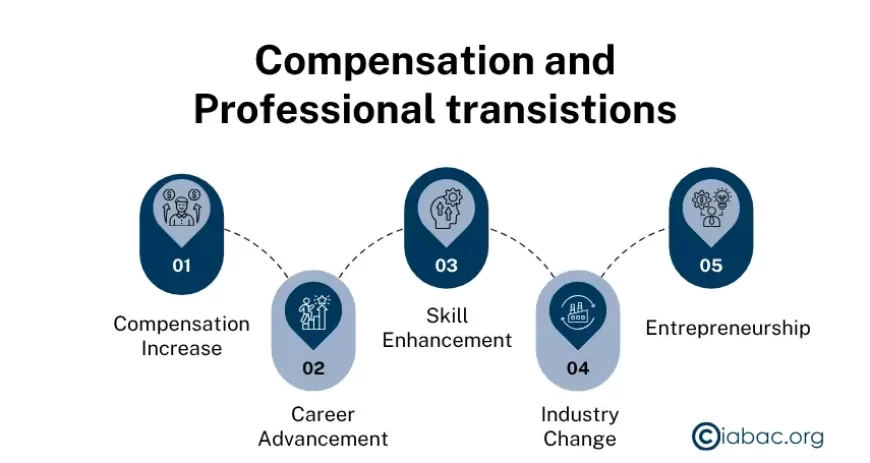
IABAC vs domestic alternatives: a side-by-side comparison
Where US-centric certifications have the edge
Google Data Analytics Certificate, IBM Data Science Professional Certificate, AWS Machine Learning Specialty, and Microsoft Azure Data Scientist Associate certifications outperform IABAC in specific US hiring scenarios. They appear more frequently in job postings, carry stronger name recognition with US HR teams, and have larger domestic alumni networks. In tech company hiring pipelines, especially at companies with heavy cloud infrastructure commitments, vendor certs signal direct platform competence that hiring managers can map to team needs immediately. At the entry level, recognizable brand names also carry weight in ATS screening, where recruiters typically spend limited seconds on each resume that clears the initial filter.
Where IABAC holds a distinct advantage
The Edison® framework gives IABAC a competency standard that is not tied to any vendor's product roadmap. When AWS updates its services or Google restructures its certification tracks, those credentials require renewal on the vendor's schedule. An Edison®-aligned credential reflects professional competency, not platform familiarity. IABAC also offers domain-specific certifications in healthcare, finance, HR, and marketing analytics that fill a gap most general tech certs leave open. A healthcare administrator or finance manager cannot easily map an AWS ML Specialty to their day-to-day responsibilities. An IABAC domain cert addresses that context directly. For more on the Edison® Data Science Framework and its design goals, see commentary and summaries such as the overview at KDnuggets on the Edison framework and the original framework documents published for the EU research community.
For most professionals, this is not an either/or decision. IABAC pairs well alongside a vendor cert. The combination signals both applied business judgment and platform-specific technical skill, a more complete profile than either credential provides on its own.
Who should get IABAC in 2026 and what to do next
The professional profiles that benefit most
IABAC delivers the strongest return for four professional types. Mid-career professionals formalizing existing analytics skills get a structured competency credential that reflects what they already do. Domain specialists in finance, healthcare, or HR get a certification tied directly to their industry context rather than a generic platform badge. Professionals at multinational firms benefit because Edison® alignment carries real weight with international hiring panels. Candidates who want a project-based assessment come away with submitted work they can discuss in interviews, something multiple-choice exams cannot produce. These profiles share a common thread: they need a competency credential, not a vendor badge.
Be equally honest about who should look elsewhere. Early-career candidates targeting pure tech hiring pipelines where Google, IBM, or Microsoft brand recognition dominates will get faster traction from those credentials. Senior engineers needing advanced content in MLOps, AI governance, or production model deployment will find IABAC's CDS syllabus too foundational for their career stage.
How to move forward
If the profile above matches your situation, the practical next step is either direct enrollment through IABAC's platform or connecting with an Authorized Training Partner for structured preparation. IABAC's ATP program covers training providers globally, and going through one gives you structured learning materials, instructor support, and the preparation pathway IABAC itself recommends for better outcomes. You can start by reviewing available guidance on careers and certification pathways, for example the Careers & Certification, IABAC guidance. If you are still uncertain about fit, use one clear decision criterion: evaluate based on your industry context, your employer type, and whether global credential portability matters more to your career than vendor-specific platform recognition.
IABAC For US Professionals
This IABAC certification review for US professionals comes down to a straightforward fit assessment. IABAC is a credible, competency-backed credential with real career ROI in the right professional contexts, specifically multinational environments, domain-specific analytics roles in healthcare, finance, or HR, and careers that require portability across borders. It is not yet a mainstream requirement in US data science job postings, and that gap is worth weighing seriously before you invest time and money. The Edison® framework is a genuine structural differentiator for professionals whose careers extend beyond US borders or whose roles require domain-specific competency signals that vendor certs do not address.
If you work in healthcare analytics, financial data roles, or international business environments, IABAC deserves serious consideration. If you are targeting entry-level tech roles at US-based software companies, start with a credential that hiring managers already recognize. If you want both dimensions covered, pair IABAC with a vendor cert and you will have a more competitive profile than candidates who hold only one type of credential.
Visit IABAC's official certification page to explore the CDS DS2050 and domain-specific tracks, or reach out to an Authorized Training Partner to map out a preparation plan that fits your timeline and budget.