


























































Key Data Scientist Skills Companies Value Most?
Build strong data scientist skills companies value most. Understand key technical, analytical, and practical abilities that support data science careers.

You walk out of a data science interview feeling confident. The questions about Python, machine learning, and statistics went well. You explained your projects clearly and demonstrated your technical knowledge.
But a few days later, the response arrives: the company has selected another candidate.
Suddenly, several questions start crossing your mind.
What exactly did the company expect?
Which skills made the difference?
What are hiring managers actually looking for in a data scientist?
In many cases, the gap is not about effort or interest in the field. It is about understanding the specific combination of technical, analytical, and practical skills companies value when hiring data scientists. Organizations look for professionals who can work with complex datasets, build reliable models, communicate insights clearly, and connect data with real business decisions.
Let’s take a closer look at the key data scientist skills companies value most.
Strong Foundation in Statistics and Mathematics
Statistics and mathematics form the analytical base of data science. These subjects provide the principles needed to interpret patterns, measure uncertainty, and evaluate relationships within datasets. Without this foundation, it becomes difficult to understand how models function or determine whether analytical results are reliable.
Statistical knowledge helps professionals interpret data distributions, identify correlations, and determine whether patterns are statistically significant. Mathematics supports the development of algorithms and optimization methods used in machine learning models.
Important areas that strengthen analytical capabilities include:
-
Probability theory and statistical distributions
-
Hypothesis testing and experiment design
-
Linear algebra for handling high-dimensional datasets
-
Calculus concepts used in optimization algorithms
-
Statistical modeling techniques for predictive analysis
These concepts guide how data scientists analyze datasets and evaluate the performance of analytical models. For example, probability helps estimate the likelihood of certain outcomes, while hypothesis testing supports data-driven decisions by validating whether observed changes are meaningful.
Programming and Data Manipulation Skills
Programming skills allow data scientists to work efficiently with large datasets and automate analytical processes. Most data science tasks involve collecting data from multiple sources, cleaning it, transforming it into structured formats, and preparing it for analysis.
Popular programming languages used in data science include
-
Python for machine learning, automation, and data analysis
-
R for statistical analysis and advanced data visualization
-
SQL for querying and managing structured databases
-
Scala or Java for large-scale data processing environments
Programming enables professionals to process large volumes of information quickly. Instead of performing repetitive tasks manually, scripts and workflows can automate data preparation, feature extraction, and model training.
Data manipulation is also a critical part of programming work in data science. Professionals regularly use libraries and frameworks that simplify tasks such as cleaning and transforming datasets.
Common programming tasks include:
-
Importing data from multiple sources such as databases and APIs
-
Cleaning inconsistent or incomplete data records
-
Transforming variables into usable formats
-
Combining datasets from different systems
-
Preparing data structures for machine learning models
Data Wrangling and Preparation Expertise
Raw data rarely arrives in a format ready for analysis. Information collected from operational systems, digital platforms, or external sources often contains inconsistencies, missing values, duplicate records, and formatting differences.
Data wrangling refers to the process of transforming raw data into structured datasets suitable for analysis and modeling.
Key activities involved in data preparation include:
-
Detecting and correcting inconsistent data entries
-
Handling missing values through appropriate imputation techniques
-
Removing duplicate records that may distort analysis
-
Standardizing data formats across different sources
-
Creating derived variables that support deeper analysis
Many real-world data science projects spend a large portion of time on data preparation. When data quality is poor, even advanced machine learning models cannot produce reliable results.
Developing expertise in data wrangling helps professionals identify potential issues early and build robust analytical workflows. Clean, well-structured datasets allow models to perform more effectively and produce insights that organizations can trust.
Machine Learning and Predictive Modeling
Machine learning plays a central role in modern data science. It allows organizations to analyze historical data, identify patterns, and predict future outcomes. Companies rely on predictive models to support decision-making in areas such as marketing optimization, risk analysis, customer behavior prediction, and operational planning.
Data scientists must understand various machine learning algorithms and know when to apply them based on the nature of the problem.
Common machine learning algorithms include:

-
Regression algorithms for predicting numerical outcomes
-
Classification models for categorizing observations
-
Clustering techniques for grouping similar data points
-
Decision trees and ensemble methods for complex predictions
-
Neural networks for analyzing large and unstructured datasets
In addition to building models, professionals must evaluate their performance using appropriate metrics and validation techniques.
Model evaluation involves:
-
Splitting datasets into training and testing sets
-
Measuring model accuracy using suitable performance metrics
-
Identifying overfitting and improving generalization
-
Refining models through feature engineering and parameter tuning
Feature Engineering and Experimentation Skills
Feature engineering is often one of the most influential steps in building successful machine learning models. It involves transforming raw variables into meaningful features that improve model performance.
Well-designed features help models detect patterns more effectively and produce more accurate predictions.
Important feature engineering practices include:
-
Creating new variables from existing data
-
Encoding categorical variables into numerical formats
-
Scaling and normalizing data for model compatibility
-
Selecting the most relevant variables for training models
Experimentation is another valuable capability in data science. Professionals frequently test different hypotheses, models, or product changes to determine which approaches produce better outcomes.
Experimentation methods often include:
-
A/B testing to evaluate alternative strategies
-
Controlled experiments for product or marketing improvements
-
Comparing model performance across different datasets
-
Iteratively refining models based on experimental results
Data Visualization and Insight Communication
Data visualization helps transform complex analytical findings into clear visual representations that support understanding and decision-making.
Charts, graphs, and dashboards allow stakeholders to identify trends and patterns quickly without needing to analyze raw data.
Common visualization tools include:
-
Tableau for interactive dashboards
-
Power BI for business intelligence reporting
-
Python libraries such as Matplotlib and Seaborn
-
R tools like ggplot2 for advanced visualizations
Effective data visualization focuses on clarity and relevance. Instead of presenting every available metric, visuals highlight the insights that matter most for decision-making.
Important visualization practices include:
-
Selecting chart types that best represent the data
-
Highlighting patterns, trends, and comparisons clearly
-
Structuring dashboards for easy interpretation
-
Connecting visuals with meaningful explanations
Communication skills complement visualization by helping professionals explain analytical findings in simple terms. When insights are communicated clearly, organizations can act on them more confidently.
Big Data and Cloud Technology Skills
Organizations increasingly collect data from multiple digital sources, including mobile applications, connected devices, customer transactions, and online platforms. Managing and analyzing these large datasets requires specialized infrastructure and technologies.
Big data frameworks allow distributed processing of large datasets across multiple computing systems.
Important technologies in this area include
-
Apache Hadoop for large-scale data storage
-
Apache Spark for distributed data processing
-
Cloud platforms such as AWS, Google Cloud, and Microsoft Azure
-
Data lake and data warehouse architectures
Cloud computing environments allow organizations to store and analyze data without relying on local infrastructure. These platforms also support scalable analytics workflows that can handle increasing data volumes.
Understanding these systems helps data scientists work with large datasets efficiently and collaborate with engineering teams responsible for managing data infrastructure.
MLOps and Model Lifecycle Awareness
As organizations deploy machine learning models into production systems, managing the full lifecycle of these models becomes increasingly important. MLOps focuses on maintaining reliable, scalable, and continuously improving machine learning systems.
Understanding MLOps practices helps data scientists ensure that models remain effective after deployment.
Important aspects of model lifecycle management include:
-
Versioning models and datasets for reproducibility
-
Automating model training and deployment pipelines
-
Monitoring model performance over time
-
Detecting data drift that may reduce model accuracy
-
Updating models when new data becomes available
Professionals who understand how models operate in real production environments contribute more effectively to long-term analytics initiatives.
Business Understanding and Context Awareness
Data science delivers meaningful results when analysis aligns with organizational goals. Understanding how different industries operate helps professionals focus on analytical problems that create measurable impact.
Business awareness allows data scientists to interpret data in the correct context and identify opportunities for improvement.
Examples of data science applications across industries include
-
Retail organizations analyzing customer purchasing patterns
-
Financial institutions using predictive models for fraud detection
-
Healthcare providers analyzing patient data to improve treatment outcomes
-
Manufacturing companies applying predictive analytics for equipment maintenance
Understanding the operational context behind datasets allows professionals to design solutions that address real challenges rather than purely technical problems.
Responsible Data Usage and Ethical AI Practices
As organizations rely more on data-driven technologies, responsible data practices have become an important aspect of data science work. Data scientists must ensure that models operate fairly and that sensitive information is handled responsibly.
Important ethical considerations include:
-
Protecting personal and sensitive data
-
Identifying potential bias in datasets and models
-
Ensuring transparency in algorithmic decisions
-
Following regulatory and compliance requirements
Responsible AI practices help organizations maintain trust with customers and stakeholders. Companies therefore value professionals who understand the broader implications of data science work and apply ethical principles during model development and deployment.
Collaboration and Communication Skills
Data science projects often involve collaboration with multiple teams, including data engineers, analysts, business leaders, and product managers.
Effective collaboration ensures analytical insights align with organizational goals and operational requirements.
Important collaboration practices include:
-
Communicating technical findings in clear language
-
Working with teams to understand data requirements
-
Participating in strategic discussions supported by data insights
-
Sharing analytical knowledge with other team members
Professionals who communicate clearly help organizations translate analytical insights into actionable strategies.
Continuous Learning and Skill Development
The data science field continues to evolve as new algorithms, tools, and technologies emerge. Professionals who maintain a learning mindset remain better prepared for these changes.
Continuous development may involve:
-
Practicing with new machine learning frameworks
-
Studying emerging analytical techniques
-
Participating in industry communities and technical forums
-
Building projects that apply data science methods to real datasets
Regular learning strengthens analytical thinking and helps professionals remain adaptable as technologies evolve.
Building a successful path in data science involves more than understanding individual tools or technologies. Companies look for professionals who can apply their knowledge in practical situations, adapt to evolving data environments, and contribute meaningful insights that support business decisions.
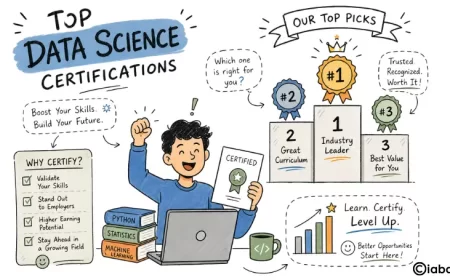
Strengthening these capabilities often requires structured learning, hands-on projects, and consistent skill development. A data science certification can support this journey by helping in learning, gaining practical exposure to industry tools, and demonstrating validated expertise to employers.