




















































Module 4: Data Science and Related Fields
Learn how data science connects with AI, machine learning, NLP, computer vision, and generative models, with real uses in healthcare and smart cities.


When Data Meets Intelligence
Data science doesn’t stand alone.
Behind every intelligent system — from medical diagnosis tools to traffic management systems — lies a network of related technologies working together.
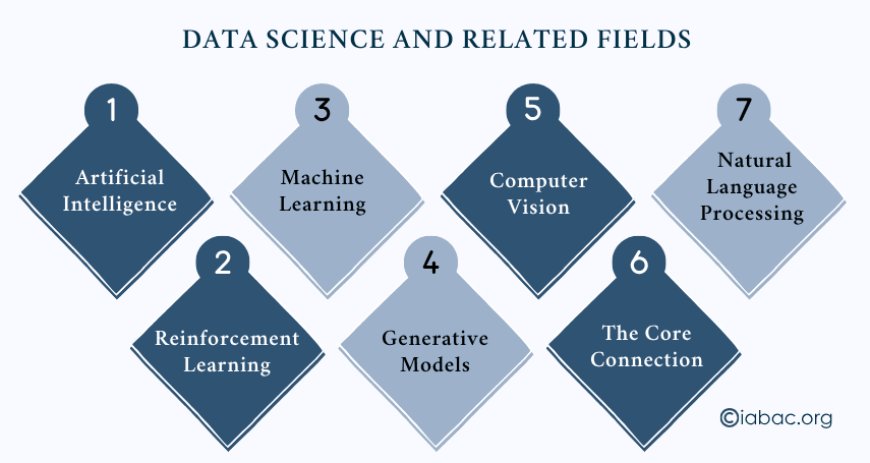
In this module, we explore data science and related fields such as Artificial Intelligence (AI), Machine Learning (ML), Computer Vision, Natural Language Processing (NLP), Reinforcement Learning, and Generative Models.
Understanding how these areas connect helps learners see the bigger picture — how data becomes intelligence and intelligence becomes action.
1. The Core Connection: Data Science, AI, and Machine Learning
To understand the relationship between data science and other fields, think of data as the foundation.
From that base, AI and ML rise as extensions that help machines think, learn, and act.
Here’s how they fit together:
-
Data Science: Gathers, cleans, and analyzes data to uncover insights.
-
Machine Learning (ML): Uses data to train algorithms that make predictions or decisions automatically.
-
Artificial Intelligence (AI): Builds systems that simulate human-like reasoning using data and ML models.
A simple example:
Netflix collects user data (data science), predicts viewing preferences (machine learning), and delivers personalized recommendations (AI).
These technologies overlap, but each plays a distinct role in creating intelligent systems that learn from data.
2. Artificial Intelligence — The Mind of Modern Technology
Artificial Intelligence (AI) aims to create systems that mimic human reasoning, perception, and problem-solving.
AI is all around us:
-
Virtual assistants that understand voice commands
-
Fraud detection systems in banking
-
Smart medical tools that detect diseases early
In healthcare, AI helps doctors analyze vast amounts of patient data, improving accuracy and speed in diagnosis.
For example, AI models can analyze MRI scans to detect early signs of brain tumors — assisting doctors rather than replacing them.
AI relies on data science to collect and prepare high-quality datasets and on machine learning to recognize patterns within them.
3. Machine Learning — Teaching Systems to Learn from Data
Machine Learning is a branch of AI that enables computers to learn patterns and make predictions without explicit programming.
It forms the bridge between data and intelligence.
Common types of ML:
-
Supervised learning: Models learn from labeled data (like predicting patient risk based on medical history).
-
Unsupervised learning: Finds patterns in unlabeled data (like grouping patients with similar symptoms).
-
Reinforcement learning: Learns through trial and feedback (like improving treatment recommendations over time).
In healthcare, ML algorithms can predict which patients are at higher risk of developing chronic conditions.
By analyzing past data, they help doctors act early — improving patient outcomes and reducing costs.
4. Computer Vision — Helping Machines See and Understand Images
Computer Vision allows machines to process and interpret visual information.
It’s what enables technologies like:
-
Facial recognition
-
Self-driving cars
-
Medical image analysis
In healthcare, computer vision models analyze X-rays and CT scans to detect fractures, infections, or abnormalities.
The process involves:
-
Collecting labeled medical images (data science)
-
Training models to recognize visual patterns (machine learning)
-
Integrating results into AI systems for doctors to review
Computer vision makes diagnosis faster and more consistent, particularly in areas where human specialists are limited.
5. Natural Language Processing (NLP) — Understanding Human Language
Natural Language Processing (NLP) bridges communication between humans and machines.
It allows systems to read, interpret, and respond to text or speech in natural language.
Examples include:
-
Chatbots that assist patients or customers
-
Sentiment analysis in healthcare feedback surveys
-
Medical transcription systems that convert doctor-patient conversations into structured records
In healthcare, NLP can scan thousands of patient records to find patterns or identify high-risk cases.
It saves time and ensures that valuable insights hidden in unstructured data — like handwritten notes — are not lost.
6. Reinforcement Learning — Learning by Experience
Unlike traditional ML, Reinforcement Learning (RL) focuses on learning through experience and feedback.
The algorithm tries actions, observes outcomes, and adjusts its strategy to maximize rewards — similar to how humans learn new skills.
Examples:
-
Robots learning how to walk
-
AI systems improving medical treatment strategies
-
Traffic management systems adjusting light timing to reduce congestion
In a smart city, RL can help balance energy distribution by learning patterns of demand across different times of day — optimizing usage in real-time.
7. Generative Models — Creating Something New
Generative models, including Generative Adversarial Networks (GANs) and Generative Predictive Models (GPMs), take learning a step further — they create.
These models generate new data that resembles the real world.
Examples:
-
Creating synthetic medical images for training AI systems when real data is limited
-
Generating design prototypes
-
Producing realistic visuals or text (like this article you’re reading)
In healthcare, generative models can simulate medical scans to train diagnostic tools while protecting patient privacy.
In smart cities, they can model new infrastructure layouts to test efficiency before construction.
8. Real-World Integration: Healthcare and Smart Cities
Let’s bring all these fields together with two examples — healthcare and smart cities — to see how they interact in real life.
A. Healthcare
-
Data Science collects and organizes patient data.
-
AI supports doctors with predictive insights.
-
Machine Learning identifies disease risk patterns.
-
Computer Vision analyzes medical images.
-
NLP processes clinical notes for faster diagnosis.
-
Generative Models create simulated data for safe model training.
Result: Improved diagnosis, personalized care, and faster treatment decisions.
B. Smart Cities
-
Data Science gathers data from traffic sensors and public utilities.
-
AI manages complex systems like traffic and waste management.
-
Machine Learning predicts demand and usage patterns.
-
Reinforcement Learning adjusts systems dynamically.
-
Computer Vision supports surveillance and safety systems.
Result: Efficient cities with better mobility, lower emissions, and data-driven sustainability.
9. Why Understanding Related Fields Matters
Learning about data science and related fields opens multiple opportunities — both in career growth and real-world application.
Here’s why it matters:
-
Data science is no longer limited to analysis; it’s the base for emerging technologies.
-
AI and ML skills are in high demand across industries.
-
Understanding relationships between fields helps professionals innovate and solve complex problems.
-
It prepares learners for advanced projects in automation, AI ethics, and decision intelligence.
Awareness insight:
Industries are already blending these technologies — healthcare AI assistants, smart city control systems, and generative design platforms are all powered by this synergy.
Those who understand these connections now will lead future innovation.
10. Quick Recap: How It All Connects
|
Field |
Purpose |
Real-World Example |
|
Data Science |
Extract insights from data |
Analyze patient history |
|
AI |
Mimic human reasoning |
Diagnose diseases |
|
Machine Learning |
Learn from data patterns |
Predict health risks |
|
Computer Vision |
Interpret images |
Detect fractures in X-rays |
|
NLP |
Understand text and speech |
Process doctor’s notes |
|
Reinforcement Learning |
Learn by feedback |
Optimize city traffic |
|
Generative Models |
Create new data |
Simulate patient scans |
What’s Next
In this module, we explored how data science connects with fields like AI, Machine Learning, Computer Vision, NLP, Reinforcement Learning, and Generative Models — all working together to turn raw data into intelligence that drives real impact.
From improving healthcare diagnostics to designing smarter cities, these technologies show that data is more than numbers — it’s the foundation of innovation.
Next in the series: [Module 5 – Data Science Roles & Workflow]
We’ll look at how data teams collaborate, the roles they play, and the workflow that brings a data project from idea to outcome.