




















































New Report Shows Which Data Science Certifications Employers Prefer
Compare execution time between Python loops and NumPy vectorisation. Learn why vectorised operations are faster for data processing tasks.

In 2026, companies are no longer asking only one question in an interview: “Do you know Data Science?” Now they ask a second question almost immediately: “Can you prove it?”
That is why Data Science Certifications have become one of the biggest topics in the world of datascience. A new global hiring report shows that employers are paying much more attention to certifications when choosing candidates for Data Science jobs. Degrees still matter, experience still matters, but certifications now act like a shortcut that tells employers, “This person already knows the skills needed for the job.”
For many people starting a data science career, this is both exciting and a little scary. Exciting because there are more opportunities than ever before. Scary because there are so many certifications available that choosing one can feel like standing in front of a buffet with 200 dishes and only one plate.
The good news is that the latest report makes things clearer. Employers around the world shared which certifications they value the most, which skills they expect from candidates, and why certified professionals often get interviews faster. This article explains everything in simple words, including which Data Science Certifications employers want most, why these certifications matter, how they fit into your data scientist roadmap, and what this means for your future data science jobs salary.
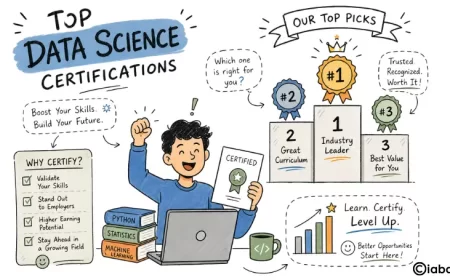
Why Employers Care About Data Science Certifications
A few years ago, many companies hired people simply because they had a degree or knew a few programming tools. Today, the situation is different.
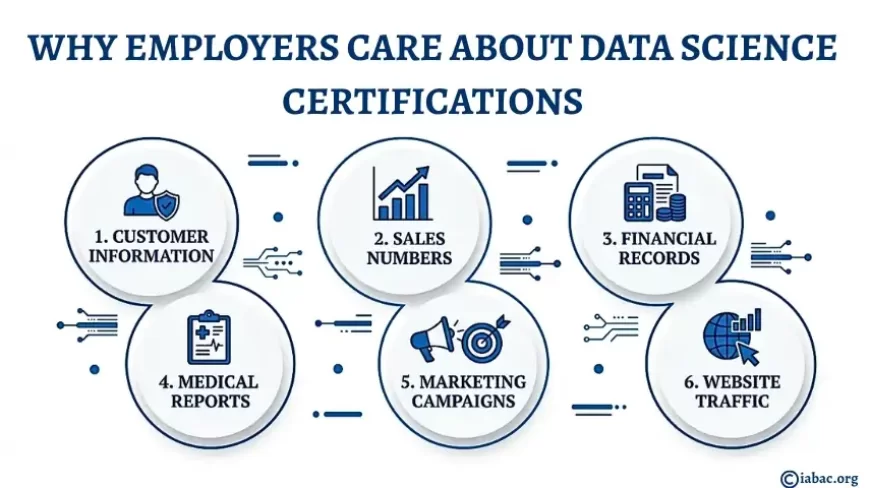
Companies work with huge amounts of science data every day:
- Customer information
- Sales numbers
- Financial records
- Medical reports
- Marketing campaigns
- Website traffic
They need people who can understand that information and turn it into useful decisions. But employers also know that not everyone who writes “Data Science” on a resume truly has the required skills.
That is why certifications matter.
A certification tells employers that a candidate has already learned:
- Python programming
- Data analysis
- Machine learning
- Statistics
- Data visualization
- Business understanding
It also shows that the person was serious enough to complete training, pass an exam, and build practical knowledge.
Think of it this way: if two people apply for the same job and both have similar experience, the person with a respected certification often gets noticed first.
What the New Hiring Report Found
The report collected information from hiring managers, recruiters, and business leaders across different countries.
The results were very clear:
- More than 70% of employers said they prefer candidates with Data Science Certifications.
- Nearly 60% said certifications make it easier to trust a candidate’s technical skills.
- Around 45% said they are willing to offer a higher salary to certified professionals.
- Over 50% said they use certifications as a way to shortlist resumes.
Here is a simple picture of how employers ranked different qualities:
|
Hiring Factor |
Importance to Employers |
|
Practical Skills |
92% |
|
Data Science Certifications |
78% |
|
Degree or Education |
65% |
|
Years of Experience |
61% |
|
Portfolio Projects |
58% |
The biggest surprise was that certifications ranked higher than years of experience in some cases. Employers said that many people have experience, but certifications help prove that the experience is relevant.
Which Certifications Employers Want Most
The report found that employers do not want “any” certification. They want certifications that teach real-world skills.
The most requested certifications are those that cover:
- Python for Data Science
- Machine Learning
- Data Analysis
- Business Analytics
- Artificial Intelligence
- Data Visualization
- Big Data Tools
Employers especially liked certifications that included practical projects because projects show that a candidate can do more than just memorize answers.
One of the most respected options mentioned in the report is the certification path available through IABAC.
The IABAC certification page at https://iabac.org/certifications offers programs that match what employers are asking for. These certifications focus on real industry skills instead of only theory.
According to the report, employers value certifications that teach:
- How to work with messy datasets
- How to create machine learning models
- How to explain results clearly
- How to solve business problems with Data Science
Because of this, many hiring managers said they prefer candidates with structured learning from recognized organizations.
Why Python Certifications Are So Popular
If there is one skill that appeared again and again in the report, it is Python.
Python is one of the most important tools in Data Science. Employers expect candidates to know how to use Python for:
- Data cleaning
- Data analysis
- Building machine learning models
- Creating charts and reports
A surprising number of recruiters said they reject resumes if Python skills are missing.
This means that if your certification includes Python, your chances improve immediately.
Imagine walking into an interview and hearing:
“Do you know Python?”
Then you answer:
“Yes, and I completed a certification that included Python projects, data analysis, and machine learning.”
That answer sounds much stronger than simply saying, “I watched a few videos online.”
The Most Important Skills Employers Expect
The report did not only focus on certifications. It also explained which skills employers want certified candidates to have.
The top skills are:
1. Data Cleaning
Most real-world data is messy. Employers want people who can fix missing values, remove duplicates, and prepare data for analysis.
2. Statistics
You do not need to become a math professor who dreams about formulas at night. But you should understand averages, probability, and trends.
A simple formula often used in Data Science is:
Average = Total Value / Number of Values
For example, if five products sold 10, 20, 30, 40, and 50 units:
Average sales = (10 + 20 + 30 + 40 + 50) / 5 = 30
This small calculation can help companies understand performance.
3. Machine Learning
Employers want candidates who know how to create models that predict results.
For example:
- Predicting customer behavior
- Predicting future sales
- Predicting whether a customer may leave
4. Communication Skills
Many people believe Data Science is only about coding. The report says otherwise.
Employers want professionals who can explain results clearly.
If you tell a manager, “The regression model has a 0.92 accuracy rate,” they may look confused.
If you say, “This model can correctly predict customer purchases most of the time,” everyone suddenly understands.
How Certifications Affect Data Science Jobs Salary
One of the most interesting parts of the report was the connection between certifications and salary.
Certified candidates often earn more because employers believe they are ready to work faster.
Here is the average difference found in the report:
|
Career Stage |
Without Certification |
With Certification |
|
Beginner |
$45,000 |
$60,000 |
|
Mid-Level |
$75,000 |
$95,000 |
|
Senior |
$110,000 |
$135,000 |
In India, the difference is also noticeable:
|
Career Stage |
Without Certification |
With Certification |
|
Fresher |
₹4 LPA |
₹7 LPA |
|
2-5 Years Experience |
₹8 LPA |
₹12 LPA |
|
Senior Professional |
₹18 LPA |
₹25+ LPA |
That is why Data Science Certifications are not only about learning. They can directly improve your data science jobs salary.
A Simple Data Scientist Roadmap
Many people want to enter Data Science but do not know where to begin. The report included a useful data scientist roadmap that matches what employers expect.
Step 1: Learn the Basics
Start with:
- Python
- Excel
- Statistics
- SQL
Step 2: Learn Data Analysis
Understand how to:
- Read datasets
- Find trends
- Create charts
Step 3: Learn Machine Learning
Study:
- Regression
- Classification
- Clustering
Step 4: Complete Data Science Certifications
This step is important because it gives structure to your learning and proves your skills.
Step 5: Build Projects
Employers love projects.
For example, create:
- A movie recommendation system
- A sales prediction project
- A customer analysis dashboard
Step 6: Apply for Jobs
Once you have skills, projects, and certifications, you are ready to begin your data science career.
Graph: Employer Preference for Certified Candidates
The report also showed a clear pattern.
Employer Preference
Certified Candidates ████████████████████████ 78%
Non-Certified Candidates ████████████ 42%
This graph shows that certified candidates are much more likely to be selected.
Another graph from the report showed the growing demand for certified Data Science professionals.
Demand for Certified Professionals
2022 ██████
2023 █████████
2024 ████████████
2025 ███████████████
2026 ███████████████████
The demand keeps increasing every year.
Why Many Candidates Feel Lost
The report also mentioned something important: many people feel overwhelmed.
There are so many certification choices that people often ask:
- Which one should I choose?
- Will this certification really help me?
- What if I choose the wrong one?
That feeling is normal.
Many people spend weeks reading about certifications and still cannot decide. Some even create a spreadsheet comparing every option. Then they create another spreadsheet to compare the first spreadsheet. Eventually, the spreadsheet needs its own Data Science project.
The easiest way to decide is to choose a certification that:
- Matches your career goal
- Includes practical projects
- Covers Python and machine learning
- Is recognized by employers
Why IABAC Certifications Match Employer Needs
The report highlighted that employers prefer certifications connected to practical work.
This is why many learners choose the programs available through IABAC.
The certifications available at https://iabac.org/certifications are designed to help learners:
- Build strong technical skills
- Learn through real projects
- Understand industry tools
- Prepare for interviews
For someone planning a long-term data science career, these certifications can become an important step.
Instead of learning random topics from ten different places, a structured certification helps you learn in the correct order.
That means less confusion, less wasted time, and fewer moments of staring at your laptop wondering why your code suddenly stopped working after adding “just one small line.”
What This Means for the Future
The future of Data Science looks very strong.
More companies are using science data every day. Businesses want people who can understand information, create predictions, and help make better decisions.
This means there will be more:
- Job opportunities
- Higher salaries
- Demand for certified professionals
The report predicts that by the end of the decade, most Data Science roles may list certifications as a preferred requirement.
That means people who start learning now will have a big advantage.
The new hiring report sends a clear message: employers want candidates who can prove their skills, and Data Science Certifications are becoming one of the best ways to do that. For anyone beginning a data science career, certifications are no longer just “nice to have.” They are becoming one of the smartest investments you can make.
They help you:
- Learn the right skills
- Build confidence
- Stand out in interviews
- Increase your data science jobs salary
- Follow a clear data scientist roadmap
Most importantly, they help turn uncertainty into opportunity. Today, you may be wondering where to begin. Tomorrow, after building your skills and earning the right certification, you could be the person companies are excited to hire.
And that future may be much closer than you think.