


















































Do You Really Need an AI Platform or Just an AI Tool?
AI platforms or AI tools: understand which one you need, when to switch, and how the right choice improves efficiency, scalability, and long-term results

Every week, a new AI solution enters the market. Another AI tool promises to write content, summarize meetings, generate code, or automate workflows. It's easy to start relying on tools for every little job when there are so many to choose from.
At some point, a bigger question naturally comes up:
Are multiple tools enough, or is it time to think about an AI platform?
This question seems simple, but the answer has long-term implications. Making the right choice can help you set up an AI system that works well and is easy to use. Making choices without clarity can lead to disconnected workflows, higher costs, and limited room for growth.
As AI adoption expands, this question is becoming more common across different use cases. Understanding the difference between AI tools and AI platforms helps you use AI more effectively in your daily tasks, decisions, and plans.
Understanding AI Tools and AI Platforms
The way artificial Intelligence is used can vary from solving a single task to building systems that handle multiple processes together. Knowing this difference helps in choosing the right approach based on how simple or complex the requirement is.
AI Tool
An AI tool is designed to perform a specific task. It focuses on solving one problem extremely well. Whether it’s writing content, generating code, or transcribing conversations, each tool is built with a clear purpose.
Common characteristics of AI tools include:
-
Functionality designed to handle specific tasks with high accuracy and speed
-
Easy to set up and learn quickly without requiring technical expertise
-
Pricing models based on subscriptions, making them accessible and scalable
-
Immediate output with little customization, focusing on quick and consistent results
AI tools are typically used for writing emails or marketing copy, summarizing long documents or meetings, generating code snippets, creating visuals or presentations
The biggest advantage of AI tools is speed. You can start using them almost instantly and see results within minutes. There’s no need for deep technical knowledge or infrastructure setup.
This makes AI tools highly effective when:
-
The problem is clearly defined
-
The output is repetitive
-
There’s no need for deep integration with other systems
They are often the first step in adopting AI because they reduce complexity and provide quick wins.
AI Platform
An AI platform operates very differently. Instead of solving one task, it provides an environment where multiple AI solutions can be built, connected, and scaled. These platforms often rely on machine learning to build models that can learn from data and improve performance across different tasks.
It acts as a foundation rather than a finished product.
Key characteristics of AI platforms include:
-
Ability to build and deploy custom AI solutions tailored to specific needs
-
Integration with multiple data sources, like CRM, ERP, and databases, seamlessly
-
Workflow automation across systems to reduce manual effort and improve efficiency
-
Scalability across multiple use cases as requirements grow over time
-
Governance, monitoring, and control to manage performance, access, and compliance
Instead of using AI for isolated tasks, platforms allow AI to work across processes. They connect different pieces of data, systems, and workflows to create a more unified experience.
This makes platforms valuable when:
-
Multiple use cases need to work together without creating disconnected workflows
-
Data needs to flow across different systems for consistent and accurate outputs
-
Custom solutions are required to match unique workflows and business requirements
-
Long-term scalability is a priority as AI usage expands across different areas
The key distinction: a tool does something for you. A platform lets you build something that does things for you.
Why AI Tools Work So Well in the Beginning
AI tools are often the starting point because they remove friction. There’s no need to think about architecture, integration, or long-term scalability. You focus on solving one problem at a time.
Here’s why they work effectively early on:
Fast Results
You can start using a tool immediately and see output within minutes. This creates quick momentum and builds confidence in AI adoption.
Low Technical Barrier
Most tools are designed for ease of use. No coding or system setup is required, making them accessible across different levels of expertise.
Flexibility
Trying multiple tools is easy. If one doesn’t work well, switching to another is simple and low-risk.
Focused Performance
Since each tool is built for a specific purpose, it often performs that task exceptionally well.
When needs are limited and clearly defined, tools provide everything required without unnecessary complexity.
When AI Tools Start Creating Friction
Over time, adding more tools can start creating challenges. What initially feels efficient can gradually become difficult to manage.
Here are common signs that things are getting complicated:
Disconnected Workflows
Each tool operates independently. Outputs from one tool don’t automatically connect to another, leading to manual effort.
Tool Overload
Managing multiple subscriptions, logins, and dashboards becomes time-consuming.
Lack of Visibility
There’s no single place to understand how AI is being used or what impact it’s creating.
Limited Customization
Tools often cover most needs, but not all. The remaining gaps can be critical, yet difficult to address.
Data Silos
Information gets scattered across different tools, making it harder to create meaningful insights.
Growing Security Concerns
As more tools interact with sensitive data, maintaining control and compliance becomes challenging.
When these issues begin to appear, it signals that the approach may need to evolve.
What Changes When You Move Toward an AI Platform
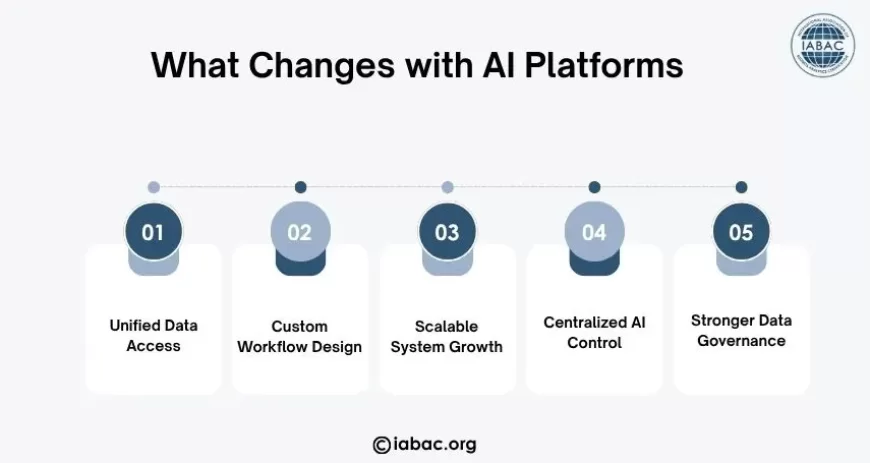
An AI platform changes how AI is used entirely. Instead of focusing on individual tasks, it focuses on building connected systems. With this shift, several key changes begin to take shape:
Unified Data and Context
Platforms bring data from different sources into one place. This allows AI to work with a broader context, leading to more accurate and useful outputs.
Custom Workflows
Instead of adapting processes to fit a tool, workflows can be designed to match specific requirements. This flexibility is critical when dealing with complex scenarios.
Scalable Systems
As needs grow, new use cases can be added without starting from scratch. Everything builds on the same foundation.
Centralized Control
Platforms provide visibility into how AI is being used. This includes monitoring, governance, and performance tracking.
Stronger Security and Compliance
With centralized systems, managing data access, permissions, and compliance becomes more structured.
This shift is not just about adding more capabilities. It’s about moving from isolated actions to coordinated systems.
The Decision Framework: 5 Questions to Ask Yourself
Choosing between tools and platforms becomes easier when you ask the right questions.
How Many AI Tasks or Requirements Are You Handling?
If the number is small and focused, tools are sufficient. If tasks are increasing and starting to overlap, a platform becomes more valuable.
Do Your Tasks Share Data?
If different tasks rely on the same data, connecting them becomes important. Platforms handle this efficiently, while tools struggle to maintain consistency.
How Important Is Customization?
If standard outputs are enough, the tools work well. If workflows need to be tailored, platforms provide the flexibility required.
Are You Building Something or Using Something?
Using AI for individual tasks fits the tools. Creating systems or products powered by AI aligns with platforms.
What Role Does AI Play in Your Growth?
If AI is a support layer, tools are effective. If it becomes central to how work is done, platforms offer better long-term value.
Answering these questions honestly provides clarity without relying on trends or assumptions.
The Hybrid Approach That Actually Works
You might think you have to choose between AI tools and an AI platform, but the best way to use them is often to use both in a balanced way.
A hybrid approach focuses on using each where it fits best:
-
Use AI tools for repetitive, high-frequency tasks that need quick results
-
Use a lightweight platform layer to connect different workflows and systems
-
Manage data flow, access, and permissions from a central point
-
Maintain flexibility while improving overall coordination between processes
This approach brings together the strengths of both:
-
Speed and ease of use from AI tools
-
Structure and control from AI platforms
-
Scalability without adding unnecessary complexity
Instead of replacing tools entirely, a platform acts as a connecting layer that helps everything work together more smoothly.
Understanding the Real Cost
At first glance, tools seem more affordable. Individual subscriptions appear manageable, especially when adopted gradually.
However, costs add up in ways that are not always obvious:
Direct Costs
Multiple subscriptions across tools can quickly increase monthly expenses.
Time Costs
Managing different tools, switching between them, and handling manual processes takes time.
Integration Effort
Connecting tools often requires additional effort, either manually or through external solutions.
Missed Opportunities
Certain use cases remain unaddressed because tools cannot support them effectively.
Risk Exposure
Without centralized control, managing sensitive data becomes more complex.
On the other hand, platforms may require more effort initially but often provide better efficiency and control over time.
The real comparison is not just about pricing; it’s about overall impact.
How the Shift Typically Happens
The transition from tools to platforms rarely happens suddenly. It usually follows a pattern:
-
Start with one or two tools
-
Add more tools as needs grow
-
Experience friction from disconnected systems
-
Look for ways to integrate or streamline
-
Consider a platform or hybrid setup
This progression is natural. The key is recognizing when the shift is needed, rather than waiting until inefficiencies become overwhelming.
There is no single right answer that fits every situation. The decision depends on how AI is being used, how it connects with workflows, and how it is expected to grow.
Start with tools when simplicity and speed matter most, and move toward platforms as coordination and scale become important. The real advantage comes from understanding when to evolve the approach. This is where building the right knowledge matters, as understanding how tools and platforms work together improves decision-making and practical AI usage.
An AI certification can help you gain clarity on workflows, use cases, and how AI systems scale beyond individual tools.
The difference between staying efficient and becoming overwhelmed often comes down to making that shift at the right time.