





















































What is Artificial Intelligence and How is it Used
Discover what Artificial Intelligence (AI) is, how it works, and explore its real-world applications across industries from healthcare to finance and beyond.

Artificial Intelligence (AI) might seem like a hard concept to understand, but it’s something we see and use every day. When you talk to Siri, get directions on Google Maps, or see product suggestions on Amazon, you are using AI without even realizing it. But what is AI? How does it work, and how is it changing our world? These are important questions to consider because AI is changing how different industries work, how we do our jobs, and even how we live our everyday lives.
What is Artificial Intelligence (AI)?
Let’s start with the basics. Artificial Intelligence (AI) is the idea of creating machines or software that can think and learn like humans. Just like how our brains process information, solve problems and make decisions, AI tries to do the same—but through computers and technology.
You can think of AI as a tool that allows machines to:
- Learn from data: For example, an AI program can learn what types of emails are spam by looking at thousands of examples.
- Make decisions: AI can use the data it learns from to make decisions, like whether to recommend a specific product online.
- Solve problems: AI can help solve complex problems, like finding the quickest route to a destination or diagnosing a disease from a medical scan.
Two main types of AI are important to understand:
- Narrow AI: This is AI designed to do a specific task well, like recognizing faces in photos or recommending what movie you might like on Netflix. This is the type of AI we mostly see today.
- General AI: This is the more advanced idea of AI—an AI that can think and learn like a human, across many tasks. General AI doesn’t exist yet, but researchers are working on it.
Why is AI Complicated to Define?
Now that we know what AI is, let’s talk about why it can be tricky to define or understand. The challenge with AI is that it covers many different technologies and uses. AI can be as simple as an algorithm that helps sort through data, or as complex as a system that can drive a car.
Some of the main technologies that make up AI include:
- Machine Learning (ML): This is a type of AI that helps machines learn from data. For example, a machine-learning program might learn to spot spam emails after looking at thousands of examples of spam and non-spam messages.
- Natural Language Processing (NLP): This is how AI can understand and process human language. Chatbots, like those you see on websites, use NLP to understand and respond to your questions.
- Neural Networks: This technology helps machines mimic how our brains work by processing information in layers to recognize patterns, such as identifying objects in images.
While AI can do amazing things, there are complications. For example, AI can make mistakes if it learns from biased or incomplete data. If an AI system is trained on biased data, it might make unfair decisions, which could have serious consequences in areas like hiring or law enforcement.
How is AI Being Used Today?
So, with all these possibilities, how exactly is AI being used in the world today? The question we need to ask is: what are the real-world applications of AI, and how does it affect industries and our everyday lives?
Let’s explore some key examples of how AI is already transforming different sectors.
AI Applications Across Different Sectors
1. Healthcare: Improving Diagnosis and Treatment
AI is making a huge impact in healthcare. One way AI is helping is by analyzing medical data, such as scans or test results, to identify diseases more accurately and faster than humans can. For example, AI can look at a scan of a patient’s lungs and detect early signs of cancer that a doctor might miss. This means patients can get treatment earlier, which can save lives.
AI is also helping doctors make personalized treatment plans for patients by analyzing their medical history and predicting what treatments will work best for them. Another use of AI is in telemedicine, where chatbots can help answer medical questions, schedule appointments, or even suggest if a patient needs to see a doctor.
2. Finance: Detecting Fraud and Managing Investments
In the finance world, AI is used to spot unusual or suspicious activities in your bank account that could indicate fraud. It does this by analyzing patterns in spending and transactions, which helps banks detect fraud faster and more accurately.
AI is also used in managing investments. Robo-advisors, which are AI-powered financial platforms, help people manage their money by suggesting the best investment strategies based on data, without the need for a human advisor. This makes investing easier and more affordable for more people.
3. Retail and E-commerce: Creating Personalized Shopping Experiences
If you’ve ever shopped online and noticed that websites seem to know exactly what you’re looking for, that’s AI at work. E-commerce platforms use AI to analyze your shopping habits and recommend products based on what you’ve viewed or purchased before. This helps businesses provide a personalized shopping experience, which makes customers happier and increases sales.
Another way AI is used in retail is through chatbots, which can answer customer questions, help with orders, and solve issues—often without human help.
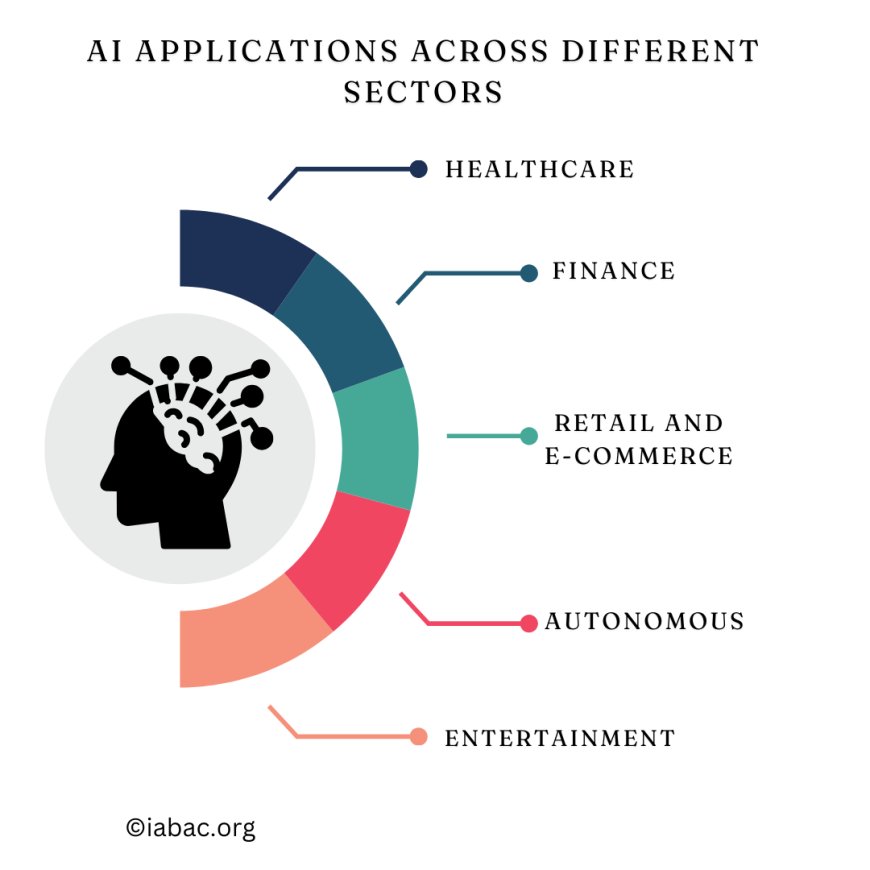
4. Autonomous Vehicles: Changing How We Drive
AI is behind the technology that powers self-driving cars. These cars use AI to understand the environment around them, such as road signs, other vehicles, and pedestrians, allowing them to navigate roads safely. While fully autonomous cars are still being perfected, AI is helping reduce the number of car accidents caused by human error.
AI is also being used in delivery drones and robots that are changing how goods are transported and delivered, making logistics faster and more efficient.
5. Entertainment: AI-Generated Content and Recommendations
Have you ever noticed how platforms like Netflix and Spotify seem to know what shows or songs you’ll like next? That’s AI working behind the scenes. AI analyzes your past viewing or listening habits and recommends content that fits your preferences, helping you discover new things more easily.
AI is also being used to create original content. For example, some music or artwork today is created with the help of AI, where the system generates new pieces based on the data it’s given. This is opening new possibilities for creativity in the entertainment world.
6. Agriculture: Helping Farmers Grow Food More Efficiently
AI is making farming smarter. With precision farming, AI can analyze the condition of soil and crops and help farmers decide the best time to plant, water, or harvest. This helps farmers grow more food using fewer resources, which is important as the world’s population grows.
Drones powered by AI can also monitor large fields and spray fertilizer or pesticides where needed, making the whole process more efficient and sustainable.
AI is Here to Stay
Artificial Intelligence (AI) is no longer a future concept—it's already changing industries like healthcare, finance, retail, and farming by making processes faster and smarter. While AI offers great benefits, challenges like fairness and accuracy need attention. As students and future professionals, understanding AI is essential because it will play a big role in shaping the future. Whether you're interested in tech, business, or healthcare, learning about AI will give you an edge. It's not just about robots—AI is about using smart systems to make life more efficient and improve how we live and work.