





















































What is the role of analytics in business
Discover how analytics drives smarter business decisions, improves efficiency, and creates a competitive edge through data-driven strategies.

When I started working in business, I quickly saw that data was more than just numbers. It helped me understand what was really happening and make better decisions. That’s when I saw the real value of Business Analytics. As I learned more, I came across Business Analytics Certifications. These helped me build my skills and gave me a strong base to understand market trends, how customers think, and how to improve my business. Over time, I realised how important Business Analytics is for success. It helps turn problems into chances to grow.
What is Business Analytics?
Business Analytics means using data, statistics, and tools to understand past and current events and help make better decisions. It helps businesses solve problems, improve performance, and plan ahead.
Businesses collect a lot of data daily—from sales, customer habits, stock levels, and more. Business Analytics turns this information into clear answers that help teams work smarter.
Business Analytics vs. Business Intelligence
These two terms are related but have different goals. Business Intelligence looks at what happened in the past. Business Analytics goes further. It looks at why things happened and what should be done next.
In short:
-
Business Intelligence = What happened?
-
Business Analytics = Why did it happen and what can we do about it?
Types of Business Analytics
There are four main types of Business Analytics, each helping in different ways:
1. Descriptive Analytics
Shows what happened in the past using reports and charts. Example: How many products were sold last month?
2. Diagnostic Analytics
Finds out why something happened. Example: Why did fewer people visit our website last week?
3. Predictive Analytics
Uses patterns to guess what might happen next. Example: Will sales increase next season?
4. Prescriptive Analytics
Gives ideas on what to do next. Example: What pricing model will bring more sales?
Why Business Analytics Matters
Business Analytics is now used in all areas of a company, not just IT or finance. It helps teams work faster, make better decisions, and reduce waste.
Benefits of Using Business Analytics:
-
Better decisions: Use facts, not guesses.
-
Save time and money: Spot and fix problems early.
-
Know your customers: Understand their needs and habits.
-
Reduce risks: Catch issues before they grow.
-
Stay ahead: Be more prepared in a fast-moving market.
Industries like retail, healthcare, banking, and manufacturing are already using data to improve how they work.
Popular Tools Used in Business Analytics
To use analytics well, people use different tools and platforms. Some of the most common are:
-
Data Tools: Excel, SQL, Python, R
-
Charts and Dashboards: Tableau, Power BI
-
Storage Tools: Google BigQuery, Snowflake
-
Machine Learning: Scikit-learn, TensorFlow
-
Reports: Microsoft SSRS, Looker
Learning how to use these tools is part of becoming certified in Business Analytics.
How Business Analytics Works in Real Life
Here’s how businesses use data in their day-to-day work:
Forecasting: Use old data to guess future sales or demand. This helps in planning better.
-
Customer Groups: Split customers by habits or age to send better messages or offers.
-
Finding Fraud: Banks use data to spot anything unusual and stop fraud early.
-
HR Planning: Use data to improve hiring, keep employees happy, and plan team size.
How to Start a Career in Business Analytics
Anyone can learn Business Analytics with the right plan. Here's how you can begin:
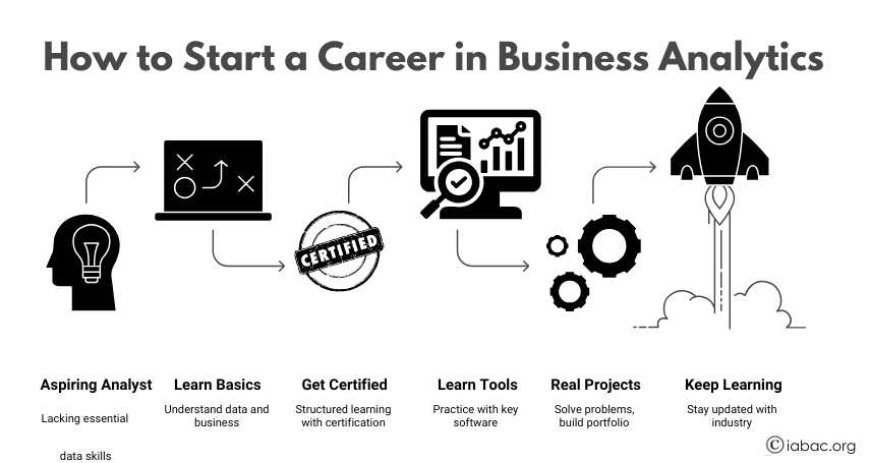
1. Learn the Basics
Start with understanding data, charts, and how businesses use them.
2. Join a Business Analytics Certification Course
A Business Analytics Certification gives you structured learning, projects, and worldwide value. IABAC offers certifications that teach useful skills in:
-
Business Analytics
-
Data Science
-
Artificial Intelligence
-
Tools like Power BI and Tableau
3. Learn Tools and Programming
Study tools like Python, SQL, and data visualization platforms.
4. Practice on Real Projects
Work on actual data problems. Share your work on websites like GitHub.
5. Keep Learning
Stay updated with news, blogs, and online events in the data field.
Jobs in Business Analytics
There’s a strong demand for people with analytics skills. Job roles include:
-
Business Analyst
-
Data Analyst
-
Operations Analyst
-
Marketing Analyst
-
Data Scientist
Average Salaries:
On average, certified professionals earn between $65,000 and $120,000 per year, depending on skills and experience.
Why Pick IABAC for Business Analytics Certifications?
IABAC (International Association of Business Analytics Certifications) offers global certifications built to match what industries need. Here’s why professionals choose IABAC:
-
Job-ready Skills: Courses built by experts with real-world experience
-
Flexible Learning: 100% online and learn at your own pace
-
Valid for Life: No renewal needed
-
Trusted Worldwide: Accepted by employers around the world
Whether you're just starting or already working, IABAC Business Analytics Certifications help you build strong skills for the future.
Business Analytics Helps You and Your Company Grow
Business Analytics helps people and companies make sense of their data. It supports better choices, smarter planning, and stronger results.
Learning this skill and earning a Business Analytics Certification from IABAC can open doors to new roles, better pay, and more confidence in your work. Take the next step with IABAC’s Business Analytics Certifications and grow your career with trusted skills.