











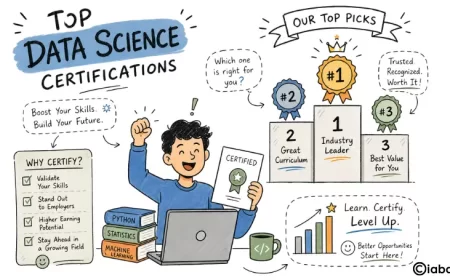




































Worried About Job Security? A Data Science Certification Could Help
A data science certification can strengthen technical skills support career stability and help professionals stay competitive in data driven roles.

Many people feel a quiet pressure to keep learning new skills. Technology changes quickly, and data has become the foundation of decision-making in many industries. Companies rely on data to understand customers, improve products, and plan strategies.
Because of this shift, data science has become one of the most valuable skills for professionals who want long-term career growth.
But many people face a common question:
Where should I begin, and how do I prove my skills to employers?
A course for data science combined with Data Science Certifications can help solve this challenge. It allows professionals to learn the skills and gain proof of their knowledge at the same time. This article explains the real benefits of a course for data science with certification, how it supports upskilling, and why certification plays an important role in building a strong professional profile.
The Job Market Is Giving Us the Ick (And It's Real)
Job insecurity isn't just a feeling — it's a documented, statistically verified anxiety-fest. Automation, AI, remote-work reshuffling, and economic uncertainty have created a workforce that's constantly looking over its shoulder.
But here's what's fascinating: while some jobs are shrinking, Data Science roles are absolutely booming. We're talking about one of the fastest-growing fields in the world right now.
|
36% Projected growth in data science jobs over the next decade (US Bureau of Labor Stats) |
₹12L+ Average annual salary for certified data professionals in India |
3x More likely to get hired with a recognized certification vs. self-reported skills |
So the question isn't "Should I learn data science?" The real question is: "What's stopping me?" (Spoiler: it's probably just fear and Netflix. Both are valid. Only one pays the bills.)
What Even IS Data Science?
Imagine you run a chai stall. Every day you notice which flavors sell out by noon, which days are slow, and which customers always buy two cups. That gut instinct? That's basically Data Science — just with Python instead of intuition and dashboards instead of memory.
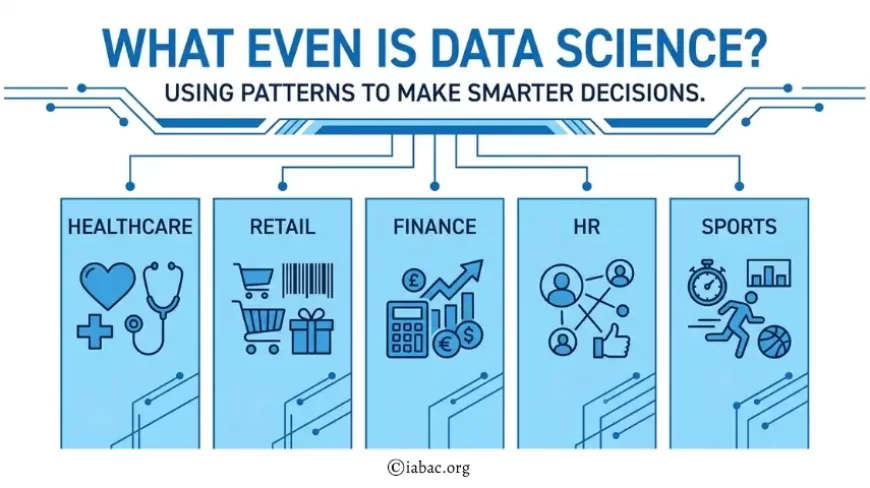
Data Science is the art (and science!) of collecting information, finding patterns in it, and using those patterns to make smarter decisions. Every industry does this now:
- Healthcare — predicting which patients need early intervention
- Retail — figuring out why you bought that thing you didn't need at 2am
- Finance — catching fraud before it catches your bank balance
- HR — yes, your resume is being analyzed by an algorithm. Fun, right?
- Sports — why do you think IPL teams are so obsessed with analytics?
The point is: Data is everywhere, and people who understand it are everywhere in demand.
Upskilling vs. Reskilling: Know the Difference
These buzzwords are thrown around like confetti, but they mean different things for your career:
- Upskilling: Adding new skills on top of what you already know. A marketing pro learning data analysis to understand campaign performance better. You're leveling up your existing role.
- Reskilling: Pivoting into a completely new field. A logistics coordinator transitioning into a data analyst role. A fresh start with purpose.
- Both lead to the same place: More career options, better salary potential, and the quiet confidence of knowing you're future-proofing yourself.
Real talk: You don't need to quit your job, go back to college, or spend a year doing nothing but coding. A structured course for data science, done evenings and weekends, is genuinely enough to change your career trajectory.
The Benefits of a Course for Data Science (Beyond "It Looks Good on Your CV")
Look, everyone says certifications look good on your resume. True. But let's go deeper than that, because the benefits of a course for data science are way more interesting:
- You Actually Learn to Think Differently: Data science teaches structured problem-solving. You start seeing patterns everywhere — in your work, your market, your industry. It's like getting a superpower, minus the radioactive spider.
- You Can Speak the Language: Know what's really valuable? Being the person in the room who understands both the business AND the data. You become a translator between tech and strategy. Everyone needs that person.
- Higher Salary, No Apologies: Data Science Certifications consistently correlate with salary bumps — both in new jobs and when negotiating raises at your current one. Knowledge is leverage.
- Industry-Agnostic Skills: Data science skills travel with you. Healthcare, fintech, e-commerce, government — every industry runs on data. You're never locked into one sector again.
- Credibility That's Hard to Fake: Anyone can write "familiar with data analysis" on a CV. A certified professional has proof. And in 2025's job market, proof > promises.
Why Data Science Certifications Matter More Than Ever
Here's a scenario that plays out in hiring every single day:
- Candidate A has spent six months learning data science through YouTube videos, online articles, and passion projects. Impressive dedication. Genuinely skilled. But their resume just says "self-taught."
- Candidate B did the same self-learning — AND earned a recognized Data Science Certification. Their resume says "certified professional" with a credential that can be verified.
Guess who gets the interview? (And who gets the job.)
This isn't about intelligence. It's about signal. In a pile of 200 applications, Data Science Certifications are a hiring manager's shortcut to identifying serious candidates. They tell employers: this person didn't just read about it — they proved it.
The future of work isn't just about what you know. It's about what you can demonstrate.
Enter IABAC: Certification That Actually Means Something
Not all certifications are created equal. Some are worth their weight in professional gold. Others are worth… approximately nothing.
The International Association of Business Analytics Certification (IABAC) is one of the legitimate ones. It's a globally recognized certification body focused on business analytics, artificial intelligence, and Data Science — built specifically for working professionals who want credentials that hold up in the real world.
What makes IABAC worth your time and attention?
- Globally recognized framework — respected by employers across industries and geographies
- Built for working professionals — not just fresh graduates looking for their first job
- Aligned with real industry needs — curriculum reflects what employers actually ask for
- Validates practical knowledge — not just theoretical cramming, but applied understanding
- Supports upskilling AND reskilling paths — wherever you're starting from, IABAC meets you there
Think of IABAC as the bouncer at the club of high-paying data jobs. Get the certification, get on the list. Simple.
The Future of Work Is Already Here. Are You Ready?
Here's the uncomfortable truth about the future of work: it's not coming. It's here. Right now. This morning. In that meeting where your boss mentioned "leveraging our data assets" and everyone nodded like they understood.
Professionals who embrace data literacy today aren't just surviving — they're leading. They're the ones getting promoted, getting recruited, and getting paid. And the beautiful part? You don't need a computer science degree. You don't need to know how to build AI from scratch. You need a structured path, genuine effort, and a certification that proves you took it seriously.
Career growth isn't linear. It's a series of investments — in your skills, your time, and your credentials. A Data Science certification is one of the highest-ROI investments a professional can make right now. Full stop.
Your Action Plan (No Overwhelm Allowed)
Let's make this real. Here's a simple path forward:
- Week 1–2: Explore Data Science basics — Python, statistics, what data analysts actually do day-to-day
- Month 1–2: Work through a structured course for data science — online platforms, video content, practice projects
- Month 2–3: Build 1–2 small portfolio projects (yes, even small ones count enormously)
- Month 3–4: Earn your IABAC certification to validate everything you've learned
- Month 4+: Update your LinkedIn, apply confidently, negotiate like you mean it
That's it. That's the whole plan. Four months from "worried about job security" to "data-certified professional." You've binge-watched longer seasons than that.
The professional world continues to move toward data-driven decision making. Because of this shift, Data Science has become an essential skill across industries. Learning resources are widely available, making it easier than ever to begin building these skills. However, certification remains an important step for professionals who want their knowledge to be recognized.
A course for data science combined with Data Science Certifications helps professionals strengthen their profiles, improve career opportunities, and prepare for a future where data skills are highly valued. For those ready to validate their expertise and grow professionally, IABAC certification offers a practical pathway to demonstrate knowledge and build credibility in the field of Data Science.
Start your journey with IABAC today.