


























































Business Analyst Certificate for Job Growth
Get certified as a Business Analyst and boost your career with valuable skills. Open doors to better jobs and success in today’s growing job market.


When I wanted to boost my career, earning a business analyst certificate made a big difference. It helped me connect business needs with practical solutions. The learning process improved my analytical skills, taught me useful methods, and led to new job opportunities. Employers saw the value I could bring to projects, increasing my confidence and professional reputation. This certificate showed me how it can help with career growth and make complex tasks easier to handle. A business analyst certificate or business analytics certification is a great choice for anyone looking to grow in their career.
What’s a Business Analyst Certificate Anyway?
Picture this: You’re the bridge connecting what a business needs with the solutions that make it happen. A business analyst certificate gives you the skills to understand business problems, find practical solutions, and ensure everything runs smoothly.
This certification teaches you the essentials, like talking to stakeholders (basically anyone with an opinion), improving workflows, and thinking strategically. It’s like having a cheat code for understanding businesses and making them better. Plus, it shows employers you know your stuff, kind of like a badge of honor but for your brain.
Why Should You Bother Getting a Business Analyst Certificate?
Let’s face it: job hunting is hard, and standing out isn’t as easy as wearing a bright yellow suit to an interview. Here’s how this certification can help you shine:
1. Learn Cool, Real-World Skills
No fluff here; this certification teaches you real, useful skills like
- Gathering and documenting what a business needs (translation: figuring out what people want).
- Analyzing data to spot trends and opportunities.
- Fixing messy processes (because no one likes inefficiency).
- Managing people and projects like a pro.
And let’s not forget communication because no one likes being left in the dark!
2. Get Paid Well
Business analysts don’t just have cool jobs; they’re also paid pretty well. With businesses relying on data to make decisions, your skills will be in demand. Jobs you could snag include:
- Business Analyst
- Data Analyst
- Product Manager
- Project Manager (basically, you get to boss people around in a nice way).
3. Keep Your Options Open
If you’re not sure what you want to be when you grow up (no shame, we’ve all been there), a business analyst certificate gives you a strong foundation. Whether you end up working in tech, healthcare, or even a startup, the skills you’ll learn will be useful everywhere.
What Does the Certification Cover?
Alright, let’s peek inside the magic box of a business analyst certificate program. Here’s what you’ll typically learn:
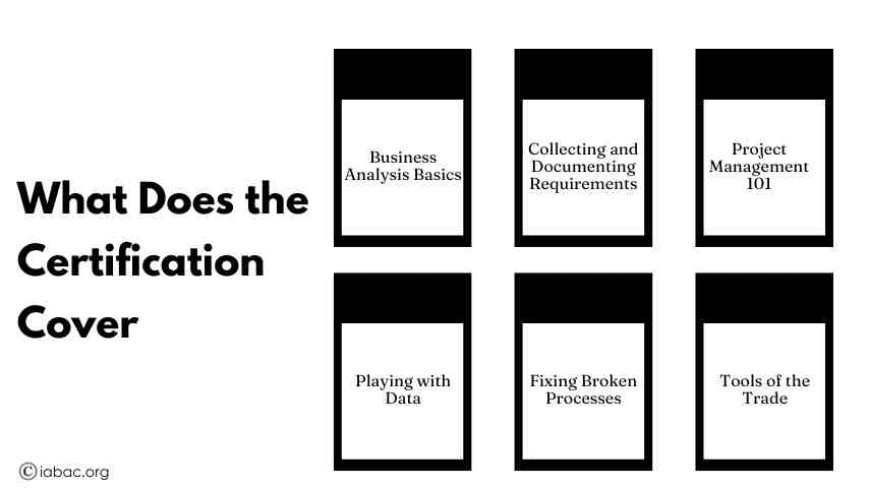
- Business Analysis Basics: You’ll get the lowdown on what business analysts do and why they’re so important.
- Collecting and Documenting Requirements: This is fancy talk for “making sure everyone’s on the same page.”
- Fixing Broken Processes: Learn how to spot inefficiencies and come up with better ways of doing things.
- Playing with Data: You’ll learn how to analyze data and create charts that make you look super smart in meetings.
- Project Management 101: Discover how to keep projects on track without losing your sanity.
- Tools of the Trade: From Excel to Power BI, you’ll get hands-on experience with tools that make your job easier.
How to Get Your Business Analyst Certificate (Without Losing Your Mind)
Let’s break this down step by step:
- Find a Program: Look for programs with good reviews that fit your goals. Bonus points if they’re flexible enough for you to binge-watch Netflix on the side.
- Sign Up and Commit: Enroll in the program and stick with it. Yes, that means logging in and doing the work!
- Learn and Practice: Dive into the lessons and try applying what you’ve learned. Practice makes perfect, even if it’s just with mock projects.
- Ace the Exam: Some certifications come with an exam. Don’t panic; just study smart, take practice tests, and avoid cramming (your brain will thank you).
- Show It Off: Once you’ve got the certificate, update your resume and LinkedIn and maybe even brag about it to your grandma.
What Makes a Business Analyst Certificate Valuable?
Getting certified shows employers that you’ve learned the basics of business analysis and are ready to take on challenges. These certifications often teach important skills, like:
- Understanding Business Processes: Learning how companies work and identifying ways to improve them.
- Working with Data: Collecting and analyzing information to solve problems.
- Requirements Gathering: Finding out what clients or teams need and creating plans to meet those needs.
- Communication and Teamwork: Learning how to share ideas and work well with others.
When applying for jobs, make sure your resume highlights what you learned during the certification. For example, mention tools you used (like Excel or SQL), group projects, or case studies that helped you practice solving real-world problems.
Building Confidence with Employers
Employers look for candidates who are dependable, ethical, and eager to learn. As a beginner in the field, earning trust is key. Highlight your soft skills like clear communication, problem-solving, and teamwork; these are essential for explaining ideas and working well with others.
Boost your skills and stay updated by earning a business analyst certificate or other business analytics certifications through online courses, workshops, or training programs. Customize your resume and cover letter for each job by learning about the company’s goals and showing how your skills match what they need.
This shows you’ve put in the effort and genuinely care about the role. References also play an important role. Ask teachers, mentors, or past employers to recommend you, as their support can help prove your reliability and professionalism to future employers.
Entry-Level Job Titles to Search For
When you’re looking for jobs, try searching for titles like:

- Junior Business Analyst
- Associate Business Analyst
- Business Systems Analyst (Entry-Level)
- Data Analyst (Focused on Business)
- Requirements Analyst
These roles often involve learning on the job and working on important projects. Be open to roles that help you grow into a business analyst position over time.
Being a business analyst is about solving problems, making sense of data, and helping organizations succeed. With the growing need for skilled analysts, getting a business analyst certificate or business analytics certification is a no-brainer. It’s not just about adding a line to your resume; it’s about building a career that’s meaningful and rewarding. So, go ahead and take that first step. The future you (who’s sipping coffee in a swanky office) will thank you.