






















































What is the Role of a Business Analyst in Organizations?
Understand the role of a business analyst in aligning business goals, analyzing data, improving processes, and supporting decisions for organisational growth.


You’re part of a project where everything looks active, meetings are happening, reports are being shared, and teams are constantly working on updates. Still, there’s a sense that things aren’t fully aligned. The data exists, but it doesn’t clearly guide decisions, and every step forward feels uncertain.
Have you noticed how confusion builds even when information is available?
Who actually connects all the dots to bring clarity?
This is where a business analyst steps in, turning scattered inputs into structured insights. They help organisations understand what’s really happening, align teams with clear goals, and make decisions that are based on logic rather than assumptions.
Understanding the Core Role of a Business Analyst
A business analyst focuses on identifying business needs and finding the right solutions to meet those needs. These solutions can involve process improvements, system upgrades, or completely new strategies.
They spend time understanding how an organization functions, what challenges it faces, and where improvements can be made. This requires both analytical thinking and strong communication skills.
Key responsibilities include:
-
By Identifying business problems and opportunities they recognise gaps and areas where improvements or growth can be achieved
-
Gathering and documenting requirements ensures business needs are clearly captured and communicated for accurate implementation
-
Analysing data to support decision-making helps interpret insights that guide effective actions
-
Recommending practical and scalable solutions focuses on solving current issues while supporting future growth
-
Working with stakeholders to align goals ensures all teams move in a common direction for successful outcomes
At its core, the role is about bringing structure and clarity to situations that may otherwise feel uncertain.
Acting as a Bridge Between Teams
One of the most important responsibilities of a business analyst is connecting different teams within an organization. Often, technical teams and business teams operate with different perspectives, which can lead to misalignment.
A business analyst ensures that:
-
Business stakeholders clearly communicate their needs
-
Technical teams understand requirements accurately
-
Project goals remain aligned across departments
They translate business requirements into technical language and vice versa. This reduces misunderstandings and ensures that projects move in the right direction.
Without this bridge, organisations often face delays, rework, and inefficiencies.
Gathering and Managing Requirements
Requirement gathering is a fundamental part of a business analyst’s role. Before any project begins, it is crucial to understand exactly what needs to be achieved.
Business analysts use various techniques, such as:
-
Interviews with stakeholders help capture expectations, challenges, and specific business needs directly from decision-makers
-
Workshops and brainstorming sessions encourage collaboration and generate diverse ideas for better requirement clarity
-
Surveys and questionnaires collect structured inputs from a larger group to identify common patterns and requirements
-
Observation of existing processes helps understand real workflows and identify gaps or inefficiencies
Once gathered, these requirements are documented in a structured format so that all teams can refer to them throughout the project lifecycle.
Clear requirements help in:
-
Reducing project risks
-
Avoiding scope creep
-
Ensuring alignment with business objectives
This step sets the foundation for successful project execution.
Analysing Data for Better Decisions
Data plays a critical role in modern organisations, and business analysts are responsible for turning raw data into meaningful insights.
They analyze data to:
-
Identify patterns and trends to uncover hidden insights in data
-
Evaluate business performance to measure success and identify improvement areas
-
Support strategic decisions by providing accurate data-driven insights for planning
This analysis helps organisations understand what is working and what needs improvement.
For example:
-
Sales data can highlight customer behaviour and buying preferences clearly
-
Operational data can reveal inefficiencies and areas needing process improvement
-
Financial data can guide budgeting decisions and optimise resource allocation effectively
By interpreting data effectively, business analysts enable organisations to make informed and confident decisions.
Improving Business Processes
Organisations often have processes that evolve over time, and not all of them remain efficient. A business analyst evaluates these processes to identify gaps and areas of improvement.
They focus on:
-
Eliminating unnecessary steps to simplify workflows and improve overall efficiency
-
Reducing delays and bottlenecks to ensure smoother and faster operations
-
Enhancing overall productivity by optimising processes and resource utilisation
Process improvement involves both analysis and practical implementation. Business analysts often create process maps and workflows to visualize how operations function and where changes can be made.
The result is
-
Faster operations through streamlined processes and reduced execution time
-
Better resource utilisation by aligning efforts with business priorities effectively
-
Improved customer satisfaction through consistent and efficient service delivery
Efficiency improvements directly impact business performance.
Supporting Technology Implementation
Technology plays a major role in business transformation, and business analysts are closely involved in implementing new systems.
Their responsibilities include:
-
Defining system requirements
-
Collaborating with development teams
-
Testing solutions before deployment
-
Ensuring systems meet business needs
They ensure that technology solutions are not just technically sound but also aligned with business objectives.
For example, when implementing a new software system, a business analyst ensures that:
-
The system solves existing problems
-
Users can easily adopt the solution
-
The implementation supports long-term goals
This reduces the risk of failed technology investments.
Facilitating Communication and Collaboration
Effective communication is at the heart of a business analyst’s role. They interact with multiple stakeholders, including:
-
Business leaders
-
Project managers
-
Developers
-
End users
They ensure that everyone involved in a project has a clear understanding of objectives, timelines, and expectations.
This includes:
-
Conducting regular meetings
-
Sharing progress updates
-
Addressing concerns and feedback
Strong communication helps in building trust and ensuring smooth project execution.
Managing Change Within Organisations
Change is inevitable in any organization, whether it involves new processes, technologies, or strategies. However, change can often be met with resistance.
Business analysts play a key role in managing this transition by:
-
Identifying potential challenges
-
Preparing stakeholders for change
-
Providing training and support
They ensure that changes are implemented smoothly and that teams adapt effectively.
Successful change management leads to:
-
Faster adoption of new systems
-
Reduced disruption in operations
-
Improved overall outcomes
This makes business analysts valuable during transformation initiatives.
Skills Required to Succeed as a Business Analyst
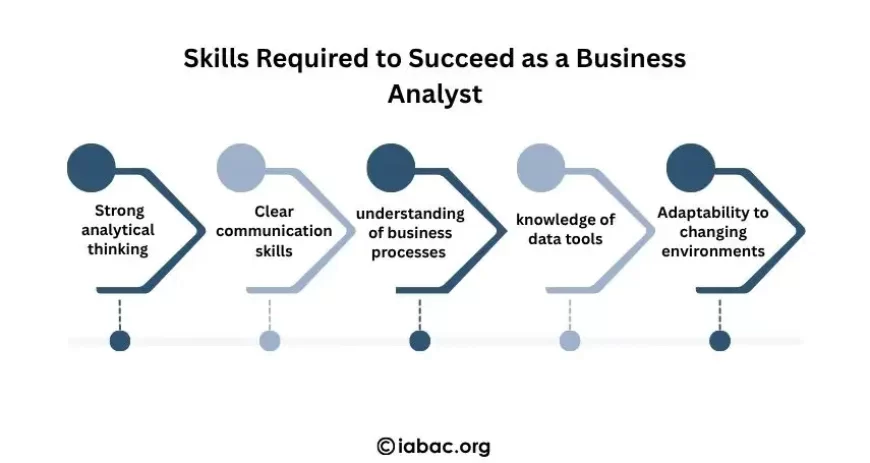
To perform effectively, a business analyst needs a combination of technical and non-technical skills.
Important skills include:
-
Analytical thinking and problem-solving
-
Communication and interpersonal skills
-
Understanding of business processes
-
Basic knowledge of data analysis tools
-
Stakeholder management
In addition, adaptability is crucial, as business environments are constantly evolving.
A strong skill set enables business analysts to handle complex challenges and deliver impactful solutions.
Different Types of Business Analysts in Organisations
The role of a business analyst can vary depending on the organization and industry.
Common types include:
-
IT Business Analyst – focuses on technology solutions
-
Data Analyst – works heavily with data insights
-
Process Analyst – concentrates on improving workflows
-
Product Analyst – supports product development and strategy
Each type plays a unique role but shares the common goal of improving business performance.
Understanding these variations helps organisations assign the right analyst to the right task.
Tools Used by Business Analysts
Business analysts use various tools to perform their tasks efficiently.
These tools help in Data analysis, process modeling, requirement documentation, project management
Popular tools include:
-
Excel for data analysis
-
SQL for database queries
-
Power BI or Tableau for visualisation
-
Jira for project tracking
Using the right tools improves accuracy and efficiency in their work.
Challenges Faced by Business Analysts
Despite their importance, business analysts often face several challenges in their roles.
Common challenges include:
-
Unclear or changing requirements
-
Communication gaps between teams
-
Resistance to change
-
Managing multiple stakeholders
Handling these challenges requires strong problem-solving abilities and effective communication.
Overcoming these obstacles is part of what makes the role both demanding and rewarding.
Why Organisations Need Business Analysts
Organisations operate in a dynamic environment where decisions must be made quickly and accurately. Without proper analysis, decisions can lead to inefficiencies and missed opportunities.
Business analysts help organisations:
-
Make data-driven decisions: companies leveraging data see up to 23% higher profitability
-
Improve operational efficiency: process optimisation can reduce costs by 20–30%
-
Reduce risks in projects: projects with clear requirements are 2x more likely to succeed
-
Align strategies with business goals: aligned organisations report 30% better performance outcomes
Their contribution directly impacts growth and competitiveness.
As organisations continue to evolve, the need for skilled business analysts continues to grow.
Career Growth in Business Analysis
The field of business analysis offers strong career growth opportunities.
Professionals can progress through roles such as:
-
Entry-level Business Analyst
-
Mid-level Analyst
Senior Business Analyst
-
Product Owner or Consultant
With experience, they can move into leadership roles or specialize in areas such as data analytics or strategy.
Continuous learning and skill development play a key role in advancing in this field.
The Future of Business Analysts in Organisations
With the increasing importance of data and technology, the role of business analysts is becoming even more critical.
Organisations are relying more on:
-
Data-driven strategies
-
Automation and AI integration
-
Digital transformation initiatives
Business analysts are expected to adapt to these changes by enhancing their skills and understanding emerging trends.
Their role is shifting from traditional analysis to strategic decision support, making them an integral part of modern organisations.
Actionable Next Steps
For Students
Start with the basics of business analytics and data to understand how organizations function and how decisions are made.
-
Work on small projects to gain practical experience and apply what you learn.
-
Build communication skills to explain ideas clearly and work effectively with others.
For Working Professionals
-
Map your current skills to identify how they align with the business analyst role.
-
Fill gaps in analysis and communication to become more effective in problem-solving.
-
Gain practical exposure by working on real scenarios or cross-functional projects.
For Job Seekers
-
Practice real interview questions to improve confidence and clarity in responses.
-
Use examples in answers to show practical understanding instead of theory.
-
Show problem-solving ability by explaining how you approach and solve business challenges.
A business analyst’s impact continues to grow as organisations rely on structured insights to drive smarter decisions and improve outcomes. Building the right skills, supported by a business analytics certification, helps professionals strengthen their ability to analyze data, align teams, and solve complex challenges, creating strong career opportunities while contributing to business efficiency, innovation, and long-term success in a data-driven environment.