














































Can HR professionals become HR analyst
Are you in HR and considering analytics? Find out how HR professionals can transition into data-focused HR analyst roles with the right skills.

When I started working in HR, I didn’t think data analytics would become such a big part of my job. But as I continued in my role, I saw that becoming an HR analyst could lead to better career options. It allowed me to use my HR knowledge while making smart decisions based on data.
I looked into different Data Analytics Certifications and found them helpful for improving my skills. IABAC was one of the best sources I came across during this time. With more experience, I saw how HR professionals can grow into the role of an HR analyst by learning data skills. This change helped me improve HR processes using data and make better decisions for the team.
HR Is Becoming More Data-Focused
Today, HR is more than just hiring, training, or managing people. Companies are now using data to make better decisions, and this includes decisions about people. HR teams are expected to use data analytics to support planning, hiring, and performance reviews.
Because of this, a new role is growing in the HR field—the HR analyst. These professionals help companies understand employee data and make better decisions about workforce management.
Many HR Professionals Lack Data Skills
Even though many HR professionals are great with people and company policies, they often don’t have experience with data tools. This can make them unsure about switching to roles like HR analyst.
Common concerns include:
-
Do I need to be good at coding?
-
Is this only for people from tech backgrounds?
-
Will I have to start my career from the beginning?
Also, as more companies ask for data skills in HR, professionals who don’t learn these skills may miss out on better job roles.
Can HR Professionals Become HR Analysts Without a Tech Background?
Yes, they can! You don’t need to be from a tech background to become an HR analyst. What you do need is a desire to learn and improve.
Becoming an HR analyst is not the same as becoming a data scientist. It’s more about understanding data, using simple tools, and helping your company make better decisions based on facts.
How HR Professionals Can Step Into Analytics Roles
Here’s a simple path that can help any HR professional move into the role of an HR analyst.
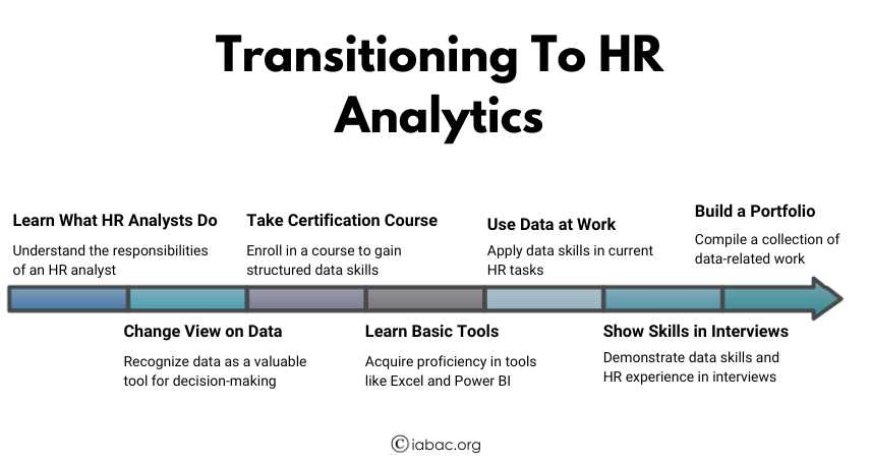
1. Know What an HR Analyst Does
An HR analyst works with employee data to find helpful insights. Some of their tasks include:
-
Checking why employees leave and what can be done to keep them
-
Building simple reports or dashboards to track performance
-
Studying past data to help with future hiring plans
-
Looking at survey feedback to understand employee happiness
Their goal is to help HR teams use data to make better choices.
2. Change the Way You Think About Data
Many HR professionals think data work is hard or only for tech people. But that’s not true. Tools like Excel, Power BI, and Tableau are simple to learn. These tools can help you do useful analysis without writing any code.
Plus, your HR knowledge is a big plus. Since you already understand company culture and people issues, it’s easier for you to use data in a meaningful way.
3. Learn Through Data Analytics Certifications
One of the best ways to learn is through Data Analytics Certifications made for HR professionals. These programs teach you:
-
How to read and work with data
-
What HR metrics (like turnover rate) mean
-
How to show data through charts and graphs
-
How to use data to predict future trends in HR
Look for programs like the Certified HR Analytics Professional from IABAC. These certifications give you proper training and also look good on your resume.
4. Learn Basic Tools and Skills
You don’t need to learn everything at once. Here are a few skills that are helpful:
-
Excel: Learn pivot tables, VLOOKUP, and charts
-
Power BI or Tableau: These help create easy-to-read dashboards
-
Basic statistics: Like average, percentages, and patterns
-
Data cleaning: Fixing errors in data before using it
-
Presenting data: Telling a simple story with your data
Most of these can be learned online or through a Data Analytics Certification course.
5. Use Your Skills at Work Right Away
You don’t need a new job to start using your data skills. Try these simple ideas in your current HR role:
-
Make a small report that shows how many people leave the company each year
-
Use employee feedback to understand what needs to improve
-
Track how well new hires are doing after training
These small steps show your team and managers that you can use data analytics to improve HR work.
6. Create a Portfolio and Get Certified
As you try these new ideas, keep a record of your work. Your portfolio can include:
-
A report on hiring patterns
-
A dashboard showing team performance
-
A case where your data helped solve an HR issue
Also, getting a Certified HR Analytics Professional certificate from IABAC shows that you have real skills in this area. This makes it easier to apply for HR analyst roles in the future.
7. Show Your Skills in Job Interviews
When applying for jobs, highlight:
-
Your HR experience
-
Your new skills with data analytics
-
The Data Analytics Certifications you completed
-
Examples of real work you’ve done with data
This will show hiring managers that you can work with people and data, which is very valuable.
HR Is Changing, and You Can Grow With It
Can HR professionals become HR analysts? Yes, they can.
The role of HR is changing fast. Data is now an important part of how people decisions are made. By learning data analytics and earning a Certified HR Analytics Professional certification, you can keep your skills strong and grow your career.
There’s a growing need for HR analysts. Now is a great time to learn something new, improve your work, and help your company make smarter decisions with data.
-
The HR analyst role is growing in companies that use data for people decisions.
-
You don’t need a tech background to move into this role.
-
Data Analytics Certifications can help you learn new skills and build confidence.
-
Start by using data in your current HR tasks.
-
A Certified HR Analytics Professional certificate from IABAC can boost your career.
Yes, HR professionals can become HR analysts if they learn the right skills. By understanding how to work with data, use tools like Excel or HR software, and make decisions based on numbers, they can take on this new role. As companies rely more on data, this shift can help HR professionals grow in their careers and make a bigger impact in their organizations.