
















































Can You Survive Without Healthcare Analytics Skills
Learn why healthcare analytics skills are becoming essential. Understand how they impact patient care, decision-making, and career growth in the health sector.

There was a time when doctors and healthcare managers made decisions mainly based on experience and instinct. But now, every patient visit, test result, and medical record generates data — data that can help improve care, reduce errors, and make hospitals work more efficiently.
Today, Healthcare Analytics turns that data into insights. It helps doctors and administrators make informed choices instead of guesses. So the real question is — can you succeed in healthcare today without analytics skills? Or are you missing the most important tool of modern medicine?
The New Reality: Data Drives Healthcare
If you walk into a modern hospital, you’ll see dashboards showing live data on patient recovery, treatment performance, and hospital resources. Artificial Intelligence (AI) tools help predict diseases and suggest better treatment plans.
Healthcare has become smarter through data analytics.
Some examples include:
- Predictive analytics helps identify patients at risk before they get sick.
- Machine learning models improve diagnosis accuracy.
- Data dashboards help hospitals manage time, staff, and supplies effectively.
Working without analytics today is like driving without headlights — possible, but risky.
Why Healthcare Analytics Skills Matter So Much
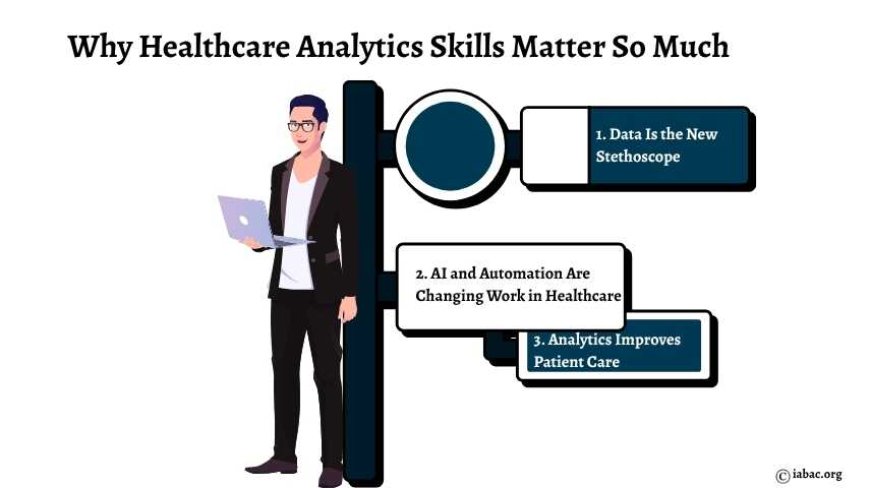
1. Data Is the New Stethoscope
Data helps healthcare professionals make better and faster decisions.
With analytics, hospitals can spot patient readmission risks, track recovery progress, and measure treatment success in real time.
Without these skills, even experienced professionals may miss critical patterns hidden in the data. Having Healthcare Analytics skills today is just as essential as having medical knowledge itself.
2. AI and Automation Are Changing Work in Healthcare
Artificial Intelligence isn’t replacing people; it’s replacing repetitive tasks.
This means people who can understand data and use analytics tools are becoming more valuable than ever. In hospitals, insurance companies, and clinics, professionals who know how to use AI tools and analytics are being promoted faster.
That’s why certifications like Healthcare Analytics Professional or Data Analytics Foundation from IABAC are becoming key to career growth. These programs help you stay ready for the future of healthcare.
3. Analytics Improves Patient Care
Analytics isn’t just about numbers or charts — it’s about improving lives.
For example:
- Predictive models help detect diseases early.
- Data analysis reduces hospital waiting times.
- Tracking real-time data improves safety and treatment quality.
By studying data patterns, hospitals can improve patient experience and make care more personal and effective.
A Real Story of Change
Let’s look at Meera’s story.
She was a hospital operations coordinator with years of experience. She handled data manually in spreadsheets and reports.
When her hospital introduced analytics software, she felt lost. Her colleagues were using data dashboards and predictive models — things she had never learned. Instead of giving up, Meera decided to learn. She joined the IABAC Healthcare Analytics Professional Certification. Within months, she learned how to analyze healthcare data and make better decisions.
Later, she led a project that reduced patient waiting time by 25%.
Meera’s story shows how learning Healthcare Analytics can turn experience into career success.
The Future of Work in Healthcare: Speak the Language of Data
By 2030, most healthcare jobs will need people who can work with data and AI tools. The World Economic Forum says that analytical thinking and digital skills will be among the most important abilities for professionals. In the coming years, healthcare leaders won’t only be doctors or nurses — they’ll also be data-smart professionals who can turn numbers into action.
To keep up, every professional should learn at least the basics of data analytics, AI, and problem-solving using data.
What Are Healthcare Analytics Skills?
Healthcare Analytics means using data to make better healthcare decisions and improve results.
Here are some of the most important skills you should know:
| Skill | Meaning | Why It Matters |
|---|---|---|
| Data Interpretation | Understanding healthcare reports | Supports better decisions |
| Predictive Analytics | Forecasting risks or disease trends | Enables early prevention |
| Data Visualization | Making charts and dashboards | Makes information easy to grasp |
| AI Tools | Using smart tools to analyze data | Saves time and improves accuracy |
| Ethical Data Handling | Protecting patient information | Ensures trust and compliance |
You don’t need to be a data scientist to use these.
You just need data confidence — the ability to understand and apply insights from data.
Analytics Across Every Profession
Analytics is useful not just in healthcare, but in every profession.
People in HR, finance, and management also depend on data to make informed choices.
|
Field |
How Analytics Helps |
Result |
|
Healthcare |
Predicts disease trends, improves treatment |
Better patient care |
|
HR Analyst |
Tracks performance, reduces employee turnover |
Better workforce planning |
|
Finance |
Detects fraud, forecasts risks |
Stronger financial control |
|
Management |
Supports strategic decisions |
Improved business outcomes |
This shows why data knowledge is now a basic skill for professionals in all fields.
How IABAC Helps You Build Analytics Skills
The International Association of Business Analytics Certifications (IABAC) helps professionals learn data analytics through globally recognized programs.
IABAC works with the European Qualification Framework (EQF) to maintain international standards.
Here’s what makes IABAC stand out:
- Globally Recognized: IABAC certifications are accepted across industries and countries, giving professionals more career opportunities.
- Practical Learning: The courses are designed by experts who understand healthcare, business, and data science, ensuring the training is relevant and useful.
- Learn at Your Own Pace: You can study online or through IABAC’s authorized training partners.
- Career Growth: Many learners see job promotions or new opportunities after completing IABAC programs.
Popular Certifications
IABAC offers certifications for different career goals:
- Healthcare Analytics Professional
- Data Analytics Foundation
- Data Analyst Certification
- Finance Analytics Professional
- Data Analytics for Managers
- HR Data Analyst / Human Resources Data Analyst
These programs give you practical skills that apply across healthcare and other industries.
The Formula for Smarter Decisions
Think of it this way:
Effective Decisions = Good Data × Strong Analytical Skills
If either part is missing, your decisions lose accuracy.
In healthcare, both are needed — reliable data and the ability to understand it.
That’s why learning Healthcare Analytics can make a big difference in the quality of work you do.
What Happens If You Don’t Learn Analytics
If you ignore data skills today, you may fall behind tomorrow.
Without analytics:
- Promotions may become harder to achieve.
- Decisions may depend on guesswork instead of evidence.
- Adapting to new technologies may become difficult.
Learning analytics is not just about career growth — it’s about staying relevant and confident in your profession.
How to Start Learning with IABAC
Here’s a simple roadmap to begin your journey:
- Know Your Goals – Decide if you want to work in healthcare, HR, or finance.
- Start with Basics – Learn how to read and visualize data.
- Choose a Certification – Begin with Healthcare Analytics Professional or Data Analytics Foundation.
- Apply What You Learn – Work on small projects or datasets to gain real experience.
- Keep Learning – Update your skills as new tools and techniques appear.
The Future Belongs to Data-Smart Professionals
Healthcare without analytics is like a compass without direction.
Professionals who can connect compassion with data are shaping the future of healthcare.
If you want to move from guesswork to informed action, it’s time to take the next step.
IABAC helps you become:
- Data-smart – understand and use analytics confidently
- Future-ready – able to adapt to digital changes
- Career-strong – skilled across multiple domains like healthcare, HR, and finance
So, can you survive without Healthcare Analytics skills?
Maybe for now. But in a world where data drives decisions, surviving isn’t enough — you need to grow and lead. Learning analytics opens new doors in healthcare and beyond. Start your journey with IABAC today and turn your skills into success.