


























































Certified Data Engineer: Salary, Skills, Path
Certified data engineer certification builds expertise in data pipelines, cloud platforms, salary growth, skills, eligibility, and career opportunities.

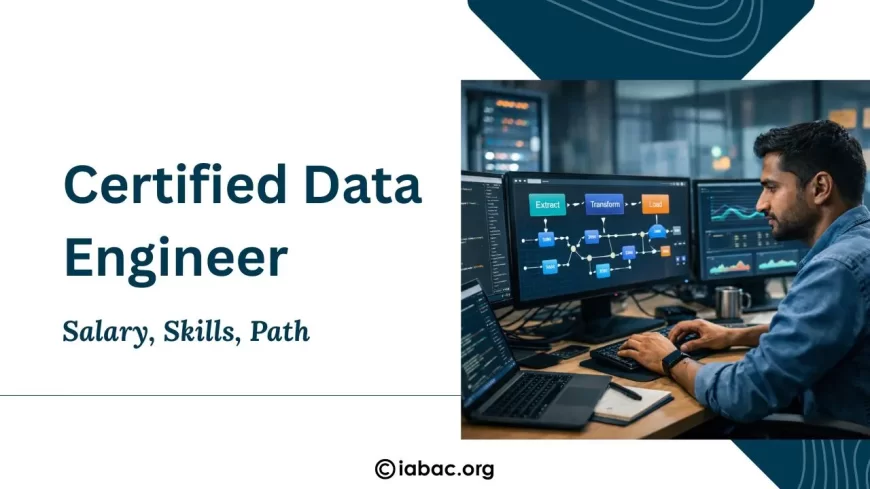
As data volumes grow and cloud adoption accelerates, organizations require professionals who can architect reliable, production-ready data systems. A certified data engineer demonstrates the capability to design scalable pipelines, optimize distributed workloads, and maintain secure cloud-based environments that support real-time analytics and AI deployment.
This certification reflects applied understanding of modern data tools and performance optimization strategies used in real-world environments. With companies actively investing in scalable infrastructure, certified expertise signals readiness to handle complex data ecosystems and build sustainable data engineering careers.
What Is a Certified Data Engineer?
A certified data engineer is a professional who has demonstrated expertise in designing, building, and optimizing data systems through structured certification assessment. The credential confirms proficiency in data architecture, ETL and ELT pipelines, distributed systems, cloud platforms, governance frameworks, and performance optimization.
Unlike general IT certifications, this credential focuses specifically on creating analytics-ready infrastructure. It validates the ability to transform raw data into structured, reliable, and secure assets used for reporting, machine learning, and business intelligence.
Why Certified Data Engineer Certification Matters
The data ecosystem has become more complex with the adoption of cloud platforms, streaming technologies, and AI workflows. Employers increasingly look for verified expertise when hiring for data engineering roles.
This certification helps in:
-
Demonstrating standardized technical knowledge
-
Improving credibility during job applications
-
Strengthening confidence in real-world project handling
-
Increasing salary negotiation leverage
-
Accelerating career progression in data engineering careers
Certification signals commitment to professional growth and mastery of modern data infrastructure.
Core Skills Covered in Certified Data Engineer Certification
A strong certification program evaluates both foundational and advanced competencies required for building scalable data systems.
Data Pipeline Development
Data engineers design ETL and ELT pipelines to collect, clean, transform, and load data from various sources. Certification assesses the ability to build reliable workflows that handle structured and unstructured datasets efficiently.
Cloud Data Engineering
Cloud platforms such as AWS, Azure, and Google Cloud are central to modern data ecosystems. Certified professionals demonstrate the ability to design data lakes, warehouses, and serverless processing pipelines in cloud environments.
Big Data Processing
Handling large-scale datasets requires distributed computing frameworks. Certification validates knowledge of tools like Apache Spark and streaming technologies such as Kafka for real-time data processing.
Database Management
Understanding relational databases and NoSQL systems is essential. Data engineers optimize queries, implement indexing strategies, and ensure high-performance data retrieval.
Data Warehousing Concepts
Designing dimensional models, star schemas, and analytics-ready data warehouses is a critical skill evaluated during certification.
Data Governance and Security
Data privacy and compliance requirements demand secure architecture. Certification covers encryption, access control, auditing, and data lineage tracking.
Automation and Monitoring
Infrastructure automation tools and monitoring frameworks ensure pipeline reliability. Certified professionals understand how to deploy and manage data workflows efficiently.
Certified Data Engineer Certification Curriculum Overview
A comprehensive Data engineer program typically includes:
Introduction to data architecture: Covers the design principles of scalable, reliable, and efficient data systems, including data lakes, warehouses, and distributed architectures.
SQL and advanced querying techniques: Focuses on writing optimized queries, joins, indexing strategies, and performance tuning for efficient data retrieval
Python for data engineering: Teaches data processing, automation, scripting, and pipeline development using Python libraries and frameworks.
ETL and ELT pipeline design: Explains how to extract, transform, and load data from multiple sources into structured storage systems.
Cloud data platform integration: covers deploying and managing data solutions using cloud services
Big data technologies: Introduces distributed processing frameworks such as Apache Spark and Hadoop for handling large-scale datasets.
Real-time streaming systems: Focuses on processing continuous data streams using tools like Kafka for real-time analytics.
Data governance and compliance: Covers data security, access control, privacy regulations, and maintaining data integrity standards.
Performance optimization techniques: Teaches methods to improve pipeline efficiency, reduce latency, and optimize storage and compute costs.
Capstone projects with practical implementation: Provides hands-on experience by building end-to-end data engineering solutions using real-world scenarios.
The curriculum balances theoretical clarity with hands-on practice to ensure applied knowledge.
Eligibility Criteria for Certified Data Engineer
Most certification programs recommend:
-
Basic understanding of databases
-
Familiarity with programming fundamentals
-
Logical reasoning and analytical thinking
-
Interest in working with data systems
Candidates from computer science, IT, analytics, and software backgrounds often pursue this certification, though structured learning paths support skill development regardless of starting point.
Certified Data Engineer Salary and Career Scope
The salary potential for certified data engineers remains strong across major technology hubs.
Entry-level data engineers receive competitive packages compared to other IT roles. With experience in cloud platforms and distributed systems, mid-level professionals see substantial growth. Senior data engineers and data platform leads command significantly higher compensation.
As organizations continue expanding AI initiatives and real-time analytics capabilities, demand for certified professionals remains consistent across industries.
Industries Hiring Certified Data Engineers
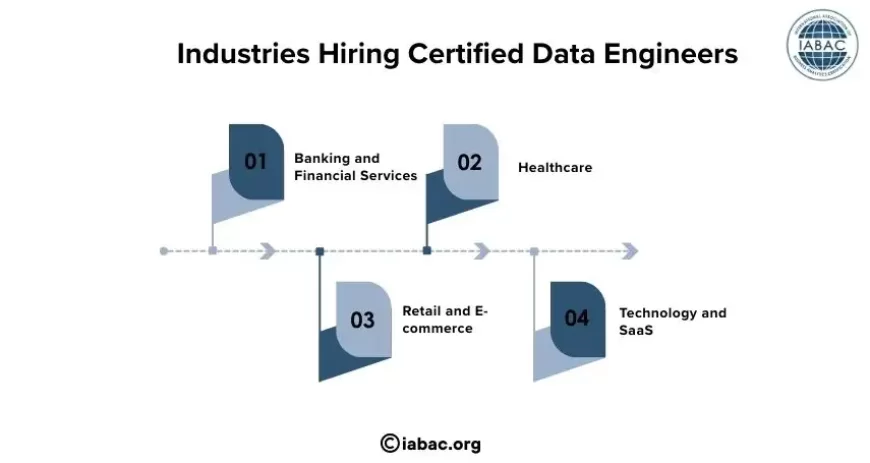
Certified Data Engineers are in strong demand across industries that depend on scalable, secure, and high-performance data systems.
Banking and Financial Services
Financial institutions rely on data engineers to build risk analytics pipelines that process large transaction volumes accurately. They design fraud detection systems capable of identifying suspicious activities in real time. They also develop regulatory reporting infrastructure to ensure compliance and audit readiness.
Healthcare
Healthcare organizations require secure patient data systems that protect sensitive medical information. Data engineers create analytics-ready medical databases to support clinical insights and operational reporting. They also implement compliance-focused storage architecture aligned with healthcare data privacy standards.
Retail and E-commerce
Retail businesses use customer behavior analytics pipelines to track purchasing trends and engagement patterns. Data engineers build recommendation engine pipelines that power personalized shopping experiences. They also manage inventory data processing systems to maintain real-time stock visibility and demand forecasting accuracy.
Technology and SaaS
Technology companies depend on cloud-native data platforms designed for scalability and performance. These professionals implement streaming event processing systems to handle real-time user activity data. They also prepare AI model data pipelines to ensure high-quality datasets for machine learning and automation workflows.
These industries depend on strong data infrastructure to drive efficiency, accuracy, and intelligent decision-making.
Cost and Return on Investment of Certification
The cost of data engineer certification varies depending on the training provider, program duration, and assessment structure. While there is an upfront investment, the long-term benefits include:
-
Improved employability
-
Faster role progression
-
Stronger salary growth
-
Increased technical confidence
-
Access to advanced data engineering careers
Certification often pays for itself through enhanced earning potential and expanded job opportunities.
Common Challenges in Data Engineering Careers
Data engineering involves navigating complex systems and large-scale datasets.
Common challenges include:
-
Managing distributed computing environments
-
Ensuring data consistency
-
Handling streaming data workflows
-
Controlling cloud costs
-
Maintaining governance compliance
Structured certification provides frameworks and best practices to address these challenges effectively.
Tools Commonly Used by Certified Data Engineers
Professionals in this field frequently work with tools like:
-
SQL and advanced database systems: Used to store, manage, and efficiently query structured data with optimized performance and indexing strategies.
-
Python for data processing: Enables data transformation, automation, scripting, and pipeline development for large-scale datasets.
-
Apache Spark & Apache Kafka: Spark handles distributed batch processing, while Kafka manages real-time data streaming and event-driven pipelines.
-
Airflow for workflow orchestration: Automates and schedules complex data pipelines, ensuring tasks run in the correct sequence with monitoring support.
-
Snowflake and cloud data warehouses: Provide scalable, cloud-based storage and analytics environments for high-performance querying and business intelligence.
Familiarity with these tools enhances job readiness and performance in real-world projects.
Future Trends in Data Engineering
The future of data engineering careers is shaped by:
-
Real-time analytics systems
-
AI-ready data pipelines
-
Data mesh architectures
-
Automated governance frameworks
-
Cloud-native serverless processing
-
Integration of MLOps workflows
Professionals who continuously upgrade their skills remain aligned with evolving industry requirements.
How to Get Started with Certified Data Engineer Certification
Preparation typically involves:
-
Strengthening SQL and database fundamentals builds the ability to efficiently query, manage, and optimize structured data systems.
-
Learning Python for data manipulation enables automation, transformation, and scalable processing of large datasets.
-
Understanding cloud platform basics helps in designing and deploying data solutions in scalable, secure environments.
-
Practicing ETL and pipeline development develops the skills required to extract, transform, and load data efficiently across systems.
-
Working on hands-on projects provides practical experience in building end-to-end data engineering solutions.
Choosing a recognized certification program with practical exposure ensures structured learning and measurable skill development.
Why Certified Data Engineer Certification Is a Strategic Career Move
Data infrastructure forms the backbone of analytics and AI systems. Skilled data engineers remain essential to building scalable, secure, and performance-driven platforms.
The Certified Data Engineer certification validates structured expertise, strengthens technical depth, and supports long-term growth in data engineering careers. With expanding demand across industries and increasing reliance on cloud-based data systems, this credential positions individuals for stable, high-impact roles in modern technology environments.
Investing in certified data engineer training builds confidence, credibility, and readiness to contribute effectively to complex data ecosystems while unlocking strong opportunities in evolving data engineering careers.