

















































Confused About Data Science Qualifications? You’re Not Alone
Many professionals feel unsure about data science qualifications. Learn which skills education and certifications support strong career opportunities.

Many professionals today are asking an important career question:
Do companies really care about Data science qualifications and certificates?
People who want to move into Data Science often feel confused. Some think they need a university degree. Others believe only work experience matters. And many wonder whether Data Science Certifications actually help in getting a job.
The truth is simple: companies care about skills, proof of knowledge, and the ability to solve problems. Certificates are not the only thing that matters, but they can help professionals show their knowledge in a clear way. This article explains what companies really expect, how Data science qualifications help your career, and how professionals can learn Data Science in practical ways.
Why are Data Science skills becoming important
Data is now used in almost every industry. Businesses want to understand customer behavior, improve products, and make better decisions. Because of this, the demand for Data Science skills keeps increasing.
Many reports show that companies need more people who understand data. This growth can be compared to an exponential pattern, where the demand rises faster every year.
This simple exponential curve represents how the demand for Data Science professionals continues to rise as companies collect more data.
For professionals who want career growth, learning Data Science can open many opportunities.
What companies really look for in Data Science professionals
When companies hire for data roles, they usually focus on three important things.
1. Practical skills
The most important factor is the ability to work with data.
Employers want people who understand:
- Data analysis
- Statistics
- Python or R programming
- Machine learning basics
- Data visualization
For example, a company may want to know which customers are likely to stop using their service. A data scientist studies past customer data and builds a model that predicts this behavior.
This kind of work shows the real value of Data Science.
2. Proof of knowledge
Even when someone has strong skills, companies still want to see proof that the person understands the field.
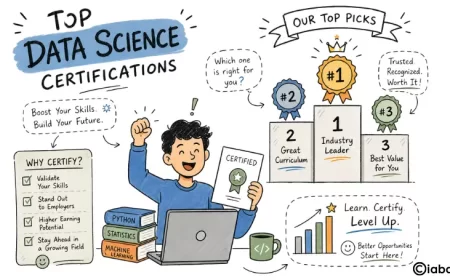
This is where Data Science Certifications become useful.
Certificates show that a person has studied the subject and completed a structured learning path. Recruiters often check Data science qualifications while reviewing resumes because it helps them understand a candidate’s background.
A certification does not replace experience, but it strengthens a professional profile.
3. Continuous learning
Technology changes quickly. New tools appear every year. Because of this, companies respect professionals who continue learning.
Many professionals improve their skills through:
- Online tutorials
- Practice projects
- community learning
- Data Science Certifications
This process of upskilling and reskilling helps people stay relevant in their careers.
Can someone learn Data Science without expensive courses?
Yes. Today, learning Data Science is more accessible than before.
Many professionals start by learning from free sources. The internet has many tutorials, lectures, and practice materials.
For example, beginners can learn:
- Python basics from online videos
- statistics from free tutorials
- machine learning from open educational content
Many people learn these topics through YouTube lessons, online articles, and practice datasets.
This approach helps learners build knowledge step by step.
However, after learning from free resources, many people want something more — recognition of their knowledge.
That is where Data Science Certifications help.
Why certifications still matter
Some professionals think certificates are not important. But in many cases, they play a helpful role.
Here are a few reasons why Data science qualifications matter.
- Resume visibility: Recruiters often review hundreds of applications. Certifications make a profile easier to notice.
- Professional credibility: When certifications come from recognized organizations, employers trust the learning process behind them.
- Career transition: Many professionals move into Data Science from other roles such as marketing, finance, or software development. Certifications help show that they have studied the field seriously.
Learning first, certification later
A smart approach for many learners is simple:
- Learn concepts from free sources
- Practice projects
- Build real skills
- Get certified to validate knowledge
This combination works well because it balances learning and professional recognition.
Many professionals follow this path today.
The role of trusted certification platforms
Not every certificate carries the same value. Companies often trust certifications from organizations that follow professional standards.
One example is
International Association of Business Analytics Certifications.
IABAC focuses on helping professionals improve their skills in analytics, AI, and Data Science. Their certifications are designed to support career development and help professionals show their knowledge clearly.
A learner can study Data Science concepts using many free resources online and then use a certification platform to validate that knowledge.
This approach is practical and accessible for many professionals.
Simple roadmap to build a Data Science career
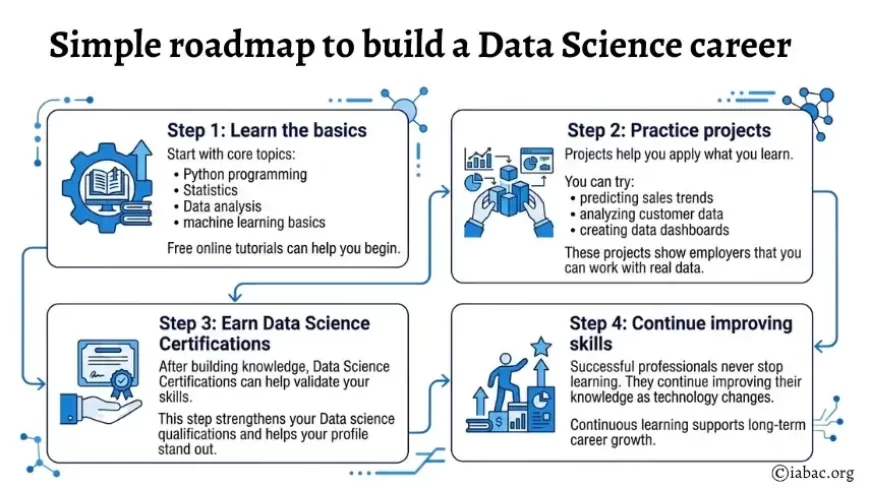
If you want to move into Data Science, you can follow a simple plan.
Step 1: Learn the basics
Start with core topics:
- Python programming
- Statistics
- Data analysis
- machine learning basics
Free online tutorials can help you begin.
Step 2: Practice projects
Projects help you apply what you learn.
You can try:
- predicting sales trends
- analyzing customer data
- creating data dashboards
These projects show employers that you can work with real data.
Step 3: Earn Data Science Certifications
After building knowledge, Data Science Certifications can help validate your skills.
This step strengthens your Data science qualifications and helps your profile stand out.
Step 4: Continue improving skills
Successful professionals never stop learning. They continue improving their knowledge as technology changes.
Continuous learning supports long-term career growth.
Why Data Science Qualifications Will Remain Important
The future of work is strongly connected to data. Companies depend on professionals who can understand information and guide decisions.
Because of this, Data science qualifications will continue to matter. They help show that professionals understand the fundamentals of the field.
Certifications also show commitment to professional development.
For employers, this signals that the candidate is serious about their career.
Building a career in Data Science does not require expensive training or complicated steps.
You can start learning with free online resources. Practice with real datasets. Build small projects that show your ability to work with data. After developing skills, Data Science Certifications help validate your knowledge and strengthen your Data science qualifications. Organizations such as International Association of Business Analytics Certifications support professionals by providing recognized certification pathways that help learners demonstrate their skills.
The most important step is simply to start learning and continue improving.
Start your journey with IABAC today.