
















































What Are Generative AI Assistants and How Do They Work?
Generative AI assistants help users create content, automate tasks, and improve productivity. Understand how they work, features, tools, and real-world uses

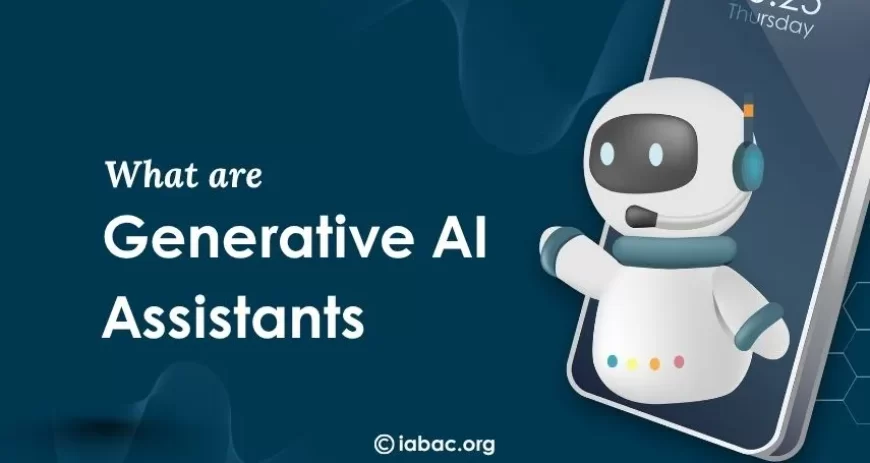
When people hear about generative AI assistants, they usually think of tools that can write or answer questions. But these assistants do more than just answer questions. They are made to understand what you mean, give you useful results, and help you with a lot of different things in your daily life. People are using generative AI assistants more and more to help them make decisions, write and summarize, and automate tasks. When you know how they work, it's easier to use them well and learn skills that are useful with them.
What Are Generative AI Assistants
Generative AI assistants are smart systems that can talk to people, understand what they want, and give useful answers based on the situation. These assistants are different from traditional automation tools because they can make new content, adapt to different situations, and handle tasks that change over time.
These assistants are powered by technologies like natural language processing and machine learning, which let them understand language, figure out what someone means, and respond in a way that makes sense to people.
They are used a lot in many different areas, such as the following:
-
Answering questions through chatbots
-
Making content for writing and talking
-
Summarizing information and documents
-
Assisting with everyday tasks and workflows
-
Providing recommendations and insights
They are different because they can go beyond simple responses and actively help with tasks that need understanding and generation.
How Generative AI Assistants Work
Generative AI assistants work by processing data, using intelligent models, and interacting with users in real time. You can understand their workflow in a structured way.
Understanding Input
The process begins when a user provides input in the form of text, voice, or commands. The assistant analyzes this input using natural language processing to understand intent, context, and meaning.
Instead of relying on keywords alone, the system evaluates:
-
The purpose behind the query
-
The context of the conversation
-
The relationships between words
This allows the assistant to respond accurately even when queries are complex or conversational.
Model Processing
Advanced AI models process the input once they understand it. These models learn from huge amounts of data and can find patterns, guess what will happen, and give useful answers.
The models rely heavily on deep learning techniques, which allow them to:
-
Understand how languages work
-
Get the meaning of more than one sentence.
-
Make outputs that make sense and fit the situation.
Response Generation
After processing, the assistant generates a response. This could take various forms depending on the use case:
-
Answering a question
-
Writing content
-
Summarizing information
-
Recommending actions
-
Automating a task
The response is generated in real time, making the interaction seamless and efficient.
Continuous Learning and Optimization
Generative AI assistants get better over time based on how people use them and what they say. They change based on how users act, improve their responses, and better meet user needs.
This continuous improvement ensures:
-
More accurate answers
-
Better personalization
-
Increased efficiency in task handling
Key Capabilities and Features
These assistants are special because they can do many things in one system.
Conversational Interaction
They can understand natural language, which makes it easy for people to talk to them. Whether you talk to someone or text them, the conversations are meant to feel like real ones.
Context Management
These assistants can remember what happened in previous conversations, which lets them give more relevant and personalized answers. This makes conversations flow better.
Content Generation and Analysis
They can write, summarize documents, and look at data. This means they can be used for both learning and doing things.
Task Automation
Gen AI assistants can do things like set reminders, send emails, and schedule things automatically. They go beyond talking by integrating with tools to carry out tasks.
Key Technologies Behind Generative AI Assistants
Generative AI assistants are made up of a number of advanced technologies that work together to make them smart.
Large Language Models
Gen AI assistants are built on Large Language Models (LLMs). These models learn from a lot of text data and can respond like a person.
They enable:
-
Conversations that take context into account
-
Creating content in different formats
-
Understanding language on a large scale
Deep Learning
Deep learning lets AI systems work with complicated data and find patterns that older systems can't. It is very important for the assistant's ability to produce accurate and useful outputs.
Cloud Infrastructure
Cloud platforms give these models the processing power they need to work in real time. They make sure that everything runs smoothly and is easy to get to.
APIs and Integrations
APIs let Gen AI assistants talk to other tools. This lets them do things like:
-
Fetching data
-
Updating information
-
Starting the workflow
Types of Generative AI Assistants
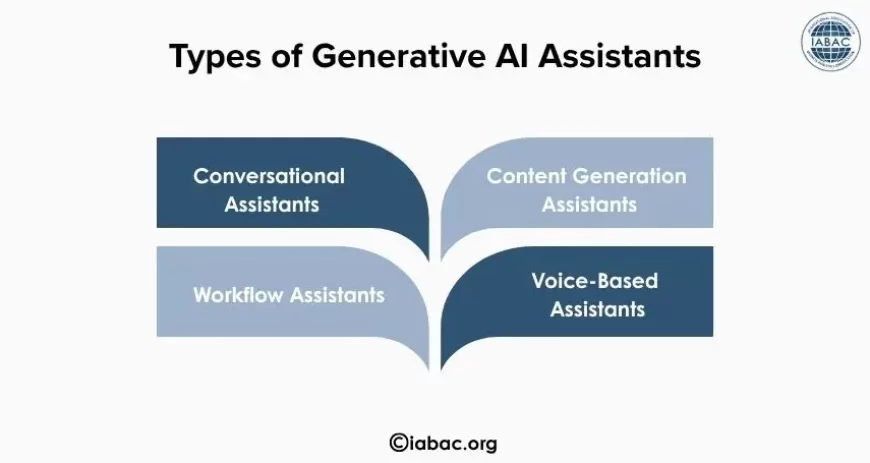
Gen AI assistants come in different forms depending on how they are used.
Conversational Assistants
These assistants are meant to talk to you in a natural way. People often use them in chat apps and virtual help systems.
Content Generation Assistants
These assistants are mostly used for writing, editing, and other creative tasks that involve making written or visual content.
Workflow Assistants
These assistants help you keep track of tasks, organize information, and get more done every day.
Voice-Based Assistants
Voice-enabled assistants let users talk to them, which makes them great for hands-free use.
Real-World Applications of Generative AI Assistants
Gen AI assistants are already part of many everyday tools and platforms.
Customer Support
Through conversational interfaces, they give answers right away and help users solve problems quickly.
Employee Productivity
AI helpers can help you with research, writing, and keeping track of your tasks. Gen AI assistants can help users finish tasks up to 25% faster. Rivian and other companies use AI-powered tools to make their operations run more smoothly.
Document Management
Assistants can pull out important information from documents and summarize them. Using tools like Adobe Acrobat AI Assistant makes it easier to work with PDF files and other files.
Software Development
AI assistants help developers write code and fix problems. Amazon Q and other solutions help with development workflows.
Commonly Used Generative AI Assistant Tools
Several tools are widely used to interact with gen AI assistants.
-
Gemini: Can handle complicated conversations and tasks that use more than one mode of communication.
-
Amazon Q: Helps with technical and development workflows
-
Adobe Acrobat AI Assistant: Helps you understand and summarize documents.
-
Microsoft Copilot: Helps with everyday tasks and productivity
These tools show how AI assistants are becoming a normal part of digital life.
Difference Between AI Assistants and Generative AI Assistants
Learning the difference between traditional AI assistants and gen AI assistants can help you understand why newer systems seem more advanced and useful in everyday situations.
Nature of Interaction
Most AI assistants work by following commands. Devices like Amazon Alexa can follow specific commands, like setting alarms or playing music.
Gen AI assistants can talk to each other. They know the context, can handle multi-step questions, and answer in a way that is more natural and flexible.
Response Capability
Most AI assistants give answers that are already set or based on rules. They can only answer questions that they have been programmed to answer.
Gen AI assistants can create new responses in real time. They generate content, explain concepts, and adapt answers based on the conversation.
Context Understanding
AI assistants don't remember much about past conversations. People often treat each command as if it were its own.
Gen AI assistants remember what was said in previous conversations, which lets them give answers that are more relevant and personal.
Task Complexity
AI assistants are made to help with simple, repetitive tasks like setting reminders, answering basic questions, or controlling devices.
Gen AI assistants can do a lot of hard things, like writing content, summarizing documents, helping with coding, and giving detailed explanations.
Learning and Adaptability
AI assistants improve mainly through updates and predefined improvements.
Gen AI assistants continuously improve through advanced models and usage patterns, becoming more accurate and aligned with user needs over time.
Real-World Examples
-
AI Assistant: Amazon Alexa for basic voice commands
-
Gen AI Assistants:
-
Google Gemini for conversational tasks
-
Microsoft Copilot for productivity
-
Amazon Q for development support
Benefits of Generative AI Assistants
Gen AI assistants are gaining popularity because of the value they bring to everyday use.
Improved Productivity
They help you get things done faster by helping you write, do research, and stay organized.
Time Savings
Automating everyday tasks cuts down on the time you spend doing the same thing over and over.
Ease of Use
They are easy to use even for people who aren't tech-savvy because they use natural language.
Better Learning Support
They can explain concepts, summarize information, and assist in skill development.
Challenges and Considerations
While gen AI assistants are useful, it is important to understand their limitations.
Accuracy and Verification
AI-generated responses may not always be fully accurate, so validation is important.
Data Privacy
Sharing sensitive information requires caution and awareness of how data is used.
Over-Reliance
Depending too much on AI without understanding the output can lead to errors.
Learning Curve
Users may need time to understand how to use these tools effectively.
The Future of Generative AI Assistants
Gen AI assistants are expected to become more advanced and more integrated into everyday life. As technology improves, these systems will offer better context understanding, faster responses, and more personalized interactions.
Future developments are likely to include:
-
More human-like conversations
-
Better integration with apps and devices
-
Increased personalization based on usage
-
Improved accuracy and reliability
As these assistants continue to evolve, they will become an essential part of how people interact with technology.
Generative AI assistants are changing how people interact with information, tools, and everyday tasks. Their ability to understand context, generate meaningful responses, and assist across different activities makes them highly useful in both personal and professional settings.
Learning how these systems work and how to use them effectively through generative AI certification can open up strong opportunities in AI-related careers.