




















































What Are Data Science Certificates and Why Do They Matter?
Are data science certificates worth your time? Learn their value, career impact, job roles, and how to choose the right one.


If you’ve ever searched “how to become a data scientist, you’ve probably felt overwhelmed within minutes.
One page tells you to learn Python.
Another says you need machine learning.
Someone else says you need a degree.
And everywhere you look, you see the phrase “data science certificate.”
But what does that actually mean?
Is it just another online badge?
Does it really help you get hired?
Or is it just marketing wrapped in fancy words?
These are real questions — and you’re not alone in asking them.
As data science becomes one of the most in-demand skills across industries, certificates have emerged as a popular way to prove your knowledge. But not all certificates are equal, and not all of them matter in the same way.
Let’s break this down simply — without hype, without jargon — so you can understand what data science certificates really are and whether they make sense for you.
Why People Are Searching for Data Science Certificates
Data science is no longer limited to research labs or large technology companies. Today, it plays a critical role across healthcare, finance, marketing, manufacturing, government, and many other industries. As organizations rely more on data-driven decisions, the demand for data skills continues to grow.
At the same time, many people want to enter or advance in this field but struggle to find a clear starting point. Traditional degrees often require years of study and significant financial investment. On the other hand, self-learning through scattered online resources can feel unstructured and difficult to validate.
This gap has made data science certificates increasingly attractive.
They offer a more practical middle path — one that combines structured learning with measurable outcomes. Instead of navigating endless tutorials or committing to long academic programs, learners can follow a defined curriculum that focuses on essential concepts and skills.
Another reason people search for data science certificates is the need for proof of learning. In a competitive job market, simply saying “I’m learning data science” is rarely enough. Certificates help demonstrate seriousness, consistency, and foundational knowledge in a way that employers can quickly understand.
For many learners, certificates also provide clarity. They help answer important questions such as:
-
What should I learn first?
-
Which skills actually matter?
-
How do I know I’m progressing in the right direction?
Because of this, data science certificates have become a practical entry point for students, professionals, and career switchers who want structure, direction, and credibility while building data skills.
What Are Data Science Certificates?
Data science certificates are formal credentials awarded after completing a structured learning or assessment process that validates knowledge in data science concepts and skills.
Unlike casual online courses, certificates are designed to confirm that an individual meets a defined level of competency. They typically assess understanding across key areas such as data analysis, statistics, machine learning, and analytical thinking.
A data science certificate may be issued after:
-
Passing an assessment or examination
-
Completing a structured learning pathway
-
Demonstrating applied understanding through tasks or evaluations
Their main purpose is to provide recognizable evidence of capability, especially in fast-evolving technical fields.
What Do Data Science Certificates Usually Cover?
While coverage may vary, most reputable data science certificates focus on core foundations rather than tools alone. Common areas include:
Core Concepts
-
Data types and data structures
-
Data collection and preparation
-
Exploratory data analysis
-
Statistical thinking
Programming and Analysis
-
Basics of Python or R
-
Working with datasets
-
Data manipulation concepts
-
Writing logical workflows
Machine Learning Fundamentals
-
Model training concepts
-
Evaluation metrics
-
Overfitting and generalization
Data Visualization and Communication
-
Interpreting results
-
Presenting insights clearly
-
Using charts and dashboards
-
Storytelling with data
Business and Ethical Understanding
-
Translating data into decisions
-
Problem framing
-
Responsible and ethical data use
Rather than teaching only tools, strong certificates emphasize understanding why methods work and how to apply them logically.
Why Do Data Science Certificates Matter Today?
The modern job market values skills more than titles. Employers increasingly look for proof that a candidate can actually apply knowledge, not just list qualifications.
Data science certificates matter because they:
-
Help validate practical knowledge
-
Provide structured learning in a complex field
-
Reduce uncertainty for employers
-
Help candidates stand out in competitive markets
-
Support continuous upskilling
-
Align learning with industry expectations
As technology evolves quickly, certificates also help professionals keep their skills current without committing to long academic programs.
How Data Science Certificates Are Used in Real-World Hiring
In real hiring scenarios, certificates often serve as signals rather than guarantees.
They help recruiters:
-
Shortlist candidates for entry-level or junior roles
-
Identify motivated learners
-
Verify foundational understanding
-
Reduce screening effort
For professionals, certificates help:
-
Strengthen resumes and LinkedIn profiles
-
Support internal role changes
-
Back up career transitions
-
Demonstrate learning consistency
While experience still matters most, certificates can open the door to conversations.
Jobs You Can Target After a Data Science Certificate
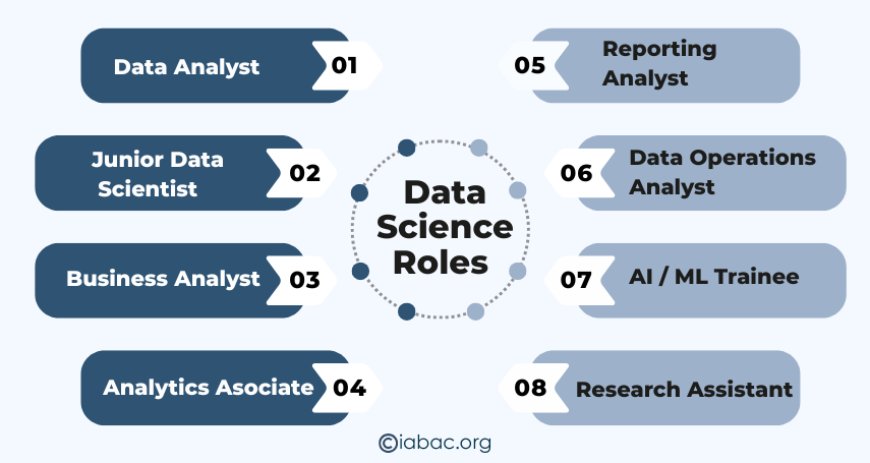
A data science certificate on its own does not guarantee a specific job title, but it can significantly support entry into several early- and mid-level roles. These roles typically value foundational knowledge, analytical thinking, and the ability to work with data, rather than deep specialization from day one.
Below is a clearer look at the most common roles learners can target after completing a data science certificate, along with what each role usually involves.
A Data Analyst focuses on turning raw data into meaningful insights that support business decisions.
Typical responsibilities include:
-
Cleaning and organizing datasets
-
Analyzing trends and patterns
-
Creating reports and dashboards
-
Interpreting results for non-technical teams
-
Supporting decision-making with data
This role is often one of the most accessible entry points for learners with foundational data science skills.
Junior Data Scientist
A Junior Data Scientist works under senior team members and focuses on learning how models and analytical workflows are built in real environments.
Common tasks include:
-
Assisting with data preparation and exploration
-
Supporting model development and testing
-
Running experiments and evaluating results
-
Documenting findings and assumptions
This role is suitable for those who understand core concepts like statistics, machine learning basics, and data handling.
Business Analyst
Business Analysts focus on connecting data insights with business needs. They translate questions from stakeholders into analytical tasks.
Typical responsibilities:
-
Understanding business problems
-
Analyzing operational or performance data
-
Creating reports and dashboards
-
Communicating insights clearly
-
Supporting strategy and planning
A data science certificate helps by strengthening analytical thinking and data interpretation skills used in this role.
Analytics Associate
An Analytics Associate supports analytics teams by handling structured analysis and reporting tasks.
Common responsibilities include:
-
Preparing datasets for analysis
-
Performing descriptive and diagnostic analysis
-
Maintaining dashboards
-
Supporting senior analysts and scientists
-
Ensuring data accuracy
This role is well suited for beginners building confidence with data workflows.
Reporting Analyst
A Reporting Analyst focuses on generating regular reports and insights used by leadership and operations teams.
Typical duties include:
-
Creating automated or recurring reports
-
Monitoring key performance indicators (KPIs)
-
Ensuring data consistency
-
Visualizing trends and metrics
-
Supporting data-driven reviews
Strong fundamentals in data handling and visualization make this role accessible after certification.
Data Operations Analyst
A Data Operations Analyst works at the intersection of data quality, systems, and workflows.
Responsibilities often include:
-
Monitoring data pipelines
-
Ensuring data accuracy and consistency
-
Supporting data governance processes
-
Troubleshooting data issues
-
Coordinating between technical and business teams
This role benefits from understanding how data flows through systems, a concept often introduced in structured data science learning paths.
AI / ML Trainee
An AI or Machine Learning Trainee role is designed for beginners who are learning how intelligent systems are built and applied.
Typical activities include:
-
Assisting in preparing training data
-
Understanding model workflows
-
Running basic experiments
-
Evaluating model outputs
-
Learning supervised and unsupervised concepts
This role focuses more on learning and exposure than ownership and is ideal for those planning to grow into advanced AI roles.
Research Assistant
A Research Assistant supports analytical or experimental work in academic, corporate, or applied research environments.
Responsibilities may include:
-
Collecting and organizing datasets
-
Running basic statistical analysis
-
Supporting experiments or studies
-
Documenting results
-
Assisting senior researchers
This role suits individuals interested in deeper analytical thinking, experimentation, and structured inquiry.
Skills to Build Alongside a Data Science Certificate
To get real value from certification, learners should also develop:
-
Problem-solving and logical thinking
-
Data cleaning mindset
-
Clear communication of insights
-
Business understanding
-
Basic SQL and Python fluency
-
Curiosity and analytical reasoning
Certificates work best when paired with hands-on practice and real-world thinking.
How Data Science Certificates Support Career Growth
A well-designed data science certificate can support career development in several ways:
1. Improve Employability
Certificates signal that a candidate has invested time in building relevant skills and understands core concepts used in real-world analytics.
2. Help Career Switchers Transition
Professionals from non-technical backgrounds often use certificates to build foundational knowledge and demonstrate commitment to entering data-related roles.
3. Strengthen Professional Profiles
Adding a recognized certificate can improve resumes, LinkedIn profiles, and job applications.
4. Build Confidence for Interviews
Structured learning helps candidates explain concepts clearly during interviews and technical discussions.
5. Support Internal Career Growth
Employees can use certifications to qualify for analytics-related roles or responsibilities within their organizations.
Who Should Consider a Data Science Certificate?
Data science certificates are useful for a wide range of learners, including:
-
Students exploring analytics careers
-
Fresh graduates seeking employable skills
-
Working professionals upgrading capabilities
-
Career switchers entering data roles
-
Analysts expanding into advanced analytics
-
Managers aiming to become more data-driven
-
Non-technical professionals seeking analytical literacy
Because certificates vary in depth, individuals can choose options aligned with their experience level and goals.
Data Science Certificates vs Degrees: Understanding the Difference
Both degrees and certificates serve different purposes.
Degrees typically offer:
-
Long-term academic education
-
Theoretical depth
-
Broader subject coverage
-
Higher time and financial investment
Certificates typically offer:
-
Shorter learning cycles
-
Focused, skill-based content
-
Practical orientation
-
Flexibility for working professionals
Rather than replacing degrees, certificates often complement them by adding applied and updated skill validation.
What Makes a Good Data Science Certificate?
Not all certificates offer the same value. A strong data science certificate usually includes:
-
Clearly defined learning outcomes
-
Alignment with industry skill requirements
-
Assessment-based validation
-
Emphasis on conceptual understanding
-
Practical application of knowledge
-
Transparent evaluation criteria
-
Focus on real-world relevance
These factors help ensure that the certificate reflects genuine capability rather than just course participation.
Are Data Science Certificates Worth It?
The value of a data science certificate depends on how it is chosen and used.
They are worth it when:
-
They focus on skills, not just content
-
They include meaningful assessment
-
They align with your career goals
-
They complement hands-on practice
-
They come from credible frameworks
Certificates are not shortcuts to instant jobs, but they can significantly strengthen learning paths when paired with effort and practice.
How to Choose the Right Data Science Certificate
Before selecting a certificate, consider the following:
-
Your current skill level
-
Your long-term career goals
-
The depth of the curriculum
-
Whether assessments are included
-
Recognition and credibility
-
Learning flexibility
-
Skill coverage versus tool focus
Choosing thoughtfully ensures better long-term value.
How Long Does It Take to Earn a Data Science Certificate?
The time required depends on depth and structure:
-
Short programs: a few weeks
-
Medium programs: 3–6 months
-
Advanced or part-time paths: longer
Learning pace, prior experience, and time commitment all affect duration.
Common Misconceptions About Data Science Certificates
Myth 1: A certificate guarantees a job
Reality: Certificates improve readiness but do not replace experience.
Myth 2: All certificates are the same
Reality: Quality, structure, and evaluation vary widely.
Myth 3: Only top universities matter
Reality: Skill validation and learning outcomes matter more than brand names.
Myth 4: You must be good at math before starting
Reality: Many programs teach concepts progressively.
The Future of Data Science Certification
As hiring becomes more skill-focused, certifications are evolving toward:
-
Competency-based validation
-
Modular learning paths
-
Continuous skill updates
-
Alignment with real job roles
-
Greater emphasis on ethics and governance
These trends suggest that certificates will continue playing a meaningful role in professional development.
Why Data Science Certificates Still Matter
Data science certificates help bridge the gap between learning and employability. They offer structure, validation, and direction in a rapidly changing field. While they are not a substitute for experience, they serve as an important stepping stone for building confidence, credibility, and capability.
When chosen thoughtfully and paired with practice, data science certificates can be a valuable part of a long-term learning journey.