























































Is Machine Learning a Good Career Choice in 2026?
Is machine learning a good career in 2026? Yes. Discover the top ML roles, in-demand skills, salary trends, and how to launch your career.


If you're considering a machine learning career in 2026, you've probably come across mixed opinions. Some people believe AI is creating endless opportunities, while others argue that AI tools will reduce the need for machine learning professionals.
So, what is the reality? Let's take a closer look.
Is Machine Learning a Good Career in 2026?
Yes, a machine learning career remains one of the strongest technology career choices available today.
Organizations are moving from AI experimentation toward large-scale implementation. As AI adoption increases, the demand for professionals who can build, deploy, monitor, and improve machine learning systems continues to rise.
The World Economic Forum projects that AI, Big Data, and Machine Learning Specialists will remain among the fastest-growing occupations globally through 2030.
There is one important reality to understand:
Entry-level competition has increased significantly. Employers value hands-on experience, portfolios, internships, and project work more than certificates alone.
If you enjoy coding, mathematics, problem-solving, data analysis, and continuous learning, a machine learning career offers strong long-term potential.
-
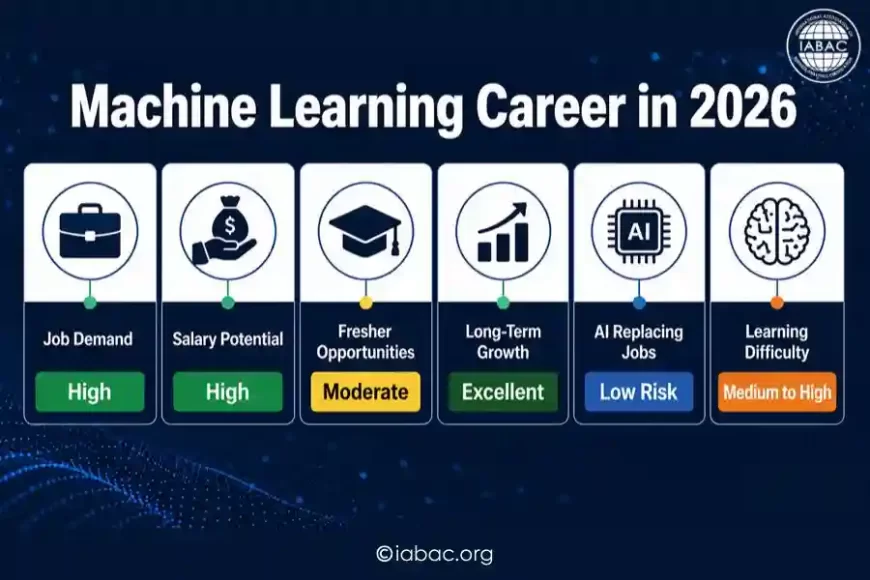
Job Demand → High
-
Salary Potential → High
-
Fresher Opportunities → Moderate
-
Long-Term Growth → Excellent
-
AI Replacing Jobs → Low Risk
-
Learning Difficulty → Medium to High
Why Machine Learning Is Growing Faster Than Ever in 2026
1. Businesses Are Moving From AI Experiments to AI Products
A few years ago, many organizations were testing AI through pilot projects. Today, companies are embedding machine learning into everyday business operations.
Common applications include:
-
Recommendation engines
-
Fraud detection systems
-
Predictive maintenance
-
Customer behavior prediction
-
Demand forecasting
-
Intelligent search
-
Generative AI assistants
-
Personalized marketing platforms
Companies are seeing clear business value from these implementations, which creates sustained hiring demand.
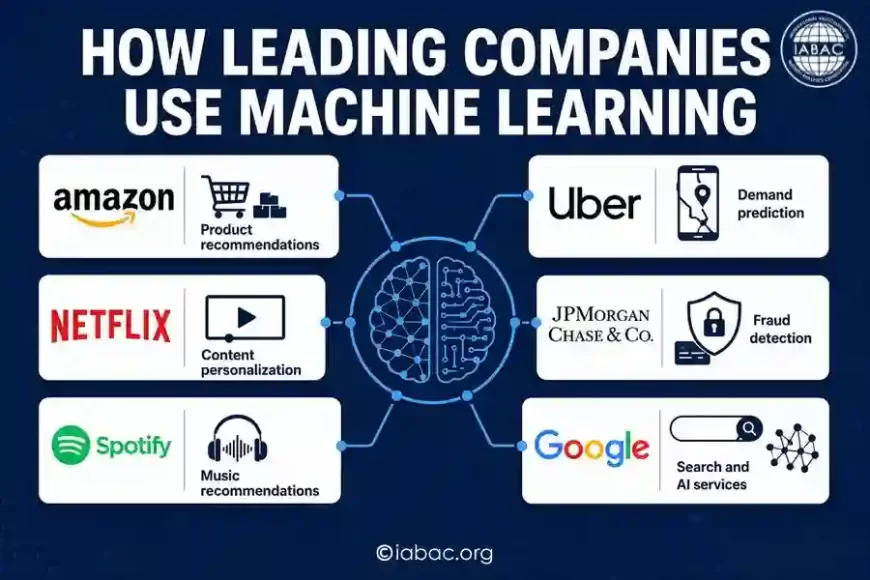
Machine learning professionals are helping build and improve products used by billions of people worldwide.
Some well-known examples include:
-
Amazon → Product recommendations
-
Netflix → Content personalization
-
Spotify → Music recommendations
-
Uber → Demand prediction
-
JPMorgan Chase → Fraud detection
-
Google → Search and AI services
As more businesses integrate AI into their products and operations, the need for skilled machine learning professionals continues to grow.
2. Every Industry Is Hiring AI Talent
Machine learning is no longer limited to technology companies.
Industries actively hiring machine learning professionals include:
-
Healthcare
-
Banking and finance
-
Insurance
-
Retail
-
E-commerce
-
Manufacturing
-
Logistics
-
Telecommunications
-
SaaS companies
-
Education technology
A healthcare company may use machine learning to detect diseases earlier. A retail brand may use it to forecast inventory demand. A logistics company may use it to optimize delivery routes.
The opportunities span almost every sector.
3. Talent Gap Remains Significant
One reason machine learning continues to offer strong career opportunities is the gap between learning concepts and applying them in business environments.
AI and machine learning remain among the fastest-growing skill areas globally. Yet many employers struggle to find candidates who can move beyond theory and contribute to production-ready AI projects.
Technical skills such as data engineering, model deployment, cloud platforms, and MLOps are still in short supply. As organizations expand their AI initiatives, they increasingly seek professionals who can combine machine learning knowledge with practical implementation skills.
For aspiring professionals, this creates a clear opportunity. In 2026, many employers are no longer looking for candidates who can only build machine learning models. The strongest candidates who can build, deploy, and maintain machine learning solutions often stand out in a competitive job market.
What the Machine Learning Job Market Looks Like?
Several hiring segments are contributing to growth:
-
AI startups
-
Product companies
-
Global Capability Centers (GCCs)
-
Enterprise organizations
-
Consulting firms
-
FinTech companies
-
SaaS providers
Large enterprises are investing in AI initiatives, while startups are building AI-first products from the ground up.
Both create strong machine learning job opportunities.
What Companies Actually Want in Candidates?
Many learners assume that Python and machine learning algorithms are enough.
Employers expect much more.
Key machine learning skills include:
-
Python programming
-
SQL
-
Data preprocessing
-
Feature engineering
-
Cloud platforms
-
API development
-
Model deployment
-
LLM integration
-
Business problem-solving
Recruiters increasingly favor candidates who can build complete solutions rather than isolated models.
Is It Hard to Get a Machine Learning Job as a Fresher?
The honest answer is yes.
A machine learning career has a more demanding starting point compared to many software roles.
However, it is far easier than entering advanced AI research positions.
Freshers improve their chances significantly when they have:
-
Internship experience
-
Strong GitHub portfolios
-
End-to-end projects
-
Open-source contributions
-
Practical deployment experience
Employers consistently prioritize demonstrated ability over theoretical knowledge.
Machine Learning Job Opportunities in 2026
1. Machine Learning Engineer
Machine Learning Engineers build, train, optimize, and deploy predictive models.
Typical responsibilities include:
-
Data preparation
-
Model development
-
Performance evaluation
-
Deployment
-
Monitoring
2. AI Engineer
AI Engineers often work with generative AI, LLMs, conversational systems, and intelligent applications.
Many organizations are expanding AI Engineer hiring faster than traditional software positions.
3. Data Scientist
Data Scientists focus on extracting insights, identifying patterns, and supporting business decisions.
Many skills overlap with machine learning roles.
MLOps is becoming one of the fastest-growing specializations.
These professionals manage:
-
Model deployment
-
Infrastructure
-
Monitoring
-
Automation
-
CI/CD pipelines
5. NLP Engineer
Demand continues to rise because of:
-
Chatbots
-
Virtual assistants
-
LLM applications
-
Enterprise AI search
6. Computer Vision Engineer
Computer vision powers applications in:
-
Healthcare imaging
-
Manufacturing quality inspection
-
Autonomous systems
-
Security monitoring
Machine Learning Skills Required in 2026
Technical Skills
Every machine learning career starts with strong fundamentals.
Focus on:
-
Python
-
SQL
-
Statistics
-
Probability
-
Linear algebra
-
Data structures
-
Machine learning algorithms
Modern AI Skills Employers Want
The hiring market has evolved rapidly.
Organizations increasingly seek experience with:
-
Large Language Models (LLMs)
-
Retrieval-Augmented Generation (RAG)
-
Prompt engineering
-
Vector databases
-
Model deployment
-
Cloud infrastructure
Many candidates struggle because they learn machine learning concepts but never apply them to modern AI systems.
Soft Skills That Create Career Growth
Technical skills open doors.
Soft skills accelerate growth.
Important areas include:
-
Communication
-
Business understanding
-
Stakeholder management
-
Critical thinking
-
Problem-solving
Machine Learning vs Data Science Career: Which Is Better?
|
Category |
Machine Learning |
Data Science |
|
Coding |
Higher |
Moderate |
|
Statistics |
Moderate |
High |
|
Salary |
Higher |
High |
|
Entry Barrier |
Higher |
Moderate |
|
Future Growth |
Excellent |
Excellent |
Choose Machine Learning If
You love:
-
Building products
-
Coding extensively
-
AI systems
-
Model deployment
-
Engineering-focused work
Choose Data Science If
You love:
-
Analytics
-
Research
-
Statistics
-
Business insights
-
Decision support
Both career paths offer excellent opportunities.
Is a Machine Learning Career the Right Fit for You?
You may enjoy a machine learning career if:
✔ You enjoy coding and software development
✔ You like solving complex problems
✔ You enjoy working with mathematics, statistics, and data
✔ You are curious about AI and emerging technologies
✔ You are comfortable continuously learning new tools and frameworks
Machine Learning May Not Be the Best Fit If
✘ You dislike coding
✘ You are looking for quick job placement with minimal preparation
✘ You prefer non-technical or creative-only roles
✘ You are unwilling to regularly update your skills
Your Roadmap to a Machine Learning Career in 2026
Step 1: Learn Python
Python remains the most important programming language for machine learning.
Step 2: Build Mathematical Foundations
Focus on:
-
Statistics
-
Probability
-
Linear algebra
Step 3: Learn Core Machine Learning Concepts
Understand:
-
Regression
-
Classification
-
Clustering
-
Model evaluation
Step 4: Build Practical Projects
Examples include:
-
House price prediction
-
Customer churn prediction
-
Recommendation systems
-
Resume screening tools
Step 5: Learn Deployment
Many candidates stop after model training.
Employers value candidates who can deploy solutions.
Step 6: Create a GitHub Portfolio
A strong GitHub profile often creates more impact than multiple certificates.
Step 7: Apply for Internships
Internships provide industry exposure and improve hiring outcomes significantly.
Learners who prefer structured guidance often follow certification-based pathways that combine machine learning fundamentals, practical projects, portfolio development, and deployment experience. Programs such as IABAC's machine learning certification are designed around these industry expectations.
A Common Career Mistake That Slows Progress
Learners spend months collecting certifications while avoiding projects.
Recruiters rarely hire based solely on certificates.
They evaluate:
-
Project quality
-
Problem-solving ability
-
Portfolio strength
-
Deployment experience
-
Practical understanding
A candidate with three strong projects often performs better in interviews than someone with ten certificates and limited hands-on work.
Do You Need a Degree for a Machine Learning Career?
A degree can help, especially in engineering and computer science.
However, many successful professionals come from:
-
BCA programs
-
BSc programs
-
Mathematics backgrounds
-
Career transition paths
Employers increasingly prioritize:
-
Skills
-
Projects
-
GitHub portfolios
-
Internship experience
-
Demonstrated outcomes
A strong portfolio can compensate for a non-traditional educational background.
Will AI Replace ML Engineers?
The short answer is no.
AI is changing the role of machine learning engineers, but it is unlikely to replace them.
AI tools can help with:
-
Writing code faster
-
Generating documentation
-
Automating model tuning
-
Speeding up experimentation
What AI Cannot Easily Replace
Organizations still require professionals who understand:
-
Business objectives
-
Data quality issues
-
Model selection
-
Deployment strategy
-
Risk management
-
Performance monitoring
As AI adoption grows, companies are looking for engineers who can work effectively with AI tools rather than compete against them. Professionals who combine machine learning expertise with practical implementation skills are expected to remain in strong demand throughout the coming years.
Why Demand Continues to Grow
As AI adoption expands, organizations need more professionals who can implement and manage AI systems effectively.
AI is changing workflows, yet it is also creating new categories of machine learning jobs.
Who Should Consider a Machine Learning Career in 2026?
A machine learning career is a strong fit for:
-
Engineering students
-
Software developers
-
Data analysts
-
Career switchers
-
AI enthusiasts
It may be challenging for:
-
People who dislike coding
-
Individuals seeking rapid results with minimal effort
-
Learners unwilling to update their skills regularly
Frequently Asked Questions
Is machine learning a good career in India in 2026?
Yes. Demand remains strong across startups, product companies, GCCs, and enterprise organizations. A machine learning career offers excellent growth potential for candidates with practical skills.
What is the salary of a machine learning engineer in India?
Freshers typically earn between ₹6–12 LPA, while experienced professionals can earn ₹25 LPA or more depending on expertise and company type.
Is machine learning better than data science?
Machine learning is generally more engineering-focused, while data science emphasizes analytics and business insights. The better option depends on your interests and strengths.
Can I learn machine learning without a computer science degree?
Yes. Many professionals enter the field through mathematics, statistics, engineering, and self-directed learning pathways.
Is machine learning still in demand?
Absolutely. Organizations across healthcare, finance, retail, manufacturing, and technology continue to invest heavily in AI and machine learning capabilities.
Should You Choose a Machine Learning Career in 2026?
If you are looking for a field with strong demand, attractive salaries, continuous innovation, and long-term growth, a machine learning career remains an excellent choice in 2026.
Competition is higher than it was a few years ago, yet opportunities continue to grow as organizations across industries accelerate AI adoption. Employers increasingly seek candidates who can apply machine learning to real-world challenges, build practical projects, and work with modern AI technologies.
Globally recognized machine learning certifications from organizations such as IABAC can strengthen your profile by validating your knowledge and providing an industry-relevant learning path. It increases value significantly by combining practical experience, project work, and a strong portfolio.
For students, developers, analysts, and career switchers who are keen on technology, problem-solving, and continuous learning, a machine learning career remains one of the most promising career paths in 2026 and beyond.