


















































Start Your Career with Data Science Programs
Learn data science with IABAC certifications. Gain practical skills in analytics, machine learning, and AI for global career growth and industry recognition.


Data Science Programs are learning courses that teach you how to understand and use data to make better decisions. These programs help you learn how to collect, clean, and analyze data to find useful patterns and insights.
They usually cover subjects such as statistics, programming, data visualization, machine learning, and data mining. With these skills, learners can build careers as Data Scientists, Data Analysts, Machine Learning Specialists, and other related roles that focus on using data to solve business problems.
Understanding Data Science Certifications
Along with learning programs, many professionals also choose to earn Data Science Certifications. These are official recognitions that prove your skills and knowledge in data science.
Popular certifications include:
- Data Science Foundation Certification – Great for beginners who want to learn the basics.
- Data Science Developer Certification – Focuses on hands-on programming and building data models.
- Machine Learning Expert Certification – Covers advanced topics like model training, testing, and tuning.
- Data Scientist Certification – Confirms complete knowledge in analytics, predictive modeling, and real-world applications.
These certifications help professionals show their abilities to employers and open up more career opportunities.
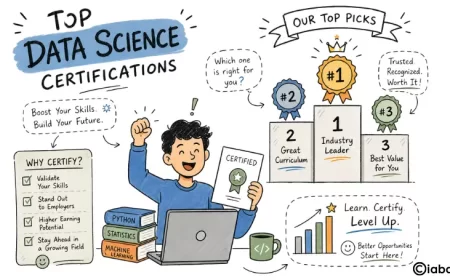
Top Data Science Certifications in 2026
Here are some popular Data Science Certifications that can help you grow your career:

- Data Science Foundation Certification: Perfect for newcomers who want to understand the basics of data analysis and statistics.
- Data Science Developer Certification: Focuses on programming, algorithms, and building machine learning models.
- Machine Learning Expert Certification: Helps you gain deeper knowledge in machine learning, model tuning, and automation.
- Data Scientist Certification: Proves your ability to work on complete projects from data collection to business insights.
Each of these certifications builds on the previous one, helping you progress step by step in your learning journey.
Why Are Data Science Certifications Important?
Many professionals and students choose certifications to build confidence and show employers that they have the right skills.
Here’s a simple view of the main benefits:
|
Benefit |
How It Helps |
|
Proof of Skills |
Shows employers that you understand data science tools and techniques |
|
Global Acceptance |
Certifications from organizations like IABAC are valued across countries |
|
Career Switch |
Great for both technical and non-technical professionals entering analytics |
|
Better Pay |
Certified data science experts often earn higher salaries |
|
More Interview Calls |
Adds credibility to your resume and online profiles |
|
Structured Learning |
Helps you learn step-by-step with clear guidance and projects |
Types of Data Science Certifications
1. Foundation Level Certifications
Perfect for beginners and students who are new to data science.
You’ll learn the basics of Python, statistics, and how to work with data.
2. Professional or Advanced Certifications
Ideal for those who already know the basics and want to grow further.
Focus areas include advanced analytics, AI, and real-world data projects.
3. Industry-Specific Certifications
These certifications focus on how data science applies to specific areas such as:
- Healthcare Analytics
- Finance and Banking Analytics
- Marketing Analytics
- Business Analytics Certification (offered by IABAC)
Why Choose a Data Science Program?
Data Science is one of the most growing fields today. Companies from sectors like finance, healthcare, retail, and marketing are all looking for professionals who can work with data to improve decisions and performance.
By joining a Data Science Program, you can:
- Learn how to code using Python, R, and SQL.
- Understand tools like TensorFlow, PyTorch, and Scikit-learn.
- Get practical training on real datasets.
- Learn to make business decisions based on data insights.
- Build a strong foundation for a future career in analytics and technology.
These programs mix both theory and hands-on projects to make learning practical and interesting.
Example of What You’ll Learn Data Science Program
Here’s a simple look at what most Data Science Programs include:
|
Module |
Topics You’ll Learn |
|
Foundations of Data Science |
Statistics, Probability, Data Cleaning |
|
Programming for Data Science |
Python, Java, Linux Basics, Full Stack Concepts |
|
Machine Learning |
Supervised and Unsupervised Learning, Reinforcement Learning |
|
Business Analytics |
Market Research, Financial Analysis, Decision Making |
Each topic is designed to help you apply what you learn in real-world scenarios.
Career Opportunities After Data Science Certification
After completing your program or certification, you can work in different types of roles, such as:
- Data Scientist (Generalist): Work across departments using data to support business strategies.
- Data Scientist – Finance: Analyze financial data, create models for investment, and predict risks.
- Data Scientist – Operations: Use data to improve production, efficiency, and business performance.
- Machine Learning Engineer: Design systems that can learn and make predictions from data.
- Business Analyst: Translate data findings into meaningful reports for decision-making teams.
These roles exist in almost every industry, making data science one of the most flexible and rewarding career paths.
Data Science Salary Trends in 2026
One of the biggest reasons people choose Data Science Programs is the strong career growth and earning potential. As businesses continue to rely on data for decision-making, the demand for skilled data professionals is increasing across industries.
While salaries vary depending on experience, location, and industry, data science professionals are generally among the highest-paid technology specialists. Entry-level professionals can begin with roles such as Data Analyst or Junior Data Scientist and gradually move into advanced positions such as Machine Learning Engineer, Data Science Manager, or Analytics Consultant.
Professionals who combine technical skills with business understanding often have better career opportunities. Learning how to interpret data and communicate insights effectively can create long-term career growth and leadership opportunities.
As organizations continue to invest in data-driven strategies, professionals with practical skills and recognized certifications are expected to remain in high demand for years to come.
Real-World Applications of Data Science
Data Science is not limited to technology companies. Organizations in almost every industry use data to improve operations and make better decisions.
Healthcare
Hospitals and healthcare providers use data science to improve patient care, predict health risks, and optimize treatment plans.
Banking and Finance
Financial institutions use data science for fraud detection, risk management, customer analysis, and investment planning.
Retail and E-commerce
Retail businesses analyze customer behavior, purchasing patterns, and product performance to improve sales and customer satisfaction.
Marketing
Marketing teams use data science to understand customer preferences, measure campaign performance, and create personalized experiences.
Manufacturing
Manufacturers use data analytics to improve efficiency, reduce waste, and predict equipment maintenance needs.
These examples show how data science skills can be applied across multiple industries, creating diverse career opportunities.
Portfolio Projects That Help You Get Hired
Employers often look for practical experience in addition to certifications. Building projects is one of the best ways to demonstrate your skills.
Some beginner-friendly project ideas include:
-
Customer Sales Analysis Dashboard
-
Movie Recommendation System
-
Loan Approval Prediction Model
-
Employee Attrition Analysis
-
Social Media Sentiment Analysis
-
Retail Demand Forecasting
Working on projects helps learners apply theoretical knowledge to real business situations and develop problem-solving abilities that employers value.
How to Get Started with Data Science Programs
If you’re ready to begin your journey, here are a few simple steps to help you start:
- Choose the right program: Select a program that matches your experience level and interests. For beginners, the Data Science Foundation Certification is a great starting point.
- Focus on both theory and practice: Pick a course that includes real-world projects and case studies.
- Practice regularly: Work on small projects to apply what you’ve learned.
- Prepare for certification: Review concepts and take mock tests before the official exam.
- Showcase your skills: Add your certification to your resume and professional profiles to attract employers.
A Simple 90-Day Roadmap to Learn Data Science
Many beginners are unsure where to start when learning data science. Following a structured plan can make the learning process easier and more effective.
First 30 Days: Build the Foundation
Focus on understanding the basics of statistics, probability, and data handling. Learn the fundamentals of Python programming and become familiar with working with datasets.
Key areas to learn:
-
Python basics
-
Data types and structures
-
Statistics fundamentals
-
Spreadsheet and SQL basics
Next 30 Days: Learn Data Analysis and Visualization
Once the basics are clear, start working with data analysis tools and visualization techniques.
Key areas to learn:
-
Data analysis using Python
-
Creating charts and dashboards
-
Exploratory data analysis
-
Business reporting
-
Data storytelling
Practice with publicly available datasets to strengthen your understanding.
Final 30 Days: Explore Machine Learning
The final phase focuses on understanding how machines learn from data and make predictions.
Key areas to learn:
-
Machine learning concepts
-
Model training and evaluation
-
Predictive analytics
-
Real-world projects
-
Portfolio development
By the end of 90 days, learners can build a strong foundation for pursuing advanced certifications and professional opportunities.
Choosing the Best Program for Data Science
Data Science is a rapidly evolving field, and selecting the right program is crucial for building a successful career. IABAC offers globally recognized certifications in data science and business analytics designed to equip professionals with practical, industry-aligned skills.
When choosing a data science program, it’s important to consider:
- Career Goals: Are you seeking deep theoretical knowledge, industry-ready skills, or leadership opportunities?
- Depth of Learning: Do you want a focused, practical certification or a more comprehensive learning path?
- Skill Focus: Identify the specific skills you want to gain, such as Python programming, statistical modeling, machine learning, or advanced analytics.
IABAC certifications provide a structured, hands-on learning experience that ensures your skills are aligned with global industry standards, preparing you for advanced roles in data science and analytics.
Common Mistakes Beginners Should Avoid
Starting a career in data science can be exciting, but many learners make mistakes that slow their progress.
Some common mistakes include:
-
Focusing only on theory without practical implementation.
-
Learning too many tools at the same time.
-
Ignoring statistics and business fundamentals.
-
Avoiding real-world projects.
-
Not building a professional portfolio.
-
Skipping certification preparation.
A balanced approach that combines learning, practice, and certification can help learners develop stronger skills and confidence.
Frequently Asked Questions (FAQs)
Do I need a programming background to join a Data Science Program?
No. Many beginner-level programs are designed for learners from both technical and non-technical backgrounds.
Which programming language is most commonly used in data science?
Python is widely used because of its simplicity and extensive data science libraries.
How long does it take to learn data science?
Learning time depends on individual goals and experience. Consistent learning and practical application can help learners build skills steadily over time.
Are Data Science Certifications useful for career growth?
Yes. Certifications help validate skills, improve professional credibility, and demonstrate commitment to learning.
Can I switch careers into data science?
Yes. Many professionals from finance, marketing, operations, and other fields successfully transition into data science by learning the required skills and earning relevant certifications.
Learning data science takes consistency, but with the right plan, you’ll be able to grow steadily.
Starting your career with Data Science Programs is a smart choice in today’s data-driven world. These programs help you gain both technical and business knowledge that companies value. Whether you want to begin your career, switch fields, or upgrade your current role, data science gives you the tools to understand information and make better decisions. With recognized certifications, you can confidently move forward and build a rewarding professional future.