


















































What Is Predictive Data Analytics
Predictive data analytics uses historical data, statistics, and models to forecast future outcomes, trends, and risks for better decisions.


There are moments in life when we wish we could see what comes next. A student wonders if a course will help their career. A business owner worries about next month’s sales. A hospital wants to know which patients need extra care. These questions may sound different, but they share one thing in common—they all look toward the future.
Predictive Data Analytics exists to help answer such questions using data. Instead of guessing or waiting for things to happen, predictive analytics studies past information to form clear expectations about what might come next. This blog explains Predictive Data Analytics in depth, using everyday language and relatable examples. It also covers the four types of data analytics, real-life use cases, the role of ChatGPT, and how certifications from IABAC support learners in this field.
What Is Predictive Data Analytics?
Predictive Data Analytics is a method of studying existing data to estimate future outcomes. It looks at patterns, trends, and relationships in historical records and uses them to form predictions.
For example:
- Will a customer return after their first purchase?
- Is a machine likely to fail soon?
- Will a student complete a certification program?
- Can a company expect higher sales during a festive season?
These answers come from data and analysis, not assumptions. Predictive analytics applies statistics, probability, and machine learning techniques to help organizations act early instead of reacting late.
Why Predictive Data Analytics Is Important
Every decision has consequences. Some decisions improve results, while others lead to losses. Predictive analytics reduces uncertainty by providing insights based on evidence.
Its importance can be seen in how it helps:
- Businesses plan ahead
- Companies reduce unexpected losses
- Teams understand customer behavior
- Organizations improve efficiency
- Leaders make confident choices
Because of this, Predictive Data Analytics has become an essential skill across industries such as banking, retail, healthcare, education, manufacturing, marketing, and technology.
The Connection Between Data and Analysis
Data is everywhere. It exists in invoices, login records, survey responses, app usage, medical reports, and social media activity. However, raw data alone does not provide value.
This is where analysis becomes important.
Data and analysis work together to:
- Identify patterns
- Find unusual behavior
- Measure performance
- Support predictions
Predictive analytics relies heavily on this relationship. Without clean and well-analyzed data, predictions lose accuracy.
What Are the 4 Types of Data Analytics?
To understand predictive analytics better, it helps to see how it fits into the larger analytics process. Data analytics is commonly divided into four types, each answering a specific question.
1. Descriptive Analytics – What Happened?
Descriptive analytics summarizes past data and presents it in an understandable format.
Examples include:
- Monthly sales totals
- Website visitor counts
- Student enrollment numbers
It focuses on reporting and helps organizations understand what has already occurred.
2. Diagnostic Analytics – Why Did It Happen?
Diagnostic analytics looks deeper to explain reasons behind past outcomes.
For example:
- Why did customer engagement drop?
- Why did production slow down?
- Why did a campaign perform poorly?
This type of analysis compares different data points to find causes and relationships.
3. Predictive Data Analytics – What Is Likely to Happen?
Predictive analytics focuses on future possibilities. It uses:
- Historical data
- Statistical techniques
- Machine learning models
It estimates probabilities rather than giving absolute answers. The goal is not certainty, but preparedness.
4. Prescriptive Analytics – What Action Should Be Taken?
Prescriptive analytics suggests possible actions based on predictions.
For example:
- Which customers should receive special offers
- When system maintenance should be scheduled
- How inventory levels should be adjusted
Together, these four types support informed and thoughtful decision-making.
How Predictive Data Analytics Works Step by Step
Predictive analytics follows a structured process:

1. Data Collection: Data is gathered from sources such as databases, applications, sensors, websites, and reports.
2. Data Preparation: The data is cleaned to remove errors, missing values, and duplicates.
3. Pattern Identification: Analysts study trends, relationships, and repeated behaviors.
4. Model Creation: Statistical and machine learning models are built using the prepared data.
5. Model Testing: Predictions are tested using known outcomes to measure accuracy.
6. Prediction Usage: Once validated, models support planning and decisions.
This process improves over time as more data becomes available.
What Are Examples of Predictive Analytics?
Predictive analytics is already part of daily experiences, often without people noticing.
Online Platforms
- Product suggestions based on browsing history
- Timing of promotional emails
Banking
- Loan approval assessment
- Transaction risk detection
Healthcare
- Identifying patients at higher risk
- Planning treatment follow-ups
Marketing
- Customer response estimation
- Campaign result forecasting
Education
- Student performance estimation
- Course completion probability
Each example shows how data-driven predictions improve outcomes.
Is ChatGPT a Predictive Model?
Yes, ChatGPT is built using predictive methods.
It analyzes large volumes of text data and learns patterns in language. When a user types a message, ChatGPT predicts the most likely next words based on those patterns.
It does not understand emotions or intent like a human. It works by estimating probabilities. This makes ChatGPT a practical example of predictive modeling using machine learning and natural language processing.
Skills Required for Predictive Data Analytics
Learners in predictive analytics usually develop skills in:
- Statistics and probability
- Data preparation techniques
- Programming languages like Python or R
- Machine learning basics
- Data visualization
- Business understanding
These skills grow gradually with practice and guided learning.
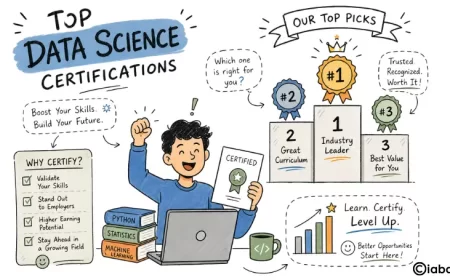
Why Data Analytics Certifications Matter
Self-learning is useful, but certifications provide structure, direction, and recognition.
Data Analytics Certifications help learners:
- Build strong fundamentals
- Learn industry-relevant tools
- Gain confidence in applying skills
- Improve employability
- Validate knowledge globally
IABAC’s Role in Data Analytics Education
IABAC (International Association of Business Analytics Certifications) offers programs designed to support learners at different stages.
IABAC certifications focus on:
- Practical skill development
- Business-focused analytics
- Real-world case studies
- Career-oriented learning paths
For those interested in Predictive Data Analytics, IABAC provides structured learning that connects concepts with practical use.
Career Opportunities in Predictive Data Analytics
Predictive analytics skills open doors to roles such as:
- Data Analyst
- Business Analyst
- Predictive Analyst
- Analytics Consultant
- Machine Learning Analyst
These roles are needed across many sectors, offering long-term career stability.
Common Challenges and How Learners Overcome Them
Many beginners feel unsure when starting. Some worry about numbers. Others feel confused by technical terms.
- Clear explanations
- Guided practice
- Real examples
- Supportive learning environments
These challenges become manageable.
The Human Side of Predictive Analytics
Behind every data point is a real person. A customer hoping for better service. A student planning a future. A patient needing timely care.
Predictive Data Analytics helps improve real lives by enabling better planning and smarter decisions.
As data continues to grow, the need for prediction will only increase. Organizations will rely more on analytics to stay prepared and make thoughtful choices.
Learning Predictive Data Analytics today builds skills that remain useful for years to come.
Predictive Data Analytics turns past data into future insight. It supports better planning, clearer thinking, and informed decisions. By understanding data and analysis, learning the four types of data analytics, exploring real-world examples, and earning trusted Data Analytics Certifications from IABAC, learners can build strong and meaningful careers in analytics.
The future may be uncertain, but with predictive analytics, it becomes easier to face it with confidence.