



















































Are You Misunderstanding How to Define Data Science?
Many people misinterpret data science as just coding or tools. Learn the true definition, core concepts, and how statistics, business thinking, and problem-solving shape real-world data science.

Many people hear the term Data Science and imagine someone wearing glasses, typing mysterious code, staring at charts that look like spaceship controls, and casually predicting the future before lunch. It sounds complex, expensive, and slightly intimidating. But the truth is much simpler—and far more interesting. A lot of people misunderstand how to define data science. Some think it is only coding. Others believe it is just statistics with better branding. Many assume it is only for math geniuses who enjoy solving equations for fun on weekends. None of those ideas tell the full story.
Data Science is one of the most valuable skills in the modern world because it helps people and businesses make better decisions using data. From hospitals predicting patient risk to streaming platforms suggesting your next binge-watch, Data Science is quietly shaping daily life around the globe. So if you have ever wondered what Data Science really means, what skills it includes, why companies care so much about it, and how professionals begin their journey through Data Science Courses or Certifications for Data Science, this guide explains it in full.
Define Data Science: What Does Data Science Actually Mean?
To define data science in simple words:
Data Science is the process of collecting, studying, and using data to solve problems, answer questions, and support better decisions.
That may sound straightforward, but the work behind it combines several areas of knowledge:
- Mathematics
- Statistics
- Programming
- Business understanding
- Communication
- Machine Learning
- Data Visualization
Data Science is not one single skill. It is a mix of skills working together.
Think of Data Science like cooking:
- Data is the raw ingredient
- Tools and methods are the recipe
- The Data Scientist is the chef
- Insights and predictions are the final dish
Raw ingredients alone do not create dinner. Data alone does not create value.
Why So Many People Misunderstand Data Science
The confusion around Data Science often comes from oversimplified definitions online.
Some people say:
- Data Science is just Machine Learning.
- Data Science means building AI robots.
- Data Science is advanced Excel.
- Data Scientists only write Python code all day.
These ideas leave out the bigger picture.
The real definition includes much more than algorithms. In fact, a large part of Data Science involves understanding the business problem before writing any code at all.
A skilled professional does not simply run models. They ask:
- What problem are we trying to solve?
- What data do we have?
- Is the data useful?
- Which method fits best?
- How should results be explained?
That is why the foundations of data science matter so much.
The Foundations of Data Science Explained
Before anyone becomes highly skilled in Data Science, they need to understand the core building blocks.
|
1. Mathematics Math supports prediction, optimization,
|
2. Statistics Statistics helps professionals
|
3. Programming Programming turns ideas into Popular languages:
|
|
4. Domain Knowledge A Data Scientist in healthcare solves different Understanding the industry matters. |
5. Communication Even the best analysis is useless if nobody understands it. Data professionals must explain findings clearly to |
Data Science in the Real World: Where It Is Used
Data Science is everywhere—even when people do not realize it.
Finance
A data scientist in finance may work on:
- Fraud detection
- Credit risk prediction
- Stock market modeling
- Customer segmentation
Healthcare
Used for:
- Disease prediction
- Medical image analysis
- Drug research
- Patient monitoring
Retail
Used for:
- Product recommendations
- Inventory forecasting
- Dynamic pricing
Sports
Teams use Data Science for:
- Player performance analysis
- Injury prediction
- Match strategy
Entertainment
Streaming platforms use Data Science to recommend content.
Yes, that suspiciously accurate movie suggestion at 1:13 AM? Data Science.
Data Science Workflow: How It Actually Works
A real Data Science project usually follows this process:
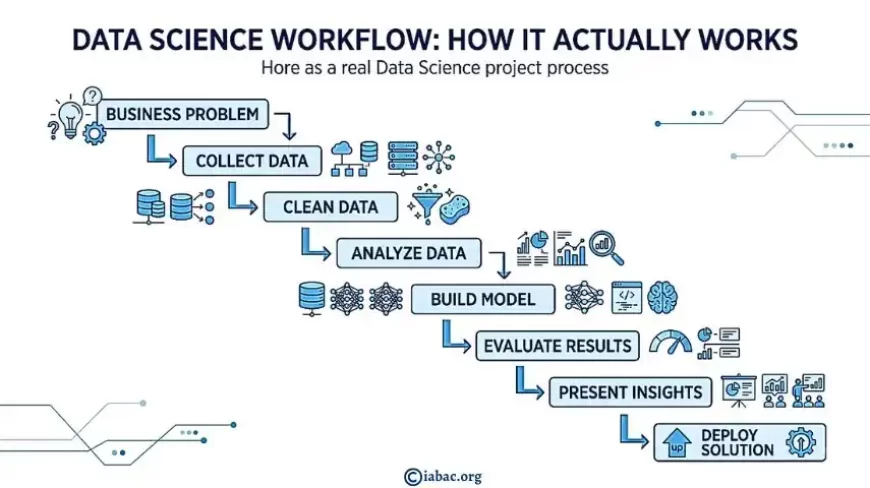
This process shows why Data Science is much more than running machine learning.
Data Science by the Numbers
Global demand for Data Science continues to grow because organizations generate more data every year.
Global Data Creation
|
Year |
Data Created Worldwide |
|
2020 |
64 Zettabytes |
|
2023 |
120+ Zettabytes |
|
2026 (Projected) |
180+ Zettabytes |
Simple Growth Chart
2020 ████████████
2023 ████████████████████
2026 ███████████████████████████
More data means more need for skilled professionals who can understand it.
Why Learning to Define Data Science Correctly Matters
Misunderstanding Data Science can lead to:
- Choosing the wrong career path
- Learning the wrong tools first
- Skipping essential fundamentals
- Expecting unrealistic job roles
- Feeling overwhelmed too early
Many beginners jump straight into neural networks before understanding statistics.
That is like trying to fly a plane before learning where the seatbelt goes.
A better approach starts with the foundations of data science.
Data Science for Developers: Why Software Professionals Are Switching
Many software engineers are moving into data science for developers because the skills overlap well.
Developers already understand:
- Logic
- Programming
- Problem-solving
- Software systems
To shift into Data Science, developers often add:
- Statistics
- Machine Learning
- Data Visualization
- Business Analytics
This makes Data Science a natural career extension for technical professionals.
Common Myths About Data Science
Myth 1: You Need a PhD
Reality: Many professionals enter through Data Science Courses and practical projects.
Myth 2: You Must Be Great at Math
Reality: Basic comfort with statistics and algebra helps, but perfection is not required.
Myth 3: Only Big Tech Companies Use Data Science
Reality: Small businesses, hospitals, banks, schools, and governments use it too.
Myth 4: Data Science Is Only About AI
Reality: AI is one part of Data Science, not the entire field.
What Skills Make a Strong Data Scientist?
A strong Data Scientist usually combines technical and soft skills.
Technical Skills
- Python / R
- SQL
- Statistics
- Machine Learning
- Data Cleaning
- Visualization Tools
Business Skills
- Problem Framing
- Critical Thinking
- Industry Knowledge
Communication Skills
- Storytelling with Data
- Presentation
- Reporting
Machine Learning and Data Science: What Is the Difference?
Many people confuse Machine Learning with Data Science.
Data Science
Broader field involving:
- Data collection
- Cleaning
- Analysis
- Visualization
- Modeling
- Communication
Machine Learning
A subset of Data Science focused on:
- Training predictive models
- Pattern recognition
- Automation
A machine learning expert often works deeply on algorithms, while a Data Scientist may handle the full process.
Why Certifications for Data Science Matter
Employers increasingly value practical proof of skill.
That is why Certifications for Data Science can help professionals:
- Show structured learning
- Validate technical knowledge
- Improve credibility
- Support career changes
- Stand out in job applications
When paired with projects and real experience, certifications strengthen a profile significantly.
Organizations such as IABAC provide globally recognized certification pathways for professionals building careers in Data Science.
How to Choose the Right Data Science Courses
Not all courses teach the same depth.
Look for Data Science Courses that include:
- Statistics fundamentals
- Python / SQL
- Data Cleaning
- Exploratory Data Analysis
- Machine Learning
- Model Evaluation
- Real Projects
- Business Case Studies
Avoid courses that promise to become a Data Scientist in 7 Days While Sleeping.
If a course sounds magical, it probably is.
Career Paths in Data Science
Learning Data Science can lead to multiple roles.
Popular Roles
- Data Analyst
- Data Scientist
- Machine Learning Engineer
- AI Specialist
- Business Intelligence Analyst
- Research Scientist
- Data Engineer
Professionals may later specialize as:
- NLP Engineer
- Computer Vision Engineer
- Quantitative Analyst
- Data Scientist in Finance
Certified Data Scientist vs Self-Taught Learning
Many learners ask whether certification matters more than self-learning.
The answer is balance.
Self-Learning Helps With:
- Flexibility
- Cost Savings
- Independent Exploration
Becoming a Certified Data Scientist Helps With:
- Structured Curriculum
- Employer Recognition
- Skill Validation
- Better Resume Positioning
Combining both often works best.
A Real Business Use Case
Imagine an online store has 100,000 customers.
Problem: Sales are dropping.
A Data Science team may:
- Analyze purchase history
- Group customers by behavior
- Predict churn risk
- Recommend targeted offers
- Test campaign results
Outcome Example
|
Metric |
Before Data Science |
After Data Science |
|
Customer Retention |
62% |
78% |
|
Revenue |
$500K/month |
$710K/month |
|
Marketing Waste |
High |
Reduced |
This is how Data Science creates measurable business value.
Mathematical Example in Data Science
A basic predictive model might use linear regression:
Formula:
Y=a+bXY = a + bXY=a+bX
Where:
- Y = Predicted outcome
- X = Input variable
- a = Intercept
- b = Slope
Example: Predict house price based on size.
While models become more advanced later, even simple math drives valuable decisions.
The Global Future of Data Science
Data Science demand continues rising worldwide because businesses need:
- Better forecasting
- Faster decisions
- Automation
- Customer insights
- Risk reduction
Industries across North America, Europe, Asia, the Middle East, and Africa continue increasing investment in Data Science talent.
How Beginners Should Start Learning Data Science
A beginner-friendly path:
Step 1: Learn basic statistics
Step 2: Study Python and SQL
Step 3: Practice data cleaning
Step 4: Build small projects
Step 5: Learn Machine Learning basics
Step 6: Take an advanced specialization
Step 7: Earn Certifications for Data Science
Define Data Science the Right Way
To define data science correctly, think beyond coding, dashboards, and AI buzzwords.
Data Science is:
The practice of using data, math, technology, and business understanding to solve meaningful problems and support better decisions.
It is one of the most practical and impactful career paths in the modern world.
Whether someone wants to become a machine learning expert, move from software into data science for developers, work as a data scientist in finance, or earn a certified data scientist credential, success begins with understanding what Data Science truly is.
Because once you understand Data Science properly, learning it becomes far less confusing—and much more exciting. To build strong skills, many professionals start with structured learning through trusted platforms and certifications from organizations such as IABAC, combining education with real-world practice.
The future belongs to people who can understand data, explain data, and use data wisely.
And no, you do not need to wear a lab coat while doing it.