
















































Artificial Intelligence in Education and its impacts
Artificial intelligence in education supports personalized learning, accessibility, data governance, ethical use, challenges, and future-focused careers.

Think about your classroom today. It might be a physical room with desks and a board, or a virtual screen with videos and assignments. Either way, learning doesn’t look the same as it did a few years ago—and that’s for a good reason.
Students today don’t all learn in the same way or at the same speed. Some understand concepts quickly, others need more time or practice. Teachers, on the other hand, handle large classes, grading, planning lessons, and supporting students individually. At the same time, society expects education to prepare students for real careers, not just exams.
This is where artificial intelligence in education comes in—not as a replacement for teachers, but as a smart support system.
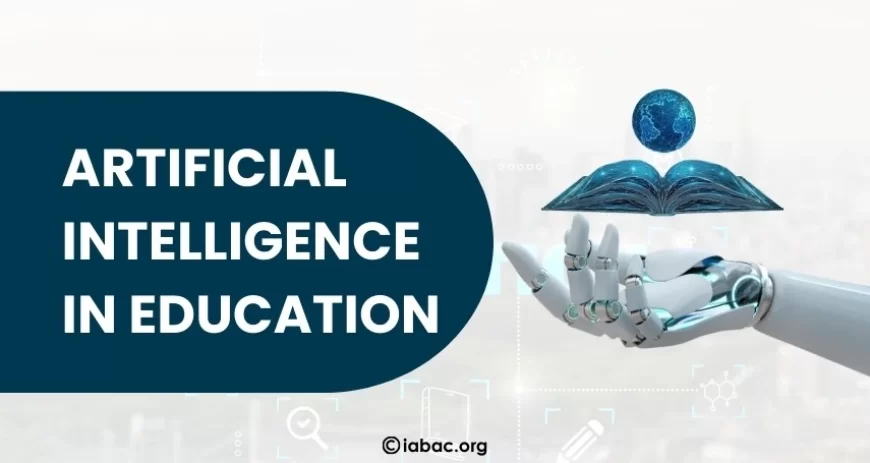
Artificial Intelligence in Education
Artificial intelligence in education uses smart tech to support how people teach and learn. AI systems analyze patterns in how students respond, where they struggle, and how they improve and use that insight to offer timely support.
In real classrooms, this looks like
-
Lessons that adjust automatically when a student is confused
-
Feedback that arrives instantly instead of weeks later
-
Chatbots answering questions late at night before an exam
-
Teachers spending more time mentoring instead of marking papers
According to a UNESCO report, over 60% of countries are already experimenting with AI tools in education, especially in assessment, personalized learning, and administration. This is not a distant future. It is happening now.
AI in education works best when it supports, not replaces, human judgment. When done right, it strengthens the relationship between students and teachers instead of weakening it.
Key Applications of Artificial Intelligence in Education
The real impact of AI in education becomes clear when we look at how it is actually used.
Personalized Learning and Adaptive Learning Systems
Every student learns differently. Some grasp concepts quickly. Others need more time, practice, or a different explanation. Traditional classrooms often struggle to serve everyone equally.
This is where personalized learning shines.
AI-powered adaptive learning systems:
-
Adjust lesson difficulty based on student performance
-
Change the pace of learning in real time
-
Identify knowledge gaps before they become serious problems
-
Recommend revision or practice exactly when it is needed
For example:
-
A student struggling with algebra may receive extra visual explanations
-
Another who excels might move ahead without waiting for the class
Research from McKinsey suggests that personalized learning tools can improve learning outcomes by 20–30% when used consistently.
AI in education helps learning feel less like a race and more like a guided journey.
Task Automation and Teacher Efficiency
Teachers did not choose their profession to spend nights grading papers or managing spreadsheets. Yet administrative work often consumes more time than teaching itself.
Artificial intelligence helps lift this burden.
Common areas where task automation helps:
-
Automatic grading of quizzes and assignments
-
Attendance tracking
-
Scheduling and timetable management
-
Early identification of students at risk of falling behind
This does not remove teachers from the process. Instead:
-
Teachers review insights, not raw data
-
Time saved is redirected to lesson planning and student support
A global survey by the World Economic Forum found that teachers using AI tools reported saving up to 10 hours per week on administrative tasks.
AI in education gives teachers something priceless: time.
Intelligent Tutoring Systems and 24/7 Learning Support
Learning does not stop at 3 p.m. Doubts often appear late at night, just before an exam, or during independent study.
Intelligent tutoring systems fill this gap.
These systems:
-
Provide instant explanations
-
Offer guided practice questions
-
Answer common student doubts through chatbots
-
Adapt responses based on student understanding
Benefits of 24/7 learning support include:
-
Reduced stress before exams
-
Better support for self-paced learners
-
Help for students who hesitate to ask questions in class
Studies show that students using AI-based tutors can perform 15–25% better in problem-solving tasks compared to those without access.
Artificial intelligence in education extends the classroom beyond walls and clocks.
Smart Content Creation and Curriculum Design
Creating quality learning materials takes time. Updating them takes even more. AI helps educators work smarter, not harder.
Smart content creation includes:
-
Digital textbooks that update automatically
-
Interactive lessons adapted to different learning levels
-
Study guides generated from curriculum goals
-
Practice tests aligned with learning outcomes
AI-assisted curriculum design also helps:
-
Map content to national standards
-
Align lessons with assessment goals
-
Customize materials for diverse learners
Instead of one-size-fits-all textbooks, artificial intelligence in education supports flexible, living content that grows with students.
Learning Analytics and Measurement of Impact
Good teaching relies on good insight.
Learning analytics turns raw data into meaningful understanding.
AI systems can:
-
Track student engagement over time
-
Highlight patterns in performance
-
Predict when students may struggle
-
Support evidence-based teaching decisions
For institutions, this means:
-
Measuring learning outcomes more accurately
-
Evaluating the impact of teaching strategies
-
Making data-informed policy decisions
According to EDUCAUSE, institutions using learning analytics report higher retention rates and earlier interventions for struggling learners.
Artificial intelligence in education helps educators see not just grades but learning stories.
Accessibility, Inclusion, and Equitable Education
One of the most powerful contributions of artificial intelligence in education is accessibility.
AI-powered tools support:
-
Text-to-speech for visually impaired learners
-
Speech-to-text for students with hearing challenges
-
Real-time translation for multilingual classrooms
-
Simplified interfaces for neurodiverse learners
These tools:
-
Reduce barriers to participation
-
Support inclusive and equitable education goals
-
Expand access in low-resource learning environments
UNESCO emphasizes that inclusive AI can help close, not widen, education gaps when implemented thoughtfully.
Education becomes fairer when technology adapts to people, not the other way around.
Benefits of Artificial Intelligence in Education
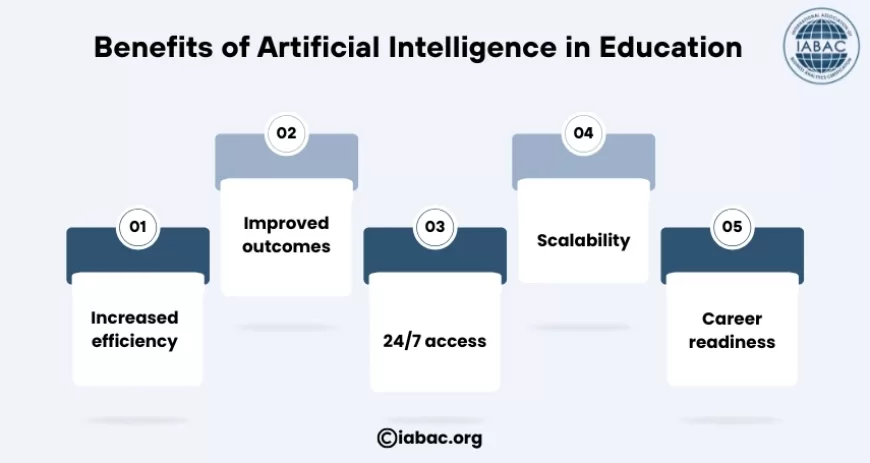
When applied responsibly, artificial intelligence in education delivers clear benefits.
Key advantages include
-
Increased efficiency: Less time on routine tasks
-
Improved outcomes: Personalized learning boosts understanding
-
24/7 access: Learning support anytime, anywhere
-
Scalability: Quality education for larger populations
-
Career readiness: Development of digital literacy and AI skills
For students, this means confidence and clarity.
For teachers, it means support and focus.
For societies, it means stronger foundations for future careers.
Data Governance and Policy Frameworks
With great data comes great responsibility.
Artificial intelligence in education relies heavily on student data. How that data is handled matters deeply.
Strong data governance includes:
Secure data storage: Student information must be protected through strong security measures to prevent unauthorized access or data misuse.
Clear data ownership rules: Educational institutions should clearly define who owns student data and how it can be used or shared.
Informed consent from students and parents: Learners and guardians should fully understand and agree to how their data is collected and used.
Transparency in how AI systems make decisions: AI tools should clearly explain how decisions or recommendations are made to build trust and accountability.
Policy frameworks must also address:
Algorithmic bias: AI systems must be regularly reviewed to ensure they do not unfairly disadvantage any group of students.
Accountability when systems fail: Clear responsibility should be established so errors or negative outcomes can be addressed promptly and fairly.
Alignment with national education strategies: AI use in education should support existing policies, curriculum goals, and long-term national priorities.
Public–private partnerships play a role here, but only when guided by clear regulation and ethical oversight.
Trust is the backbone of technology adoption in education.
Limitations of Artificial Intelligence in Education
Despite its promise, artificial intelligence in education is not without challenges.
Key limitations include:
-
Over-reliance on AI tools
-
Reduced critical thinking if students offload effort
-
Bias in algorithms trained on limited data
-
Unequal access due to the digital divide
-
High implementation costs for under-resourced schools
An OECD (Organisation for Economic Co-operation and Development) report warned that without safeguards, AI could unintentionally reinforce existing inequalities.
Recognizing these challenges is not resistance; it is responsibility.
Human-Centered Education and Ethical Considerations
Education is, and always will be, a human experience.
No algorithm can replace:
-
Encouragement from a teacher
-
Peer discussion
-
Curiosity sparked by conversation
Human-centered education ensures:
-
Teachers remain decision-makers
-
Technology supports, not controls, learning.
-
Ethical values guide innovation
Artificial intelligence in education works best when empathy leads and technology follows.
Artificial intelligence in education is changing how learning feels, flows, and functions. From personalized lessons to inclusive tools, from teacher support to future-focused careers, its influence is undeniable.
Yet its success depends on balance.
When guided by strong data governance, awareness of challenges, and a deep respect for human connection, artificial intelligence becomes more than technology. It becomes a quiet partner in learning, one that helps students grow, teachers thrive, and education systems serve everyone better.
The future of education is not artificial.
It is intelligent, ethical, and profoundly human.