






















































How Much Is the Healthcare Data Analyst Salary
Get insights into healthcare data analyst salaries, including average pay, key factors that affect earnings, and trends across industries and regions.

Healthcare and data have become closely connected across the world. Every hospital visit, medical test, insurance claim, and treatment record creates data. This data, when studied carefully, helps healthcare organizations improve patient care, reduce costs, and plan better services. Behind this work are healthcare data analysts—professionals who turn health data into clear and useful insights.
One of the first questions people ask before choosing this career is about earnings. Understanding the Healthcare Data Analyst Salary helps students and professionals decide if this path aligns with their career goals. This blog explains global salary ranges, job responsibilities, skills, career growth, and how certifications such as IABAC Global Certifications, Certified Healthcare Analytics Professional, and Data Analytics Certifications support long-term success.
Understanding the Role of a Healthcare Data Analyst
A healthcare data analyst works with data generated by healthcare systems. Their role is to study, organize, and interpret this data so that healthcare organizations can make informed decisions.
Healthcare data analysts commonly work in:
- Hospitals and clinics
- Health insurance companies
- Pharmaceutical firms
- Medical research organizations
- Healthcare technology companies
Their work supports doctors, nurses, administrators, and policy teams by providing accurate reports and insights.
Key Responsibilities of a Healthcare Data Analyst
Healthcare data analysts handle tasks that directly affect how healthcare services are delivered.
Their responsibilities often include:
- Analyzing patient data to track treatment outcomes
- Studying hospital operations and service efficiency
- Reviewing insurance claims and healthcare costs
- Creating dashboards and performance reports
- Supporting quality improvement programs
- Helping organizations follow healthcare regulations
Because healthcare data affects real people, accuracy and attention to detail are essential.
Why Healthcare Data Analytics Is Valued Worldwide
Healthcare systems across the globe are under pressure to improve quality while managing costs. Data analytics helps organizations identify what works, what needs improvement, and where resources should be used.
This makes healthcare data analytics a global profession. Skills learned in one healthcare system are often useful in another, especially when combined with international certifications. As a result, healthcare data analysts can find opportunities in many countries and healthcare environments.
Healthcare Data Analyst Salary Worldwide
The Healthcare Data Analyst Salary depends on experience, skills, industry, and organization size. However, global salary trends show that this role offers strong earning potential.
Entry-Level Healthcare Data Analyst Salary (Worldwide)
At the early stage of their career, healthcare data analysts typically earn:
USD 55,000 to USD 75,000 per year
Entry-level professionals usually focus on:
- Data preparation and validation
- Creating basic reports
- Supporting senior analysts
- Working with healthcare datasets
Students with Data Analytics Certifications often start at higher salary levels compared to those without formal credentials.
Mid-Level Healthcare Data Analyst Salary (Worldwide)
With a few years of experience and deeper healthcare knowledge, salaries increase to:
USD 80,000 to USD 120,000 per year
Mid-level professionals handle:
- Advanced reporting and analysis
- Healthcare performance metrics
- Trend identification
- Predictive insights
Holding a Certified Healthcare Analytics Professional credential often helps professionals move faster into this salary range.
Senior-Level Healthcare Data Analyst Salary (Worldwide)
Experienced healthcare data analysts and analytics leaders earn:
USD 130,000 to USD 180,000+ per year
Senior professionals are responsible for:
- Leading analytics projects
- Managing teams
- Supporting strategic decisions
- Advising healthcare leadership
At this level, professionals play a key role in shaping healthcare policies and operational strategies.
Can You Earn USD 200,000 as a Healthcare Data Analyst?
Yes, earning USD 200,000 per year is possible in healthcare data analytics, especially for professionals in leadership, consulting, or advanced analytics roles.
Professionals who reach this level usually have:
- Extensive healthcare analytics experience
- Strong technical and reporting skills
- Knowledge of healthcare compliance standards
- Experience managing large datasets
- Globally recognized certifications such as IABAC Global Certifications
High-paying roles are often found in global healthcare firms, analytics consulting companies, and advanced healthcare research organizations.
Which Data Analyst Roles Pay the Most?
Not all data analyst roles offer the same salary. Some specializations pay more due to complexity and responsibility.
Among the highest-paying data analyst roles are:
- Healthcare Data Analyst
- Cloud Data Analyst
- AI and Machine Learning Analyst
- Financial Data Analyst
Healthcare data analysts rank high because healthcare data is complex, regulated, and critical to patient care.
Skills That Influence Healthcare Data Analyst Salary
Salary growth is closely linked to skill development. Employers pay more for professionals who can handle complex data and provide reliable insights.
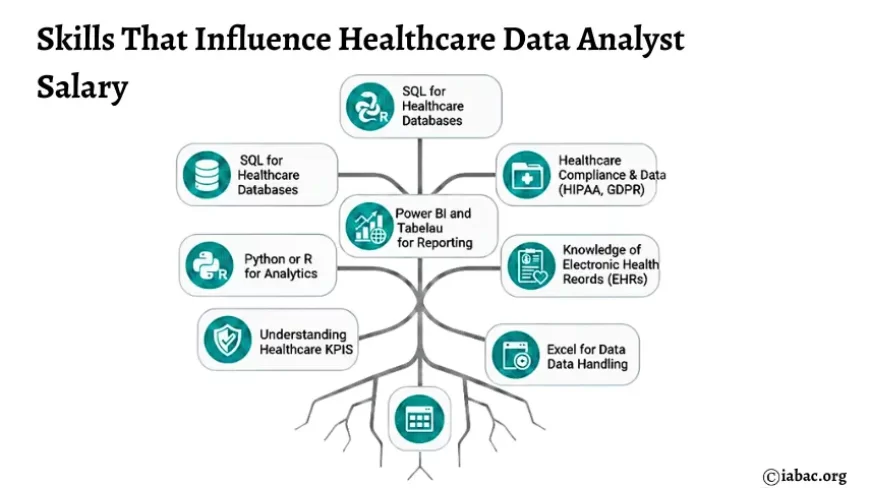
Important skills include:
- SQL for healthcare databases
- Python or R for analytics
- Power BI and Tableau for reporting
- Excel for data handling
- Understanding healthcare KPIs
- Knowledge of electronic health records
- Awareness of healthcare compliance and data privacy
Continuous learning helps professionals stay competitive and move into higher-paying roles.
Importance of Data Analytics Certifications
Certifications help professionals gain structured knowledge and prove their skills to employers.
Benefits of Data Analytics Certifications
- Improve job readiness
- Increase employer confidence
- Support global career mobility
- Help professionals negotiate better salaries
Data Analytics Certifications are especially helpful for students and career changers entering healthcare analytics.
Why IABAC Global Certifications Matter
IABAC Global Certifications focus on practical learning and industry relevance. They are designed to prepare professionals for real-world analytics challenges.
Benefits include:
- Global recognition
- Industry-aligned curriculum
- Practical projects and case studies
- Career support and guidance
Many professionals use IABAC certifications to move into specialized healthcare analytics roles and strengthen their salary prospects.
Certified Healthcare Analytics Professional: Career Impact
The Certified Healthcare Analytics Professional credential is designed for those working specifically with healthcare data.
This certification helps learners:
- Understand healthcare datasets
- Apply analytics to medical use cases
- Improve reporting accuracy
- Build confidence in healthcare analytics projects
Professionals with this credential often gain access to more advanced roles and higher salary opportunities.
Career Growth in Healthcare Data Analytics
Healthcare data analytics offers structured career growth and long-term stability.
Typical career progression includes:
- Healthcare Data Analyst
- Senior Healthcare Analyst
- Healthcare Analytics Consultant
- Healthcare Analytics Manager
- Chief Analytics Officer
Each step brings increased responsibility, influence, and compensation.
Why Choose Healthcare Data Analytics
Students are increasingly drawn to healthcare analytics because it combines technology, data, and purpose.
Key reasons include:
- Global job opportunities
- Competitive salary growth
- Meaningful work
- Stability across industries
With proper training and Data Analytics Certifications, students can confidently enter this field.
Challenges and Rewards in Healthcare Analytics
Healthcare analytics involves working with sensitive data and strict rules. Accuracy is critical, and errors can have serious consequences.
However, these challenges also make skilled professionals highly valued. The rewards include:
- Strong salary growth
- Global career options
- Professional respect
- Long-term career security
Educational Background Needed for a Healthcare Data Analyst
Many students worry that they need a medical degree to enter healthcare data analytics. In reality, this role welcomes candidates from different educational backgrounds.
Common educational paths include:
- Bachelor’s degree in data science, computer science, statistics, or mathematics
- Background in healthcare, life sciences, or pharmacy combined with analytics skills
- Business or management graduates with strong data analytics training
What matters most is the ability to work with data and understand healthcare-related information. Formal education combined with Data Analytics Certifications helps bridge skill gaps and improves job readiness.
Difference Between Healthcare Data Analyst and General Data Analyst
A topic often searched by students is how healthcare data analysts differ from general data analysts.
Healthcare data analysts:
- Work with medical and patient-related data
- Follow strict data privacy and compliance rules
- Focus on patient outcomes, healthcare costs, and service quality
General data analysts:
- Work across industries like retail, finance, or marketing
- Focus on sales trends, customer behavior, or business performance
This distinction explains why the Healthcare Data Analyst Salary is often higher than many general data analytics roles.
Industries Hiring Healthcare Data Analysts
Many readers assume healthcare data analysts only work in hospitals, but opportunities are much broader.
Healthcare data analysts are hired by:
- Hospitals and healthcare networks
- Health insurance providers
- Pharmaceutical and biotech companies
- Medical research organizations
- Healthcare software and technology firms
This wide hiring scope improves job stability and global career options.
Remote and Global Work Opportunities
Another missing topic is remote work potential.
Healthcare data analytics roles increasingly offer:
- Remote and hybrid job options
- International project-based work
- Opportunities with global healthcare organizations
Professionals with IABAC Global Certifications often qualify for cross-border roles due to global recognition.
Career Transition into Healthcare Data Analytics
Many professionals move into healthcare analytics from other roles.
Common transition paths include:
- IT professionals shifting into healthcare analytics
- Nurses or healthcare staff learning data analytics
- Business analysts moving into healthcare-focused roles
Structured learning through Certified Healthcare Analytics Professional programs helps career switchers enter the field smoothly.
Future Career Stability in Healthcare Data Analytics
Career stability is a major concern for students.
Healthcare analytics offers long-term security because:
- Healthcare systems continuously generate data
- Data-driven decisions are critical in medical settings
- Analytics improves cost control and patient care
This makes healthcare data analytics a future-ready career choice.
How Healthcare Data Analysts Create Real Impact
A meaningful topic often missed is real-world impact.
Healthcare data analysts help:
- Reduce hospital wait times
- Improve patient safety
- Support better treatment planning
- Optimize healthcare spending
This sense of contribution attracts many students to the field.
The Healthcare Data Analyst Salary worldwide reflects the importance of this role across healthcare systems. From entry-level positions to senior leadership roles, healthcare data analytics offers financial growth and professional purpose.
With strong skills, experience, and support from IABAC Global Certifications, Certified Healthcare Analytics Professional credentials, and other Data Analytics Certifications, professionals can build a rewarding global career. Healthcare data analytics is not just a job—it is a career that blends data skills with real-world impact, offering both personal satisfaction and long-term growth.