
























































Artificial Intelligence Jobs: 2026’s Biggest Opportunity for Everyone
2026 will bring the biggest boom in Artificial Intelligence jobs. Discover high-demand roles, skills, salaries, & how to prepare for the future of AI careers.


If the world feels like it’s moving faster every month, you’re not imagining it.
AI isn’t growing, it’s exploding.
Just a few years ago, artificial intelligence was something companies were “experimenting with.”
Today, businesses aren’t experimenting anymore.
They’re hiring aggressively.
And 2026 is shaping up to be the biggest AI job boom in history.
But here’s the surprising part:
Almost no one is ready for it.
Most people still think AI jobs are “only for PhD scholars” or “only for Silicon Valley engineers.”
Meanwhile, companies from healthcare to retail to finance to logistics are scrambling to fill AI roles they can’t find talent for.
will show you why the AI job boom is happening,
which roles will dominate 2026,
How salaries will change,
which industries will hire the fastest,
What skills do you truly need?
how to start (even with zero experience),
and how AI jobs will evolve between 2026–2030.
This is not just a blog.
It’s your 2026 AI career roadmap.
Let’s begin.
1. Why 2026 Will Be the Biggest AI Hiring Boom Ever
Several forces are coming together at the same time creating a once-in-a-generation job explosion:
AI tools reached the “consumer level”
In the past, AI was expensive, slow, and limited.
Now, anyone can use AI tools meaning companies can adopt AI at massive scale.
Global AI talent shortage
According to industry estimates, there are 6–8 million unfilled AI roles globally.
Demand is 10x higher than supply.
Automation pressure
Businesses want to automate:
-
repetitive tasks
-
manual workflows
-
decision-making
-
customer support
-
data analysis
Every automation project needs AI engineers, data scientists, and MLOps experts.
Industries outside tech are adopting AI
AI is no longer a “tech industry thing.”
Healthcare, finance, education, logistics, and even agriculture are hiring AI talent at record speed.
Governments are pushing AI adoption
Countries like the US, India, UK, UAE, Singapore, Japan, and Germany are investing heavily in AI infrastructure and workforce upskilling.
AI is creating more roles than it replaces
Yes, AI replaces low-skill tasks.
But it generates high-value roles at an even faster rate.
This is why 2026 will be the year AI jobs explode and the world won’t have enough skilled people to fill them.
2. Top Artificial Intelligence Jobs That Will Dominate 2026
To win in the 2026 job market, you must understand the jobs companies are hiring for right now and will hire for massively in the next 3–4 years.
Here are the most in-demand roles, explained simply.
Coding-Heavy AI Jobs (High-Paying, High-Demand)
1. Machine Learning Engineer
Machine Learning Engineers are the backbone of modern AI systems.
They design, train, and fine-tune models that power predictions, recommendations, automations, and decision-making systems across industries.
Why demand is rising:
Every organization, from finance to manufacturing, wants to automate processes, and ML Engineers make that possible.
Key Skills: Python, ML algorithms, TensorFlow, PyTorch, MLOps
Salary: ₹12–40 LPA (India) • $120K–$190K (US)
2. Data Scientist
Data Scientists turn raw data into insights and predictions.
They help companies understand patterns, customers, risks, and opportunities using data-driven analysis.
Typical work includes:
building models, analyzing trends, creating dashboards, and helping leadership make decisions.
Key Skills: Python, SQL, Statistics, ML, Visualization
Salary: ₹10–35 LPA (India) • $110K–$180K (US)
3. Deep Learning Engineer
Deep Learning Engineers work with advanced neural networks — the technology behind image recognition, speech processing, LLMs, and generative AI.
They work on:
-
computer vision
-
NLP
-
generative AI models
-
transformer-based systems
Why demand is high:
DL talent is extremely limited, and companies heavily rely on them for cutting-edge AI solutions.
Key Skills: CNNs, RNNs, Transformers, LLMs, PyTorch/TensorFlow
Salary: Higher than most ML roles due to scarcity.
4. AI Engineer
AI Engineers are versatile professionals who work across multiple stages:
model development, integration, deployment, optimization, and real-world implementation.
This role suits people who enjoy both coding and engineering.
Why companies hire them:
They can connect AI models with actual business applications.
5. NLP Engineer (Language AI Specialist)
NLP Engineers build systems that understand human language — the field behind chatbots, speech recognition, text analytics, and large language models.
Why it’s booming:
After 2024’s rise of LLMs, NLP became one of the hottest skills in AI.
6. Computer Vision Engineer
These professionals help machines “see.”
Their work powers:
-
medical imaging
-
drones
-
autonomous vehicles
-
retail security
-
manufacturing quality checks
-
facial recognition
-
defect detection systems
Why demand is massive:
Industries are adopting vision-based automation rapidly.
7. Robotics Engineer (AI + Hardware)
They combine AI algorithms with mechanical and electrical systems to build robots that:
-
move
-
sense
-
navigate
-
interact with environments
This role sits at the intersection of hardware + AI — and demand is rising due to automation and smart manufacturing.
AI models don’t stop at training. Someone must deploy them, scale them, monitor them, and keep them running smoothly.
That’s what MLOps Engineers do.
Why the role is exploding:
For every model a company builds, they need MLOps to actually run it in production.
Demand is currently 2× higher than supply worldwide.
2. Non-Coding / Low-Coding AI Jobs (Huge Opportunity)
Many people think AI jobs require deep coding—but that’s not true.
In 2026, a big part of AI hiring will come from roles that need thinking, communication, and basic AI understanding, not heavy programming.
These roles help businesses use AI correctly, manage projects, improve outputs, and make AI work in real situations.
Here are the top non-coding AI careers:
1. AI Product Manager
Helps decide what AI features to build and why they matter—no coding needed, just business and user understanding.
Creates prompts that guide AI tools to produce clear and accurate outputs; focused on creativity, not coding.
3. AI Consultant
Advises companies on where and how to use AI, choose tools, and improve workflows.
4. AI Trainer / Data Annotator
Labels images, text, and audio so AI models can learn—great starting point for beginners.
5. AI QA / Testing Engineer
Tests AI outputs, checks accuracy, spots errors, and ensures the model is safe and unbiased.
6. AI Governance & Ethics Specialist
Makes sure AI follows laws, protects data, and avoids bias—an important, fast-growing role.
7. Business Analyst (AI Projects)
Turns business needs into clear AI tasks, plans features, and measures project results.
8. AI Content Specialist
Uses AI tools to create content, research topics, and produce training material—perfect for creative profiles.
3. Industries That Will Hire AI Talent the Fastest in 2026
1. Healthcare
-
Medical diagnosis: AI helps doctors find diseases faster.
-
Drug discovery: AI helps create new medicines quickly.
-
Predictive analytics: AI predicts health risks early.
-
Radiology analysis: AI reads X-rays and scans accurately.
-
Personalized treatment: AI suggests treatments for each patient.
2. Finance
-
Fraud detection: AI spots fake or risky transactions.
-
Risk modeling: AI helps banks measure financial risk.
-
Algorithmic trading: AI makes fast, smart trading decisions.
3. Retail & Ecommerce
-
Recommendation engines: AI suggests products customers may like.
-
Demand forecasting: AI predicts what products will sell more.
4. Manufacturing
-
Predictive maintenance: AI alerts when machines need repairs.
-
Defect detection: AI finds mistakes on products automatically.
5. Logistics & Supply Chain
-
Route optimization: AI chooses the fastest delivery routes.
-
Warehouse automation: AI helps robots organize and move items.
6. Cybersecurity
-
Threat detection: AI catches cyberattacks quickly.
7. Education / EdTech
-
Adaptive learning: AI gives students lessons based on their level.
8. Agriculture
-
Smart irrigation: AI waters crops at the right time.
-
Crop analysis: AI checks plant health using images.
9. Automotive
-
Self-driving cars: AI helps cars drive safely on their own.
-
Driver-assist: AI helps drivers stay safe with alerts and controls.
10. Entertainment
-
AI-generated content: AI creates videos, images, and music.
-
Personalization: AI recommends movies, shows, and songs you’ll enjoy.
4. Global vs India Salary Comparison (2026 Prediction)
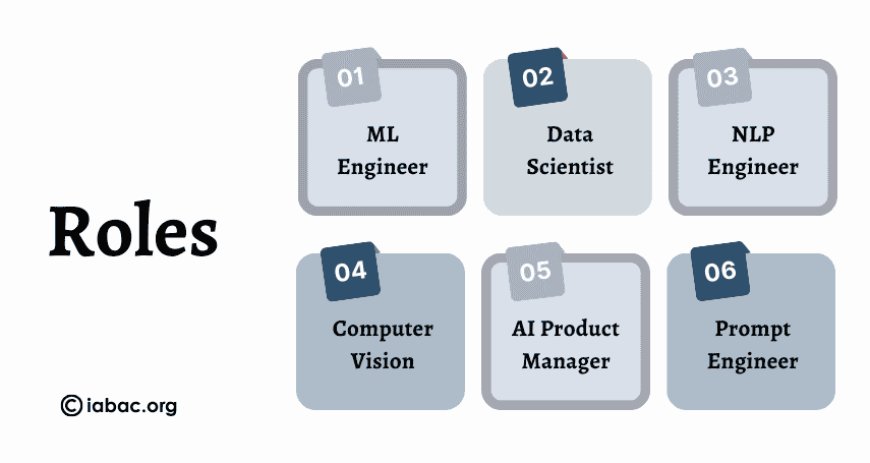
|
Role |
India (₹ LPA) |
US ($/yr) |
Europe (€ /yr) |
Middle East (AED/yr) |
|
ML Engineer |
12–40 |
120K–190K |
70K–130K |
220K–380K |
|
Data Scientist |
10–35 |
110K–180K |
60K–120K |
180K–300K |
|
NLP Engineer |
14–45 |
130K–200K |
75K–140K |
200K–350K |
|
Computer Vision |
15–50 |
130K–210K |
75K–140K |
220K–360K |
|
AI Product Manager |
18–55 |
140K–220K |
80K–150K |
250K–420K |
|
Prompt Engineer |
12–30 |
100K–160K |
60K–110K |
180K–260K |
→ Remote international roles often pay 3–6x more than Indian companies.
5. Skills You Need for AI Jobs in 2026
Technical Skills
-
Python: The main coding language used to build AI models.
-
SQL: Used to pull, clean, and manage data from databases.
-
Statistics: Helps you understand data patterns and make predictions.
-
Machine Learning: Teaches computers to learn from data and improve.
-
Deep Learning: Builds advanced neural networks for images, text, and speech.
-
NLP: Helps machines understand and process human language.
-
Computer Vision: Helps machines see and understand images and videos.
-
Cloud (AWS/Azure/GCP): Used to store data and run AI models at scale.
-
TensorFlow, PyTorch: Frameworks used to build and train AI models.
-
MLOps: Helps deploy, monitor, and manage AI models in real-world systems.
Non-Technical Skills
-
Analytical thinking: Helps you break down problems and understand data.
-
Problem solving: Helps you find practical solutions using AI tools.
-
Storytelling with data: Helps you explain insights clearly to others.
-
Communication: Helps you work smoothly with teams and explain ideas simply.
-
Business understanding: Helps you build AI solutions that match real company needs.
6. Complete AI Career Roadmap (For 2026 Beginners)
Step 1: Learn the Foundations (1–2 months)
-
Python basics
-
Math: statistics, probability
Step 2: Learn Data Skills (1–2 months)
-
SQL
-
Pandas, NumPy
Step 3: Learn Machine Learning (2–3 months)
-
regression, classification
-
trees, boosting
-
clustering
-
feature engineering
Step 4: Learn Deep Learning (2–3 months)
-
neural networks
-
CNNs
-
RNNs
-
Transformers
-
LLMs
Step 5: Learn Tools & Cloud
-
TensorFlow, PyTorch
-
AWS/GCP/Azure basics
Step 6: Build 5–10 Real Projects
-
Recommendation system
-
Fraud detection
-
NLP sentiment model
-
Image classification
-
Chatbot
Step 7: Build Portfolio & GitHub
Show your projects clearly.
Step 8: Start Internships / Freelancing
Gain experience.
Step 9: Start Applying for Jobs
Use LinkedIn, Naukri, AngelList, Wellfound, RemoteOK.
7. Future of AI Jobs (2026–2030 Predictions)
1. AI Agents Will Create New Job Roles
AI tools will become autonomous, increasing demand for AI supervisors.
2. Creative + Technical Hybrid Roles Will Appear
Example: AI Content Director, AI Concept Designer.
3. AI Governance Will Become Mandatory
Regulations = new job opportunities.
4. Robotics + AI Integration Will Boom
Manufacturing, logistics, smart cities = massive hiring.
5. Prompt Engineering Will Evolve
It will become more specialized and more powerful.
6. AI Project Managers Will Become Crucial
Someone must bridge business + AI teams.
AI isn’t killing jobs, it’s transforming them.
The 2026 AI Job Boom Is Your Opportunity
2026 isn’t “next year.”
It’s the biggest turning point for global careers.
Companies aren’t looking for perfect experts.
They’re looking for people who are willing to learn, build skills, and stay relevant.
If you start now,
by 2026 you won’t just be ready—
you’ll be ahead.
The AI revolution won’t wait.
But the people who prepare today will lead tomorrow.



-
 Devta deen tiwariI am interested exam









