





















































What LLMs Do in Data Science
Explore how large language models (LLMs) support data science tasks like data cleaning, analysis, automation, and insight generation using natural language.

What Are LLMs and Why Do They Matter in Data Science?
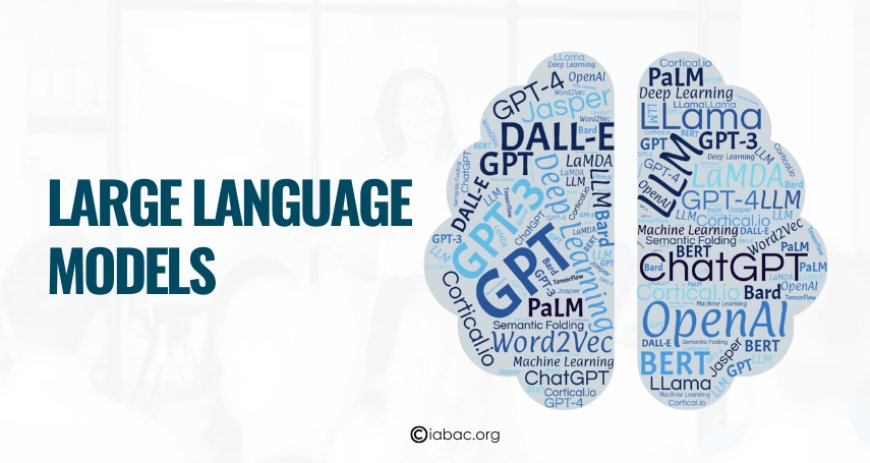
Large Language Models (LLMs), like GPT, Grok, or BERT, are advanced AI models trained on vast datasets to understand and generate human-like text. In data science, these models are revolutionizing data preprocessing and feature engineering by automating complex tasks, improving efficiency, and uncovering insights from unstructured data.
How Do LLMs Enhance Data Preprocessing?
Data preprocessing involves cleaning and transforming raw data into a usable format for machine learning. LLMs excel in handling unstructured data, such as text, and automating repetitive tasks. Here’s how they contribute:
Text Cleaning and Normalization:
-
LLMs can standardize text by correcting spelling errors, normalizing formats (e.g., dates, addresses), and removing irrelevant characters or noise (e.g., HTML tags, emojis).
-
Example: An LLM can convert “Feb. 3rd, 2025” and “02/03/25” to a uniform format like “2025-02-03” across a dataset.
Handling Missing Data:
-
LLMs can predict and impute missing values in text-based datasets by understanding context. For instance, they can fill in missing customer feedback based on patterns in similar reviews.
-
They analyze semantic relationships to suggest plausible values, improving dataset completeness.
Entity Recognition and Extraction:
-
Using Named Entity Recognition (NER), LLMs identify and extract key entities (e.g., names, locations, organizations) from unstructured text, reducing manual effort.
-
Example: Extracting product names and brands from customer reviews for sentiment analysis.
Text Summarization and Annotation:
-
LLMs can summarize lengthy documents or generate labels for unannotated datasets, saving time in tasks like sentiment labeling or topic classification.
-
Example: Summarizing user comments into positive, negative, or neutral categories for a feedback dataset.
How Do LLMs Transform Feature Engineering?
Feature engineering involves creating meaningful variables (features) from raw data to improve model performance. LLMs simplify and enhance this process, especially for text-heavy datasets:
Automated Feature Extraction:
-
LLMs generate embeddings—dense numerical representations of text—that capture semantic meaning. These embeddings serve as powerful features for machine learning models.
-
Example: Converting product reviews into embeddings that reflect sentiment and context for a recommendation system.
Sentiment and Contextual Analysis:
-
LLMs can derive features like sentiment scores, tone, or intent from text, enabling richer datasets for tasks like customer behavior prediction.
-
Example: Assigning a sentiment score (e.g., 0.8 for “highly positive”) to reviews for use in predictive models.
Topic Modeling and Clustering:
-
LLMs can identify latent topics in text data, creating categorical features for clustering or classification tasks.
-
Example: Grouping customer feedback into topics like “product quality” or “customer service” for analysis.
Synthetic Data Generation:
-
LLMs can generate synthetic data to augment small datasets, creating new features or balancing imbalanced classes.
-
Example: Generating additional customer reviews to train a classifier when real data is limited.
Benefits of Using LLMs in Data Preprocessing and Feature Engineering
-
Efficiency: Automates time-consuming tasks like manual text cleaning or feature creation, reducing preprocessing time from hours to minutes.
-
Scalability: Handles large, unstructured datasets with ease, making it ideal for big data applications.
-
Insight Generation: Uncovers hidden patterns in text data, improving model accuracy and interpretability.
-
Accessibility: Simplifies complex tasks, enabling non-experts to perform advanced data preprocessing using pre-trained LLMs.
Challenges and Considerations
While powerful, LLMs have limitations:
-
Computational Cost: Training or fine-tuning LLMs requires significant resources, though pre-trained models like GPT or Grok mitigate this.
-
Bias in Data: LLMs can inherit biases from training data, which may affect feature quality or imputation accuracy.
-
Domain Expertise: Fine-tuning LLMs for specific domains (e.g., medical or legal data) may be necessary for optimal performance.
-
Interpretability: Embeddings generated by LLMs can be less interpretable than manually crafted features, requiring additional validation.
Practical Example: Using LLMs in a Real-World Project
Imagine a company analyzing customer reviews to predict churn. Here’s how LLMs can help:
-
Preprocessing:
-
Clean reviews by removing special characters and standardizing text.
-
Use NER to extract entities like product names or locations.
-
Impute missing review data by predicting likely content based on context.
-
Feature Engineering:
-
Generate embeddings for each review to capture sentiment and context.
-
Assign sentiment scores (e.g., positive, neutral, negative) as features.
-
Identify topics like “pricing issues” or “product defects” for clustering.
-
Outcome: The processed data and engineered features improve the accuracy of a churn prediction model, enabling better customer retention strategies.
Best Practices for Using LLMs
-
Choose the Right Model: Use pre-trained models like BERT for NER or GPT for text generation, depending on the task. Tools like Hugging Face’s Transformers library simplify implementation.
-
Fine-Tune When Necessary: Adapt LLMs to your domain using labeled data to improve accuracy.
-
Validate Outputs: Cross-check LLM-generated features or imputations to ensure reliability.
-
Combine with Traditional Methods: Use LLMs alongside manual feature engineering for a balanced approach.
-
Monitor Bias: Regularly audit LLM outputs to minimize bias in preprocessing and feature creation.
Large Language Models like GPT are transforming data preprocessing and feature engineering by automating complex tasks, handling unstructured data, and generating meaningful features. By leveraging LLMs, data scientists can save time, scale their workflows, and build more accurate models. However, careful consideration of computational costs, biases, and domain-specific needs is crucial. Whether you’re working on customer analytics, sentiment analysis, or predictive modeling, LLMs offer a powerful toolkit to elevate your data science projects.