






















































What are the main topics in data science
Explore key data science topics like machine learning, data mining, statistics, big data, and AI fundamentals for real-world business insights.


Data science helps people and companies make better decisions using data. It turns big sets of information into useful ideas. Data scientists use math, coding, and knowledge about different industries to solve problems in healthcare, finance, shopping, and technology. Whether you're learning data science, leading a team, or just curious, it’s helpful to know the basics. We’ll explain 20 main topics in data science—what they are, why they matter, and how they’re used in real life.
1. Data Collection and Acquisition
Every data science project starts with collecting the right data. Without good data, even the best models won’t work well. Data collection means finding and gathering information that fits the problem you’re trying to solve.
-
How it's done: You can get data in many ways—using APIs (like Twitter or weather data), web scraping (with tools like BeautifulSoup or Scrapy), from databases (like MySQL, PostgreSQL, or MongoDB), or from data warehouses (like Amazon Redshift or Google BigQuery). Newer sources include smart devices (IoT) and social media.
-
Common challenges: Making sure the data is useful, dealing with limits on API access, and getting permission to use the data.
-
Real-life example: A retail company might use a database to get sales numbers, scrape websites for customer reviews, and use an API to get market trends. Then, they combine it all to better understand their customers.
-
Why it matters: The quality and variety of your data strongly affect how accurate and helpful your results will be. That’s why collecting the right data is a key first step.
2. Data Cleaning and Preparation
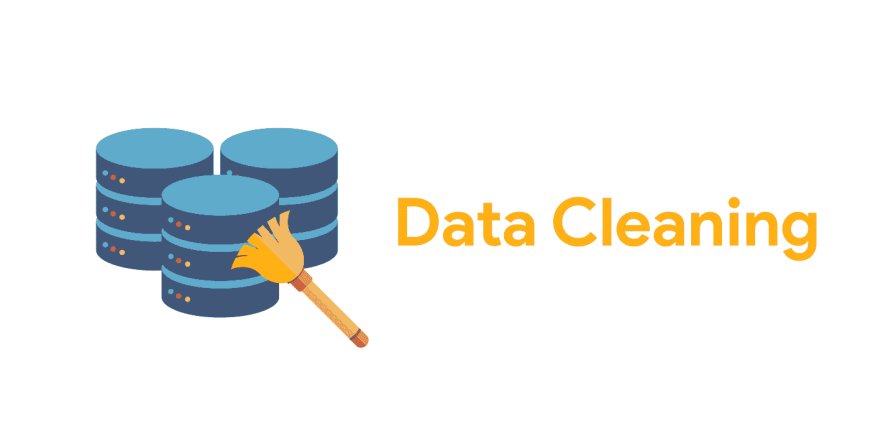
Raw data is often messy and hard to use. It might have missing details, repeated entries, or different formats. Data cleaning and preparation help turn this messy data into something organized and ready for analysis.
-
What it involves: Fixing missing values (by filling in with averages or removing bad rows), making formats consistent (like using the same date format), removing duplicates, and creating new helpful data (like figuring out a customer’s total value over time).
-
Tools used: Python tools like Pandas, R’s dplyr, or OpenRefine can help clean data quickly and at scale.
-
Common challenges: You need to be careful not to remove too much data, especially when there’s not a lot to begin with.
-
Real-life example: In healthcare, you might clean patient data by making sure all blood pressure readings use the same units, and fill in missing cholesterol values using expert knowledge.
-
Why it matters: Clean data helps build models that work better and make fewer mistakes.
3. Exploratory Data Analysis (EDA)
Exploratory Data Analysis (EDA) is like detective work in data science. It helps you look at the data closely to find patterns, trends, and anything unusual before building a model.
-
What it involves: You check basic stats like averages and medians, create charts like histograms or scatter plots using tools like Matplotlib, Seaborn, or Plotly, and look at how variables are related (using methods like Pearson or Spearman). You also try to spot outliers—values that don’t fit the pattern.
-
How it’s used: EDA helps you find things like unbalanced data, strong relationships between variables, or surprises—like a big jump in sales every holiday season.
-
Common challenges: You have to be careful not to read too much into patterns that might not mean anything in other data.
-
Real-life example: A marketing team might find through EDA that younger customers are more likely to stop using their service. This insight could help them create better ways to keep those users.
-
Why it matters: EDA gives you a clearer picture of your data and helps you make smarter choices when building models.
4. Statistical Analysis
Statistics is the core of data science. It helps data scientists make smart, reliable decisions based on data.
-
Key ideas: It includes probability (like understanding normal or Poisson distributions), testing ideas with hypothesis tests (like t-tests or chi-square tests), using confidence intervals to measure uncertainty, and applying Bayesian methods to update results as new data comes in.
-
How it's used: You might use statistics to check if a new drug works better than the old one, or to see if changing a website design helps people stay longer.
-
Common challenges: You need to make sure the data meets certain rules (like being normally distributed) and understand what the test results really mean—especially with p-values.
-
Real-life example: A finance team might use hypothesis testing to see if a new trading method beats the usual one.
-
Why it matters: Statistics helps ensure your results are solid and not just lucky guesses. It gives your analysis a strong, trustworthy base.

5. Machine Learning
Machine learning (ML) helps computers learn from data and make predictions or find patterns—without being directly told what to do.
Types of learning:
Supervised learning is when the model learns from labeled data (like using past prices to predict future ones or using customer data to predict if they’ll buy something).
Unsupervised learning is when the model finds patterns in data without labels (like grouping customers into segments or simplifying data using fewer features).
Ensemble methods combine several models to make better predictions (like random forests or gradient boosting).
-
How it’s measured: We check how well models work using numbers like accuracy, precision, and recall. We also use tools like cross-validation and grid search to test and improve them.
-
Common challenges: It’s easy to make a model that fits the training data too closely (overfitting), or one that’s too simple (underfitting). Choosing the right model and finding the right balance is key.
-
Real-life example: A streaming platform like Netflix might use ML to suggest shows based on what you’ve watched before.
-
Why it matters: ML helps power things like recommendation engines, fraud detection, and targeted marketing—it’s a major part of what makes data science useful in real life.
6. Deep Learning
Deep learning, a subset of ML, uses neural networks to tackle complex, high-dimensional data like images, audio, and text.
-
Techniques: Multi-layer neural networks, convolutional neural networks (CNNs) for image recognition, recurrent neural networks (RNNs) for sequential data, and transformers for advanced language tasks.
-
Frameworks: TensorFlow, PyTorch, and Keras simplify model development.
-
Challenges: High computational costs and the need for large labeled datasets.
-
Real-World Example: Autonomous vehicles use CNNs to detect objects in real-time camera feeds.
-
Why It Matters: Deep learning excels in tasks where traditional ML struggles, enabling breakthroughs in AI-driven applications.
7. Natural Language Processing (NLP)
NLP focuses on enabling machines to understand, interpret, and generate human language, unlocking insights from text data.
-
Techniques: Tokenization, word embeddings (e.g., Word2Vec, GloVe, BERT), sentiment analysis, topic modeling (e.g., LDA), and language generation.
-
Applications: Building chatbots, analyzing customer feedback, or translating languages in real time.
-
Challenges: Handling ambiguity, slang, or multilingual data.
-
Real-World Example: A retailer might use NLP to analyze social media mentions and gauge brand sentiment.
-
Why It Matters: With text making up a significant portion of modern data, NLP is critical for extracting actionable insights.
8. Time Series Analysis and Forecasting
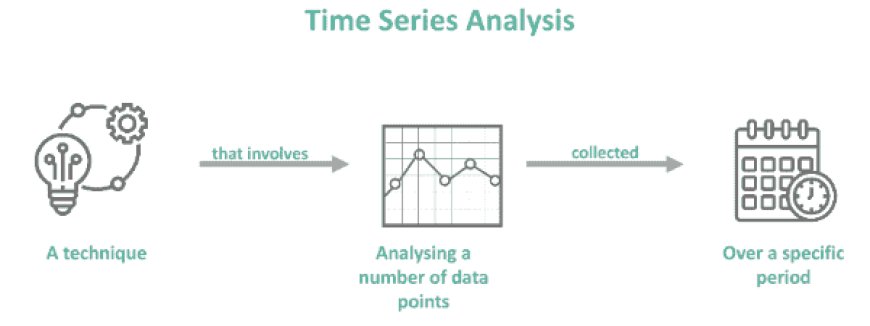
Time series analysis focuses on data collected over time, such as stock prices, weather patterns, or website traffic.
-
Techniques: ARIMA and SARIMA for forecasting, Prophet for scalable predictions, LSTM networks for complex sequences, and decomposition to analyze trends and seasonality.
-
Applications: Predicting demand in supply chains or forecasting energy consumption.
-
Challenges: Handling non-stationary data and accounting for external events (e.g., holidays).
-
Real-World Example: An energy company might use time series models to predict peak electricity demand.
-
Why It Matters: Temporal data is ubiquitous, and accurate forecasting drives strategic planning.
9. Reinforcement Learning
Reinforcement learning (RL) involves agents learning optimal actions through trial and error in an environment.
-
Concepts: Markov decision processes, Q-learning, policy gradients, and deep RL (e.g., Deep Q-Networks).
-
Applications: Training robots to navigate, optimizing ad bidding strategies, or developing game-playing AI.
-
Challenges: Balancing exploration vs. exploitation and handling sparse rewards.
-
Real-World Example: A gaming company might use RL to train an AI that competes in strategy games.
-
Why It Matters: RL is ideal for dynamic, decision-making scenarios where adaptability is key.
10. Data Visualization and Communication
Data science insights are only valuable if they can be communicated effectively to stakeholders.
-
Tools: Tableau, Power BI, and Dash for interactive dashboards; Matplotlib, Seaborn, and Plotly for static or dynamic visuals.
-
Skills: Crafting narratives, using visual cues to highlight key findings, and tailoring presentations to technical or non-technical audiences.
-
Challenges: Avoiding cluttered visuals and ensuring accessibility (e.g., colorblind-friendly palettes).
-
Real-World Example: A data scientist might create a dashboard to show real-time sales trends for a retail chain’s executives.
-
Why It Matters: Clear communication bridges the gap between analysis and actionable decisions.
11. Deployment and Production
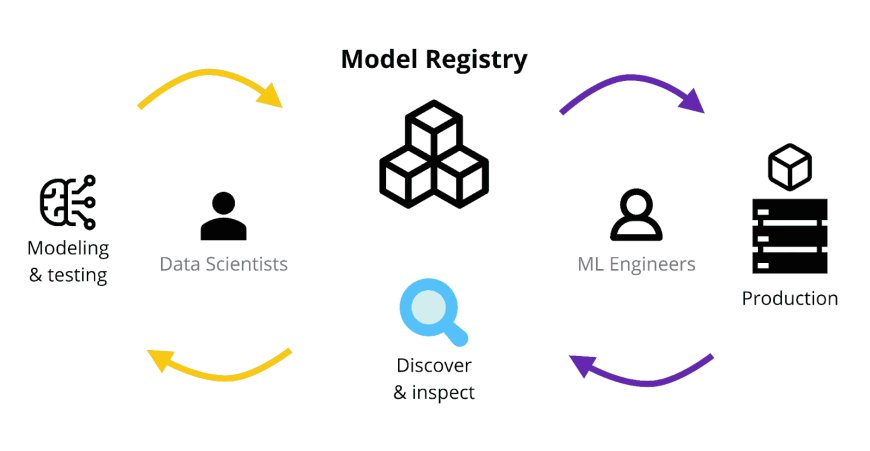
Deploying models into production transforms prototypes into scalable, real-world solutions.
-
Techniques: Wrapping models in RESTful APIs (Flask, FastAPI), containerizing with Docker, and automating deployment with CI/CD pipelines.
-
Tools: MLflow and Kubeflow for MLOps, Prometheus for monitoring.
-
Challenges: Ensuring model performance in live environments and handling data drift.
-
Real-World Example: A fraud detection model might be deployed as an API to flag suspicious transactions in real time.
-
Why It Matters: Deployment ensures data science delivers tangible business value.
12. Ethics and Privacy
As data science influences lives, ethical considerations are paramount.
-
Focus Areas: Mitigating bias (e.g., ensuring fair loan approvals), complying with privacy laws (GDPR, CCPA), and explaining model decisions transparently.
-
Challenges: Balancing model performance with fairness and navigating complex regulations.
-
Real-World Example: A hiring algorithm must be audited to prevent gender or racial bias in candidate selection.
-
Why It Matters: Ethical data science builds trust and prevents harm in data-driven decisions.
13. Domain Knowledge
Understanding the industry or problem context is crucial for relevant solutions.
-
Examples: Knowing healthcare metrics (e.g., patient readmission rates), financial KPIs (e.g., ROI), or marketing funnels (e.g., conversion rates).
-
Applications: Collaborating with domain experts to define objectives and interpret results.
-
Challenges: Bridging the gap between technical and business teams.
-
Real-World Example: A data scientist in logistics might work with supply chain experts to optimize delivery routes.
-
Why It Matters: Domain expertise ensures insights are actionable and aligned with organizational goals.
14. Big Data Engineering
Handling massive, complex datasets requires specialized tools and architectures.
-
Tools: Apache Spark for distributed processing, Apache Kafka for real-time streaming, and data lakes on AWS or Azure.
-
Applications: Processing petabytes of data for recommendation systems or real-time analytics.
-
Challenges: Managing latency and ensuring scalability.
-
Real-World Example: A streaming platform might use Kafka to process user interaction data in real time.
-
Why It Matters: Big data engineering enables data science at scale, critical for modern enterprises.
15. Experimentation and Causal Inference
Causal inference goes beyond correlation to understand cause-and-effect relationships.
-
Techniques: A/B testing, randomized controlled trials, difference-in-differences, and propensity score matching.
-
Applications: Evaluating the impact of a new feature or policy change.
-
Challenges: Controlling for confounding variables and ensuring randomization.
-
Real-World Example: An e-commerce platform might use A/B testing to measure the impact of a new checkout design on sales.
-
Why It Matters: Causal inference answers “why” questions, driving strategic decisions.
16. AutoML and Model Automation
Automated machine learning (AutoML) streamlines model development, making data science accessible to non-experts.
-
Tools: H2O, Google AutoML, DataRobot for automated feature engineering, model selection, and hyperparameter tuning.
-
Applications: Rapid prototyping and democratizing ML for smaller teams.
-
Challenges: Balancing automation with interpretability and customization.
-
Real-World Example: A small business might use AutoML to build a customer churn prediction model without deep ML expertise.
-
Why It Matters: AutoML accelerates workflows and broadens the reach of data science.
17. Data Governance and Quality
Data governance ensures data is accurate, secure, and compliant throughout its lifecycle.
-
Practices: Metadata management, data lineage tracking, quality assurance frameworks, and master data management.
-
Applications: Ensuring compliance in regulated industries like finance or healthcare.
-
Challenges: Aligning governance with innovation and managing data across distributed systems.
-
Real-World Example: A bank might implement governance to ensure customer data complies with privacy regulations.
-
Why It Matters: Robust governance supports trustworthy and ethical data use.
18. Geospatial Analysis
Geospatial analysis focuses on location-based data, critical for fields like logistics, urban planning, and environmental science.
-
Techniques: Geographic Information Systems (GIS), spatial statistics, and geospatial ML.
-
Applications: Optimizing delivery routes or analyzing climate change impacts.
-
Challenges: Handling high-dimensional spatial data and ensuring accuracy.
-
Real-World Example: A city planner might use geospatial analysis to map traffic patterns and reduce congestion.
-
Why It Matters: Geospatial data is increasingly relevant in IoT and smart city applications.

19. Cloud Computing for Data Science
Cloud platforms provide scalable infrastructure for data storage, processing, and model deployment.
-
Platforms: AWS (SageMaker, EMR), Azure (Machine Learning), Google Cloud (Vertex AI, BigQuery).
-
Applications: Running distributed ML models or hosting real-time analytics dashboards.
-
Challenges: Managing costs and ensuring security in cloud environments.
-
Real-World Example: A startup might use AWS SageMaker to train and deploy a recommendation model without investing in on-premises hardware.
-
Why It Matters: Cloud computing supports the computational demands of modern data science.
20. Collaboration and Version Control
Data science is a collaborative effort, requiring tools to ensure reproducibility and teamwork.
-
Tools: Git for code versioning, DVC for data and model versioning, and platforms like Databricks or JupyterHub for team workflows.
-
Applications: Managing multi-contributor projects and tracking experiment iterations.
-
Challenges: Ensuring consistency across teams and handling large datasets in version control.
-
Real-World Example: A data science team might use Git to collaborate on a model predicting customer lifetime value.
-
Why It Matters: Collaboration tools ensure projects are scalable, reproducible, and efficient.
Data science is a mix of skills, thinking, and knowledge used to solve real problems. The 20 topics we’ve covered—from collecting data to working with others—are the basics that every data scientist should know. As new tools and ideas come along, learning these topics will help you stay up to date and create useful solutions.
Whether you're just starting out or building on what you already know, learning these areas will prepare you to handle challenges in many fields. Try working with real data, keep practicing, and stay curious—data science has many ways for you to make a real impact.