






























































What Are Neural Networks and How Do They Work?
Learn what neural networks are, how they work, and why they matter in AI. Understand their structure, types, and real-world uses in simple terms.


Introduction
Artificial Intelligence, or AI, is used in many things we use every day, like voice assistants and social media. One important part of AI is something called neural networks. This might sound complicated, but it just means that computers can learn from data and make their own decisions.
What Is a Neural Network?
A neural network is an algorithm designed to recognize patterns. It is inspired by how the human brain processes information. Just like our brains use interconnected neurons to process signals, a neural network uses artificial nodes (also called neurons) arranged in layers.
These networks are used in tasks like image recognition, language translation, and playing games. The main idea is to let machines learn from data rather than follow fixed rules.
Basic Structure of a Neural Network
A neural network typically has three main types of layers:
-
Input Layer: Where data enters the network. Each node in this layer represents a feature or variable in the input data.
-
Hidden Layers: Layers between the input and output. They process the data using weights and activation functions. There can be one or many hidden layers depending on the task.
-
Output Layer: Produces the final result, such as a prediction or classification.
Each connection between neurons has a weight that determines the importance of the input. As the network learns, these weights are adjusted to improve results.

How Do Neural Networks Work?
Here’s a simplified breakdown:
-
Feeding in Data: Raw data enters the input layer—like pixels from an image or words from a sentence.
-
Weighted Processing: Each input is multiplied by a weight and passed to the next layer. Weights decide the strength of the signal.
-
Activation Functions: They decide if the signal moves forward and help the network learn non-linear patterns.
-
Output Generation: The processed information reaches the output layer and produces a result.
-
Learning from Mistakes: The network compares its output to the correct answer and adjusts the weights to reduce errors. This is known as training, often using backpropagation.
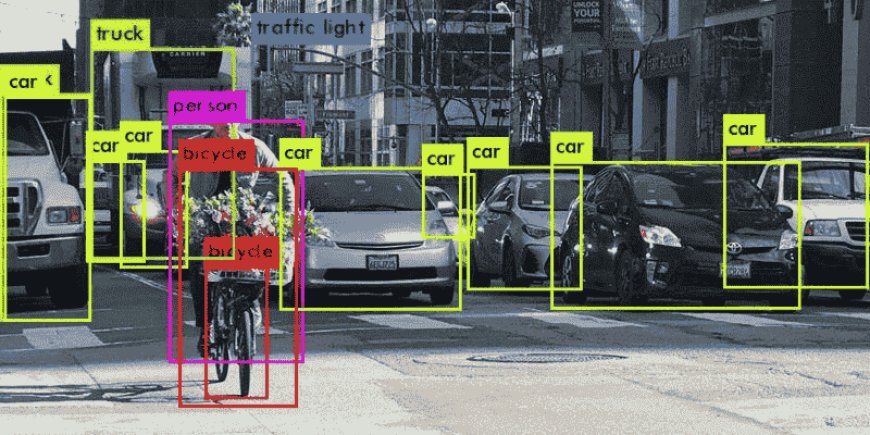
A Simple Example: Image Recognition
Let’s say you want to teach a system to recognize cats in images:
-
Feed thousands of labeled images (cat or not-cat) into the network.
-
The network looks for patterns—shapes, edges, colors.
-
Over time, it learns which patterns usually mean "cat."
-
Show it a new image, and it uses what it has learned to make a guess.
This process is how image recognition works in apps like Google Photos or Facebook.
Where Neural Networks Are Used
Neural networks power many modern applications:
-
In Marketing: Recommend products based on browsing or purchase history.
-
In Customer Support: Power chatbots and automated replies.
-
In Finance: Detect unusual transactions that may indicate fraud.
-
In Healthcare: Help identify diseases in medical images.
-
In Retail: Forecast demand and optimize inventory.

Common Types of Neural Networks
-
Feedforward Neural Networks (FNNs): The simplest kind. Data flows one way from input to output.
-
Convolutional Neural Networks (CNNs): Designed for image and video tasks. They use filters to identify visual features.
-
Recurrent Neural Networks (RNNs): Great for sequential data like time series or text. They remember past inputs.
-
Transformers: Popular in language models. They process context more effectively than RNNs.
Each is built for specific types of problems.
Why Neural Networks Matter
Neural networks are valuable because they:
-
Learn from large, messy datasets
-
Get better over time with more training
-
Don’t need explicit rules to operate
They are used in:
-
Natural Language Processing: Chatbots, translation apps, voice commands
-
Computer Vision: Face recognition, self-driving cars, surveillance
-
Predictive Analytics: Customer churn, stock market trends, buying behavior
Challenges and Limitations
Neural networks are powerful but not perfect:
-
Data Requirements: They need large datasets to perform well.
-
Lack of Transparency: It’s not always clear how they arrive at a decision.
-
High Resource Usage: Training models can be computationally expensive.
-
Bias Risk: If training data is biased, the network may learn and replicate it.
These issues are active areas of research. There is also growing interest in explainable AI to make decisions more transparent.
Quick Comparison Table
|
Feature |
Neural Networks |
Traditional Algorithms |
|
Learning from Data |
Yes |
Often limited |
|
Handles Complex Inputs |
Yes |
Not always |
|
Improves Over Time |
With more data |
Limited improvement |
|
Transparency |
Low (black-box) |
High (rule-based) |
Emerging Trends in Neural Networks
-
Explainable AI: Making model decisions understandable
-
Edge AI: Running smaller models on phones, cameras, or IoT devices
-
Transfer Learning: Reusing pre-trained models to save time and resources
-
Multimodal AI: Combining data types like text, audio, and images in one model
Mini Glossary
-
Weight: A value that determines the importance of input data
-
Activation Function: Decides if a neuron passes its signal forward
-
Backpropagation: The process of adjusting weights during training
-
Overfitting: When a model learns noise instead of useful patterns

Conclusion
Neural networks help machines recognize patterns, make decisions, and improve over time. They’ve become a key part of many AI-powered applications—from smart assistants to recommendation systems.
While they have limitations, ongoing research is making them more efficient, transparent, and widely usable. Understanding how they work is the first step to exploring how AI can support your business, product, or content strategy.
FAQs
Q: Are neural networks the same as machine learning?
A: Neural networks are a type of machine learning. All neural networks use machine learning, but not all machine learning uses neural networks.
Q: Do I need coding knowledge to use neural networks?
A: Tools now exist that allow users to work with neural networks through visual interfaces. However, coding knowledge can give more control.
Q: Can neural networks be used in small businesses?
A: Yes, especially with pre-trained models and low-code platforms. They are being used in customer service, marketing automation, and sales forecasting.