























































How Beginners Can Start Data Science Remote Jobs
Learn how beginners can start data science remote jobs, the required skills, roadmap, mistakes to avoid, and how to build a career step by step.


If you’ve ever searched for data science remote jobs and felt both excited and overwhelmed at the same time, you’re not alone.
On one hand, you see people working from anywhere, earning globally, and building flexible careers. On the other hand, you may be thinking:
-
“I’m a beginner — am I even eligible?”
-
“I don’t have experience yet.”
-
“Everyone else seems ahead of me.”
-
“Is it already too late to start?”
Here’s the truth most people don’t tell you:
Many professionals working in data science remote jobs today once had the same doubts.
The difference isn’t talent or background — it’s clarity, structure, and timing.
This guide will walk you through exactly how beginners can start data science remote jobs, what skills actually matter, what mistakes to avoid, and how to move forward with confidence.
Why Data Science Remote Jobs Are Growing So Fast
Remote work didn’t just change where people work — it changed how companies hire talent.
Today, organizations care more about:
-
problem-solving ability
-
practical skills
-
communication
-
results
…than physical location.
At the same time, companies are generating massive amounts of data. They need people who can analyze, interpret, and turn that data into decisions. That’s why data science remote jobs continue to grow globally, across industries like finance, healthcare, e-commerce, AI, SaaS, and consulting.
For beginners, this creates a rare opportunity:
You don’t need to relocate.
You don’t need a prestigious degree.
You need the right preparation.
Can Beginners Really Start Data Science Remote Jobs?
Let’s be honest.
Yes — beginners can start data science remote jobs, but not in the way social media sometimes promises.
Being a “beginner” doesn’t mean zero skills. It means:
-
You’re still learning
-
You don’t yet have professional experience
-
You’re building confidence
In hiring terms, beginners usually qualify for:
-
entry-level data science remote jobs
-
junior data analyst roles
-
associate analytics roles
-
project-based or internship-style remote work
Companies don’t expect mastery. They expect foundations + proof of learning.
This is where many people get stuck — not because they can’t learn, but because they don’t know what level is enough to start.
What “Beginner” Really Means in Data Science Hiring
A beginner in data science does not mean:
❌ Knowing every algorithm
❌ Mastering advanced math
❌ Building complex AI systems
Instead, beginner-ready candidates usually show:
✅ Basic understanding of data concepts
✅ Ability to work with datasets
✅ Logical thinking
✅ Willingness to learn
✅ Clear communication
Remote employers care less about perfection and more about whether you can contribute reliably.
Skills Needed to Start Data Science Remote Jobs
To start strong in data science remote jobs, beginners should focus on building practical, job-relevant skills, not trying to learn everything at once. Many people delay their progress by chasing advanced topics too early. In reality, recruiters look for clarity, fundamentals, and the ability to apply knowledge in real situations.
Below are the core skill areas that truly matter when starting out.
1. Foundational Technical Skills
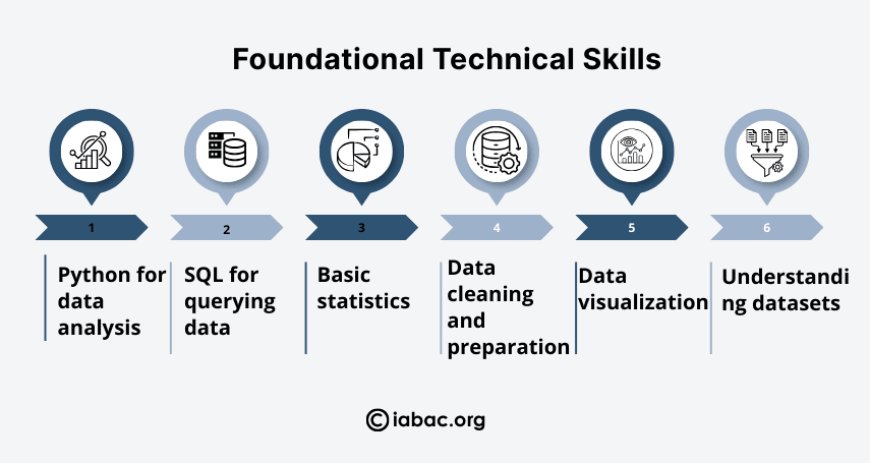
These skills form the backbone of almost all data science remote jobs. You don’t need expert-level mastery on day one — what matters is understanding how these tools work together to solve real problems.
Key foundational skills include:
-
Python for data analysis – used to clean data, perform calculations, and build logic
-
SQL for querying data – essential for working with databases and extracting insights
-
Basic statistics – mean, median, probability, correlation, distributions
-
Data cleaning and preparation – handling missing values, formatting, and inconsistencies
-
Data visualization – presenting insights using charts and graphs
-
Understanding datasets – knowing what the data represents and how it can be used
At the beginner stage, consistency matters more than perfection. Regular practice with real datasets builds confidence far faster than trying to master everything at once.
2. Analytical Thinking & Problem-Solving Skills
Technical knowledge alone is not enough. Employers hiring for data science remote jobs care deeply about how you think.
They want to see whether you can:
-
break complex problems into smaller, logical steps
-
understand what a business question is really asking
-
interpret results instead of just generating numbers
-
explain insights in a clear and structured way
Analytical thinking helps you connect data to decisions. Even simple analyses become valuable when you can explain why something happened and what it means.
This skill is often what separates beginners who struggle from those who get shortlisted.
3. Tools Commonly Used in Remote Data Science Roles
Remote teams rely heavily on tools that support collaboration, transparency, and reproducibility. Being comfortable with these tools makes it easier to integrate into distributed teams.
You should gradually become familiar with:
-
Python libraries used for analysis and visualization
-
Spreadsheets for quick analysis and summaries
-
Notebooks for documenting experiments and insights
-
Dashboards for presenting results visually
-
Version control (basic Git) to track changes and collaborate
-
Online collaboration tools used by remote teams
These tools help you share work clearly, receive feedback, and work efficiently across time zones.
4. Communication Skills (Often Overlooked but Critical)
One of the most underestimated requirements for data science remote jobs is communication.
Since you won’t always be working face-to-face, your ability to communicate clearly becomes extremely important.
Strong candidates can:
-
write explanations that are easy to understand
-
explain insights without heavy technical jargon
-
document their work clearly
-
participate confidently in virtual meetings and discussions
Many hiring decisions come down to this:
Can this person explain their thinking clearly to others?
Strong communication often becomes the deciding factor between two equally skilled candidates.
A Beginner-Friendly Step-by-Step Path to Start Data Science Remote Jobs
Here’s a realistic, experience-backed roadmap beginners can follow:
Step 1: Build Strong Foundations
Every successful data science journey starts with strong fundamentals. These basics help you understand why things work, not just how to copy code.
Start by learning:
-
Data basics — understanding types of data and how information is structured
-
Statistics concepts — averages, probability, distributions, and relationships
-
Python fundamentals — writing simple scripts and handling data
-
SQL queries — retrieving and filtering data from databases
At this stage, avoid rushing into advanced topics. Instead, focus on building clarity. When you understand the logic behind the tools, learning advanced techniques becomes much easier later.
The goal here is not mastery — it’s comfort and consistency.
Step 2: Practice With Real Data Early
Once you understand the basics, move quickly into working with real-world datasets. This is where learning truly begins.
Focus on:
-
working with real datasets
-
solving simple analysis problems
-
cleaning messy or incomplete data
-
drawing basic insights from information
Real data is rarely clean or perfect. Learning how to handle messy datasets prepares you for actual job tasks and builds confidence far faster than theory alone.
Hands-on practice helps beginners shift from learning concepts to thinking like data professionals.
Step 3: Create Small but Meaningful Projects
Projects act as your proof of ability — especially when you don’t yet have job experience.
Good beginner-level projects focus on clarity rather than complexity, such as:
-
data exploration projects
-
trend or pattern analysis
-
interactive dashboards
-
simple predictive tasks
Each project should clearly communicate three things:
-
the problem you’re trying to solve
-
your approach and reasoning
-
the outcome or insight you discovered
Well-documented projects show employers that you can think independently and apply what you’ve learned in real situations.
Step 4: Build a Strong Portfolio
For beginners, a portfolio often matters more than a resume. It becomes your proof of capability when applying for data science remote jobs.
Your portfolio should include:
-
clear project explanations
-
readable code samples
-
visual outputs such as charts or dashboards
-
short summaries explaining your decisions
A clean, well-structured portfolio instantly improves credibility. It helps recruiters understand your thinking without guessing — and builds trust before interviews even begin.
Step 5: Understand How Remote Hiring Works
Many beginners feel anxious about hiring simply because they don’t understand the process. Knowing what to expect removes uncertainty.
Most remote hiring processes include:
-
resume screening to check relevance
-
skill-based evaluation or task-based assessments
-
technical or case interviews
-
communication or culture-fit rounds
Understanding this flow helps you prepare strategically instead of randomly. You’ll know what skills to focus on, what to practice, and how to present yourself with confidence.
How to Find Data Science Remote Jobs as a Beginner
Many beginners apply randomly and get discouraged. A smarter approach works better.
Where to Look:
-
Remote job platforms
-
Company career pages
-
Analytics communities
-
Professional networks
-
Internship and trainee programs
Focus on roles labeled:
-
“junior”
-
“entry-level”
-
“associate”
-
“analyst”
Resume Tips for Beginners Applying to Remote Roles
Your resume should highlight:
-
projects over theory
-
tools used
-
outcomes achieved
-
clarity and structure
Avoid:
-
long paragraphs
-
irrelevant details
-
vague descriptions
Your resume should answer one question clearly:
Can this person contribute remotely with minimal guidance?
How Interviews Work for Data Science Remote Jobs
Interviews for data science remote jobs may feel intimidating at first, especially for beginners. But once you understand how they are structured, the process becomes far less stressful.
Most remote hiring processes are designed to evaluate how you think, how you communicate, and how you approach problems — not whether you know everything perfectly.
Typically, interviews are divided into three main parts.
1. Technical Discussions
This stage focuses on your foundational understanding. Interviewers want to see whether you understand core concepts well enough to apply them in real situations.
You may be asked about:
-
basic statistics, such as averages, distributions, or correlations
-
SQL logic, including filtering, grouping, or simple joins
-
Python concepts, especially those related to data handling
-
your problem-solving approach, rather than just final answers
The goal is not to test advanced theory. Instead, interviewers observe how you think through problems and explain your logic step by step.
Clear reasoning often matters more than speed or perfection.
2. Practical Tasks and Case-Based Questions
Many data science remote jobs include a practical component to evaluate how you work with real data.
This may involve:
-
case-style questions based on realistic scenarios
-
small take-home assignments
-
dataset interpretation tasks
-
explaining insights from a sample dataset
These exercises help employers understand how you:
-
approach unfamiliar problems
-
structure your analysis
-
clean and interpret data
-
communicate insights clearly
Even simple solutions are acceptable when your thinking process is logical and well-explained.
3. Behavioral and Communication Questions
Because these are remote roles, communication skills matter just as much as technical ability.
Interviewers often assess:
-
your communication style
-
how you collaborate with others
-
how you manage time and priorities
-
your willingness to learn and adapt
-
how you handle feedback
You may be asked to describe past learning experiences, challenges you faced, or how you handle ambiguity. These questions help assess whether you can work independently while still being a reliable team member.
What Interviewers Really Look For
Despite the technical nature of data science, interviewers are not looking for perfection.
They look for:
-
clarity of thought
-
honest explanations
-
structured reasoning
-
curiosity and learning mindset
-
the ability to explain ideas simply
Strong fundamentals combined with clear communication often outweigh advanced knowledge.
Common Mistakes Beginners Should Avoid
Many learners delay their success by making avoidable mistakes:
❌ Waiting to “learn everything” before applying
❌ Ignoring projects
❌ Copying portfolios
❌ Avoiding communication practice
❌ Expecting instant results
❌ Applying without preparation
Progress comes from action + feedback.
Salary Reality for Beginners in Data Science Remote Jobs
Entry-level salaries vary based on:
-
location
-
skill level
-
role type
-
company size
Beginners should focus less on numbers and more on:
-
experience
-
learning curve
-
long-term growth
With time and experience, income grows significantly in remote data science careers.
The Long-Term Future of Data Science Remote Jobs
Remote work is no longer a trend — it’s a structural shift.
As companies continue to:
-
rely on data
-
automate decisions
-
operate globally
…the need for data professionals who can work remotely will continue to grow.
For beginners, starting early creates a long-term advantage.
You’re Not Late — You’re Early Enough
If you’re wondering whether you can really start data science remote jobs as a beginner, the honest answer is:
Yes — if you follow a structured path and stay consistent.
You don’t need to be perfect.
You don’t need to know everything.
You just need to start.
Every professional working remotely today once stood exactly where you are now — uncertain, curious, and hopeful.
Start small. Learn deliberately. Build proof.
That’s how beginners turn into remote data professionals.