



























































How Data Science Programs Build ML and Analytics Skills
Data Science Programs build analytics and machine learning skills through structured learning, practical projects, and globally trusted certification support.


Building strong analytics and machine learning abilities has become essential for students and professionals who want to grow in data-based fields. Data Science Programs offer a structured way to gain these skills, helping learners understand concepts clearly, practice them through guided exercises, and apply them to real scenarios. When supported by trusted certification bodies such as IABAC, these programmes also validate a learner’s capability, making career opportunities easier to access.
Find out how Data Science Programs shape analytical thinking, improve ML capabilities, and support long-term professional growth. These programmes guide learners through structured topics that gradually build confidence, clarity, and practical skill. With hands-on exercises and real-world project experience, students understand how data is used to solve meaningful problems. The combination of theory and application prepares learners for competitive roles in analytics and machine learning. When supported by globally trusted Data Science Certifications, these skills become even more valuable, strengthening career prospects across industries.
Why Data Science Programs Matter for Skill Building
Many learners struggle to understand where to begin when trying to master analytics or machine learning. The volume of online tutorials, mixed-quality learning materials, and scattered topics often make learners confused. Data Science Programs solve this by creating a complete learning path where each topic supports the next.
These programmes bring three major advantages:
- Organised progression from basic concepts to advanced applications
- Guided explanations that simplify complicated mathematical and computing ideas
- Practical training that shows how real companies use data to solve problems
This balance of theory and application ensures that learners don’t just memorise formulas but learn how to think like analysts, data scientists, and AI professionals.
IABAC, known globally for its skill-based certifications, complements this learning by offering standardised recognition. This gives students the confidence that their skills align with global expectations.
Basic Skills That Strengthen Analytical Thinking
Analytical ability is the base for both machine learning and advanced data roles. Data Science Programs help learners gradually develop these capabilities through essential topics such as:
a. Understanding data
Learners start with how data is collected, stored, and used. This helps them recognise how numbers represent real-world events.
b. Cleaning and preparing datasets
Raw data is rarely perfect. Programs teach how to:
- Handle missing values
- Remove gaps
- Fix formatting errors
- Normalize and categorize data
This ensures that the knowledge produced later are reliable.
c. Identifying patterns
Students learn how trends, distributions, and connections help in making decisions. These are important elements of analytics work.
d. Basic statistics
Topics such as probability, averages, variability, and hypothesis testing help learners evaluate whether findings are meaningful.
These foundational skills play a major role in real job roles, especially in paths such as Data Science Foundation Certification, where statistics and data preparation form a large portion of the assessment criteria.
Building Technical Skills Needed for Analytics Careers
Once the foundation is strong, Data Science Programs guide learners through the tools and techniques that analysts use regularly.
Tools and techniques typically included:
- Python or R for data manipulation
- Excel for fast analysis and visualization
- SQL to retrieve data from databases
- Visualization tools such as matplotlib or basic dashboards
- Basic predictive models used in analytical reporting
Programs also include exercises that mirror tasks done in professional roles. For example:
- Creating dashboards
- Generating reports for management
- Cleaning and transforming datasets
- Answering business questions using data
These experiences prepare learners for certifications like IABAC’s Data Analyst programmes, where similar skills are tested in practical formats.
How Machine Learning Skills Are Developed In Data Science Programs
A major part of Data Science Programs is helping learners understand machine learning without overloading them. Instead of jumping into complex algorithms, the learning progresses gradually. Learners begin with simple concepts that explain how models make predictions and why data quality matters. Once the basics are clear, they move into supervised and unsupervised methods using small, manageable datasets. This steady progression ensures that students build confidence while gaining the ability to apply ML techniques effectively in real scenarios.
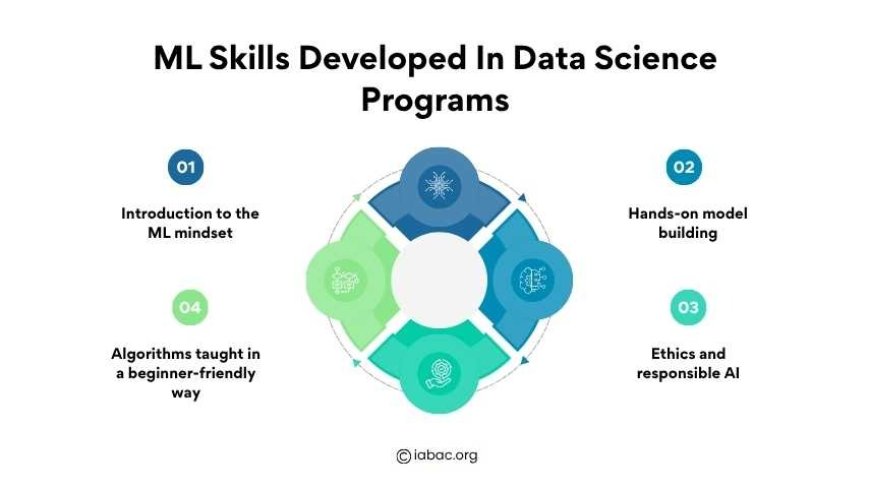
a. Introduction to the ML mindset
Students learn:
- How ML differs from traditional programming
- What makes a model accurate
- Which types of problems ML can solve
b. Algorithms taught in a beginner-friendly way
Common algorithms covered include:
- Linear and logistic regression
- Decision trees
- Clustering methods
- Basic neural networks
- Support Vector Machines
Each model is explained with simple examples such as weather prediction, exam performance estimation, or grouping similar items.
c. Hands-on model building
Learners build their first models on manageable datasets, which helps them:
- Select features
- Train and test models
- Interpret accuracy
- Improve performance
d. Ethics and responsible AI
Programmes also teach responsible use of ML, important when applying models that affect people. Topics such as fairness, privacy, transparency, and bias are introduced early so students understand the importance of safe AI development.
IABAC, as a certification authority, emphasises these components to make sure learners understand not only how to build models but also how to apply them responsibly.
Real-World Application and Industry Relevance
A significant benefit of Data Science Programs is their focus on practical application. Employers look for individuals who can perform tasks, not just memorise theories.
Common practical activities included:
- Analyzing sales or customer data sets
- Predicting outcomes based on historical trends
- Designing classification models for real scenarios
- Generating insights for business decisions
- Communicating results clearly through reports
Students often work on major projects that summarise everything they’ve learnt. These projects help learners:
- Gain confidence
- Build portfolios
- Demonstrate skills to employers
This directly supports career readiness, particularly for roles involving analytics, machine learning, or tasks tested during a Data Analyst Certification evaluation.
How Programs Build Confidence for Certification Exams
Well-designed Data Science Programs prepare learners for certification exams such as those from IABAC.
This preparation includes:
- A clear theory that strengthens understanding
- Practical exercises that mirror real questions
- Guidance on common exam topics
- Exposure to industry-quality datasets
- Practice assignments that reinforce learning
This approach reduces exam anxiety and increases confidence, especially for first-time applicants who may not know what to expect.
How IABAC Adds Value to Learners’ Career Growth
IABAC is known globally for validating data science, analytics, and AI skills. When learners complete Data Science Programs and then complete an IABAC certification:
- Their skills gain global recognition
- Employers trust their competency
- Career mobility increases
- They can pursue advanced certifications with a solid base
IABAC certifications are aligned with industry standards and recognised across regions where companies value practical capability over theoretical memorisation.
The Role of Continuous Improvement
Data Science Programs teach learners how to evolve with industry needs. This includes:
- Evaluating model performance regularly
- Updating datasets
- Improving data quality
- Communicating insights clearly
- Using AI responsibly
These skills ensure long-term success in analytics, machine learning, and specialised certification pathways.
Even tech leaders like Google and Microsoft recommend continuous improvement in AI practices, reinforcing the importance of these habits.
Data Science Programmes give students a solid path to build analytics and machine learning skills. Instead of leaving learners confused, they offer structured guidance, practical experience, and the confidence needed to navigate data careers. When combined with a certification body like IABAC, learners gain not only the skills but also the professional recognition needed to grow. Ready to strengthen your analytics and machine learning capability? Start your journey with IABAC today and take the next step toward global certification.