

















































Are You Missing Opportunities Without Data Science Certifications?
Data science certifications strengthen technical skills validate knowledge and improve career prospects in analytics machine learning and data driven roles.

Data science roles are in high demand, with over 23,000 job openings expected every year in the coming years. Companies are actively looking for people who can work with data, build models, and support decision-making.
Yet, many learners struggle to turn that demand into real job opportunities.
That’s where the confusion begins.
Some professionals complete a certification and move into well-paying roles. Others go through multiple courses and still find it hard to get shortlisted. The difference rarely comes down to effort—it comes down to direction.
Understanding how data science certifications fit into your learning path can help you focus on what actually matters - skills, projects, and outcomes that employers look for.
The Real Question - Do You Actually Need Data Science Certifications?
According to the U.S. Bureau of Labor Statistics, data science jobs are expected to grow by 34% over the next decade.
The demand for data roles is real. Companies across industries are hiring for roles like data analysts, data scientists, and machine learning engineers.
At the same time, hiring expectations have changed.
Employers are looking for:
- Strong problem-solving ability
- Practical knowledge of tools like Python, SQL, and ML frameworks
- Proof of work through projects
Here’s the reality.
Some candidates with certifications get shortlisted quickly because they show structured learning. Others get ignored because they lack practical experience.
So the question is not whether data science certifications are useful.
The real question is how you use them.
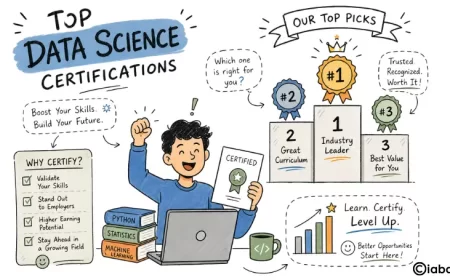
What Data Science Certifications Actually Do And What They Don’t
Understanding this clearly can save months of confusion.
What they give:
- Structure: A clear path to follow, especially helpful for beginners who feel lost.
- Fundamentals: Concepts like statistics, data analysis, and machine learning basics become easier to grasp.
- Credibility: Recognized certifications signal commitment and discipline to recruiters.
What they don’t give:
- Job guarantee: Completing a course alone does not lead to a job.
- Real project experience: Most certifications do not go deep into solving real-world problems.
This is where many learners get stuck.
They complete a certification but cannot explain how to apply what they learned. That gap directly affects hiring outcomes.
Top Data Science Certifications in 2026
Here’s a practical comparison to help you evaluate the best options:
|
Certification |
Skills Covered |
Level |
Duration |
Best For |
Outcome |
|
Google Data Analytics Certificate |
Data analysis, visualization |
Beginner |
3–6 months |
Beginners |
Entry-level roles |
|
IABAC Data Science Certification |
Python, ML, AI tools, analytics |
Beginner to Advanced |
4–6 months |
Career-focused learners |
Job-ready foundation |
|
IBM Data Science Professional Certificate |
Python, ML, data science tools |
Beginner to Intermediate |
4–6 months |
Structured learners |
Strong fundamentals |
|
Microsoft Azure Data Scientist |
ML, cloud, AI |
Advanced |
2–4 months |
Professionals |
Cloud-focused roles |
|
AWS Data Analytics Certification |
Big data, analytics tools |
Intermediate |
2–5 months |
Data engineers |
Infrastructure roles |
Why Many Learners Choose IABAC for Data Science Certification
If your goal is to move beyond theory and actually build job-ready skills, the IABAC Data Science Certification stands out for a few key reasons:
- Industry-aligned curriculum covering Python, machine learning, and real-world analytics
- Structured learning path designed for beginners as well as professionals
- Focus on practical application, helping you work on real data problems
- Globally recognized certification, adding credibility to your profile
- Career-oriented approach that aligns learning with actual job roles
Many learners prefer IABAC because it combines strong fundamentals with applied learning, which makes a real difference during interviews and project discussions.
If you're serious about building a career in data science, this is a strong place to start.
Data Science Roadmap - Certification Alone Is Not Enough
A clear data science roadmap makes all the difference.
Step-by-step approach:
- Learn basics: Start with programming, statistics, and data handling.
- Choose certification: Pick one that aligns with your goal.
- Build projects: Work on real datasets and solve real problems.
- Create portfolio: Showcase your work on GitHub or personal website.
- Apply for jobs: Focus on roles that match your skill level.
Skipping any of these steps often leads to slow progress.
What You Will Actually Learn - Data Science Syllabus Breakdown
A good data science syllabus should include:
1. Python: Data manipulation, libraries like Pandas and NumPy
2. Statistics: Probability, distributions, hypothesis testing
3. Machine Learning: Regression, classification, clustering
4. Data Visualization: Tools like Matplotlib, Power BI, Tableau
5. SQL: Database queries, data extraction
6. AI Tools: Automation, model optimization, modern workflows
This combination builds a strong data science foundation.
Data Science Projects That Get You Hired
Projects are where real learning happens. We’ve seen learners struggle after completing multiple certifications without projects. Recruiters often spend less than 30 seconds scanning a resume—projects and outcomes matter more than course completion.
Few Examples of Strong Projects:
- Customer churn prediction
- Sales forecasting models
- Recommendation systems
- Fraud detection
Platforms like Kaggle help you practice with real datasets and understand how data problems are solved in real scenarios.
Why projects matter:
- Show practical skills
- Help in interviews
- Build confidence
A strong data science project often carries more weight than multiple certificates.
Common Mistakes People Make With Data Science Certifications
Avoid these if you want better results:
- Collecting multiple certificates without depth
- Skipping project work
- Following random learning paths
- Ignoring specialization
Progress improves when learning is focused and consistent.
Career Opportunities After Data Science Certifications
Data science offers diverse roles:
Job roles:
- Data Analyst
- Data Scientist
- Machine Learning Engineer
Growth path:
Many start as analysts and move into machine learning or AI roles within a few years.
FAQs
1. Are data science certifications worth it?
Yes, when combined with practical learning and projects.
2. Which certification is best for beginners?
Google Data Analytics and IABAC are strong starting points.
3. Can I get a job with only certification?
Chances improve significantly with projects and a portfolio.
4. How long does it take to complete a data science certification?
Typically between 3 to 6 months.
Make the Right Move
Data science certifications open doors when used the right way.
Focus on building skills, working on real projects, and choosing a clear path based on your goal. The combination of structured learning and real-world application is what creates long-term career growth.
If you’re looking for a program that offers a clear learning path, strong fundamentals, and practical exposure aligned with industry needs, certifications like IABAC can give you a solid starting point. If you want clarity on the right path, the right certification, or how to get started, connect with the IABAC team to discuss your goals and next steps.
Pick one direction, stay consistent, and build work that shows what you can do.