













































How Generative AI is Changing the Way We Work in 2026?
Still spending hours on routine tasks? Generative AI is reshaping work in 2026, helping professionals move faster, make smarter decisions, and stay ahead

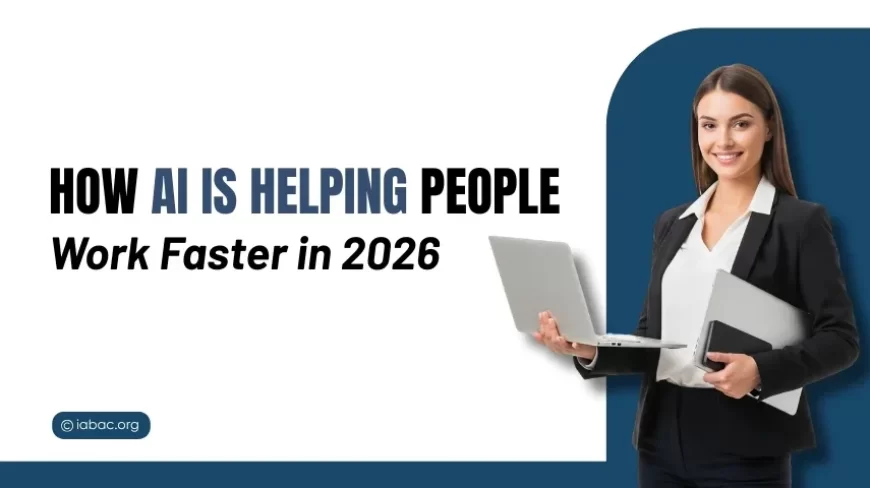
Are you still doing tasks manually while others are using generative AI to finish them in minutes?
Tasks that once took hours are now completed in minutes, and entire workflows are being handled with the help of Generative AI. Across industries, professionals are using AI to write, analyse, automate, and make faster decisions.
This shift is creating a clear gap.
Some are using generative AI to increase productivity and move into higher-value roles. Others are still trying to understand where it fits into their work.
Understanding how generative AI is changing work is becoming essential for anyone who wants to stay relevant.
The Shift Has Already Started — Work is Being Redefined
Generative AI is no longer limited to tools like ChatGPT for content or quick answers. It is now embedded into workflows across marketing, development, operations, and business functions.
The shift is clear:
-
Work is moving from manual execution to guided automation
-
Professionals are focusing more on outcomes than individual tasks
-
AI is handling repetitive and time-consuming processes
A campaign that once required multiple steps across teams can now be managed through integrated AI systems. A report that took hours can now be generated in minutes with insights included.
The role of professionals is evolving from doing work to directing work.
What Generative AI Actually Means in 2026
In 2026, generative AI is no longer about generating text or images alone. It is about execution, reasoning, and workflow integration.
-
From AI content generation to AI decision support
-
From simple prompts to multi-step automation
-
From tools to intelligent systems that assist in workflows
Large language models are now being used to analyse data, suggest strategies, and automate processes across business operations.
AI is functioning more like a co-worker that can assist, execute, and improve outcomes.
Key Ways Generative AI is Changing Work in 2026
The change driven by Generative AI is not limited to speed. It is changing how work flows, how decisions are made, and how roles are defined across industries.
If you break down what is happening inside teams, a few clear shifts stand out.
1. Work is Moving from Steps to Systems
Earlier, work followed a sequence.
Research → creation → review → execution → analysis
Each stage needed time, coordination, and handoffs.
Now, generative AI connects these stages.
A business analyst can gather data, generate insights, and prepare a report in one flow. A developer can write, test, and refine code within the same environment. A product team can move from idea to documentation without switching between multiple tools.
This reduces friction in how work moves.
2. Output Has Increased Without Increasing Effort Proportionally
The expectation from professionals has changed.
Earlier, output was tied directly to time spent. More hours meant more work done.
Now, with AI assisting in execution, the same person can produce more in less time. Content, reports, designs, and code are being generated faster, then refined by humans.
The value is shifting from effort to effectiveness.
3. Decision-Making Is Becoming More Informed
Decisions were often based on experience and limited data.
Now, AI systems process large volumes of information and highlight patterns, risks, and opportunities. This changes how professionals approach decisions.
In finance, risk signals are identified earlier.
In operations, demand patterns are predicted more accurately.
In business strategy, scenarios can be tested before implementation.
The role of the professional is moving toward interpretation and judgment.
4. Routine Work Is Getting Absorbed into Workflows
A large part of daily work used to involve repetition.
Writing similar emails, preparing standard reports, organizing data, responding to queries.
Generative AI is gradually absorbing this layer of work.
It is no longer something you consciously do. It happens in the background as part of the workflow.
This frees up time, but also raises expectations for higher-level thinking.
5. Roles Are Becoming Broader and More Demanding
The definition of a role is expanding.
A marketer is expected to understand data.
A developer is expected to communicate better and think in systems.
A manager is expected to move faster with decisions.
AI is accelerating this shift.
People who adapt to handling multiple aspects of work are moving ahead faster than those who stay within narrow responsibilities.
6. Work Is Becoming a Collaboration Between Human and AI
AI is no longer external to work. It is becoming part of how work happens.
Professionals are:
-
Using AI to explore ideas
-
Testing variations quickly
-
Refining outputs instead of starting from scratch
This creates a different rhythm of work.
You move from creating everything manually to guiding, evaluating, and improving what AI produces.
Before AI vs After AI — How Work Has Changed
|
Category |
Before Generative AI |
After Generative AI |
|
Content Creation |
Manual writing, editing, multiple revisions |
AI-assisted drafting, faster iterations, optimized content |
|
Data Analysis |
Time-consuming reports and manual insights |
Instant insights with AI-driven recommendations |
|
Campaign Execution |
Multiple tools, manual coordination |
Integrated workflows with automation |
|
Decision-Making |
Based on limited data and experience |
Data-backed decisions with AI insights |
|
Productivity |
Dependent on individual effort and time |
Enhanced output with AI productivity tools |
|
Customer Personalization |
Generic messaging for large audiences |
Personalized content at scale using AI |
|
Coding & Development |
Writing and debugging line by line |
AI copilots assisting in faster development |
|
Hiring Process |
Manual screening and scheduling |
AI-assisted candidate filtering and evaluation |
Jobs Are Not Disappearing — They Are Evolving
There is ongoing discussion about AI replacing jobs.
The reality is more nuanced.
AI is replacing repetitive tasks, while creating new opportunities.
Emerging roles include:
-
AI strategist
-
Prompt engineer
-
AI workflow manager
Human AI collaboration is becoming essential across industries.
The Skills That Will Matter in 2026
Professionals need to adapt to stay relevant.
Key skills include:
-
Working with AI powered tools
-
Analytical thinking
-
Prompt engineering at work
-
Understanding automation
-
Domain expertise
People who combine AI knowledge with domain skills gain a strong advantage.
The Hidden Risk — Why Some Professionals Fall Behind
Employees lose up to 51 days per year due to inefficient tools and workflows, highlighting why AI adoption alone is not enough without proper usage.
Access to AI tools is widespread. Outcomes vary significantly.
Common challenges:
-
Using AI passively without understanding
-
Relying on outputs without validation
-
Lack of skill development
Same tool, different outcomes.
The difference lies in how effectively AI is used.
How to Adapt to Generative AI
A structured approach helps professionals stay ahead.
-
Learn core generative AI tools
-
Apply them in daily work
-
Automate small workflows
-
Build AI-based projects
-
Stay updated with trends
If you’re serious about applying generative AI in real work scenarios, learning it casually is rarely enough. The difference usually comes from structured guidance, real use cases, and clarity on how to use AI across workflows.
Programs that focus on generative AI foundations, practical implementation, and industry use cases can help you move faster and avoid trial-and-error learning. Certifications from organizations like IABAC, a globally recognized certification body, are designed around how AI is actually being used in business environments today.
If you want direction on where to start or how to build the right skills, it’s worth exploring a structured path and speaking to experts who can guide you based on your goals.
Generative AI in Different Industries
Marketing: AI content generation, campaign optimization, audience targeting
IT and Development: Code generation, debugging, system optimization
Healthcare: Data analysis, diagnostics support, documentation
Finance: Fraud detection, reporting, forecasting
Generative AI use cases are expanding across all sectors.
The Future of Work — Human and AI Collaboration
AI is handling execution.
Humans focus on:
-
Strategy
-
Creativity
-
Decision-making
AI will not replace you. Someone using AI will.
Common Mistakes People Make with Generative AI
-
Treating AI as a shortcut
-
Ignoring core fundamentals
-
Not validating outputs
-
Avoiding real-world application
Progress comes from combining knowledge with practical usage.
FAQs
1. How is generative AI changing the way we work in 2026?
Generative AI is automating tasks, speeding up workflows, and helping professionals make faster, data-backed decisions.
2. Will generative AI replace jobs?
It is changing roles by automating repetitive tasks, while creating new opportunities for skilled professionals.
3. What skills are needed to work with generative AI?
AI tool usage, prompt writing, analytical thinking, and domain knowledge are key skills.
4. How can beginners start using generative AI?
Start with widely used generative AI tools like ChatGPT, Gemini, or Microsoft Copilot, and apply them to daily tasks and small projects.
5. Why is generative AI important for career growth?
It helps you work faster, improve output, and stay competitive in evolving job roles.
Final Insight
Work is evolving quickly, and generative AI is at the center of this shift.
Those who start early, build skills, and apply AI in real scenarios gain a clear advantage. Tools alone do not create growth. Skills and applications do.
If you want to understand how to apply generative AI in real business scenarios and build strong fundamentals, structured learning programs from IABAC can help you move in the right direction. If you’re unsure where to start or how to align it with your career goals, consider connecting with the IABAC team to get clarity and guidance based on your current level.
Start using AI in your daily work, build practical use cases, and stay ahead.
“The future of work belongs to those who learn faster, adapt quicker, and apply smarter.”