


















































How to Create Artificial Intelligence: A Simple Guide for 2026
Learn how to create artificial intelligence from scratch. Understand AI concepts, tools, and techniques to build smart systems and AI-powered applications.


Artificial Intelligence (AI) is now part of our daily life. From mobile assistants to smart healthcare systems, AI is helping people and businesses make better decisions. Many learners and professionals are now curious about one common question — how to create artificial intelligence.
Creating AI means teaching machines to think, learn, and act like humans. It combines computer science, mathematics, and creativity. In this blog, we’ll explain how AI is made, what skills you need, and how IABAC certifications can help you start or grow your career in this field.
What Is Artificial Intelligence?
Artificial Intelligence (AI) is the process of building computer systems that can perform tasks that normally need human intelligence. These tasks include understanding speech, recognizing images, learning from data, and making decisions.
AI brings together subjects like:
- Computer Science – for algorithms and programming
- Mathematics & Statistics – for problem-solving and predictions
- Neuroscience – for building models that act like the human brain
- Data Science – for analyzing and interpreting data
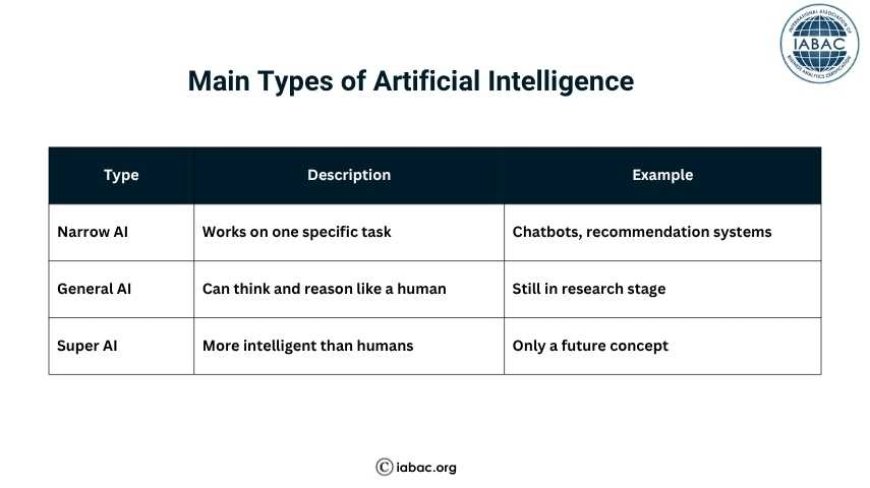
Main Types of Artificial Intelligence
The Main Steps to Create Artificial Intelligence
When learning how to create artificial intelligence, it helps to follow a simple process. Building an AI system involves collecting data, choosing algorithms, and training the model. Let’s go step by step.
1. Define the Problem
Start by understanding what problem your AI should solve.
Examples:
- Predict sales for next month
- Identify spam emails
- Recognize objects in images
2. Collect and Prepare Data
AI systems learn from data, and their performance heavily depends on the quality and organization of that data. Without clean and well-structured data, AI cannot function effectively. Data can be structured, such as spreadsheets containing numerical information, or unstructured, like text, audio, or images. For example, numerical data such as customer spending is commonly used for forecasting trends. Text data, like product reviews, is often analyzed for sentiment. Image data, such as medical scans, can support diagnosis, while audio data, like voice commands, is used in virtual assistants to enable interaction. Properly managing and understanding these data types is crucial for building accurate and reliable AI systems.
3. Choose the Right Algorithm
AI models are built using machine learning (ML) and deep learning (DL) techniques.
Some common algorithms include:
- Linear Regression – for predictions
- Decision Trees – for classification tasks
- Neural Networks – for pattern recognition
- Reinforcement Learning – for learning through experience
4. Train the Model
Training is when the AI model learns from data. The more data it processes, the better it becomes at recognizing patterns. For example, a face recognition model improves as it learns from thousands of images.
5. Test and Evaluate
After training, it’s important to test how well the AI performs. You can use performance measures like:
Accuracy
- Meaning: How often the AI is correct
- Ideal Range: Above 90%
Precision
- Meaning: Correct positive results
- Ideal Range: Above 85%
Recall
- Meaning: Ability to find all positive cases
- Ideal Range: Above 85%
6. Deploy and Monitor
Once the AI works properly, it can be used in real-world applications — such as chatbots, medical image recognition, or recommendation systems. Regular monitoring ensures that it stays accurate and updated.
The Mathematics Behind AI
Math is the backbone of AI. Every AI system uses mathematical concepts to make sense of data.
|
Math Area |
Key Concept |
Use in AI |
|
Linear Algebra |
Matrices and vectors |
Used in neural networks |
|
Calculus |
Gradients and derivatives |
For optimization during training |
|
Probability & Statistics |
Random variables, distributions |
For predictions and decision-making |
Even basic knowledge of these topics can help you understand how AI models work.
How to Create Artificial Intelligence: A Learning Roadmap
If you are serious about learning how to create artificial intelligence, here’s a step-by-step learning path you can follow.
Step 1: Learn the Basics
Start with:
- Python Programming (useful libraries: NumPy, Pandas, TensorFlow)
- Mathematics and Logic for AI
- Data Collection and Visualization
You can begin your journey with the Artificial Intelligence Foundation program by IABAC to build a strong understanding of AI basics.
Step 2: Study Machine Learning
Machine Learning is a key part of AI. The Certified Machine Learning Associate program by IABAC covers:
- Different types of ML (supervised, unsupervised)
- Model building and evaluation
- Hands-on work with real datasets
Step 3: Learn Deep Learning
Deep learning helps machines process complex data like images, speech, and video. Focus on:
- Neural Networks
- CNNs (Convolutional Neural Networks) for images
- RNNs (Recurrent Neural Networks) for text or time series data
Step 4: Understand Natural Language Processing (NLP)
NLP allows computers to understand human language. The Certified Natural Language Processing Expert program helps you learn:
- Text preprocessing
- Sentiment analysis
- Chatbot creation
- Use of modern language models like GPT and BERT
Step 5: Work on Real Projects
The best way to learn AI is by doing. Create your own projects such as:
- AI-based recommendation apps
- Voice recognition software
- Predictive analytics systems
Step 6: Get Certified
Validate your knowledge and skills with IABAC’s globally recognized certifications:
- Artificial Intelligence Foundation
- Certified Machine Learning Associate
- Certified Artificial Intelligence Expert
- Certified Natural Language Processing Expert
These certifications prepare you for the future and help you stand out in the job market.
Best Artificial Intelligence Certifications for 2026
If you want to grow your AI career, these IABAC certifications can help you learn practical skills and gain recognition.
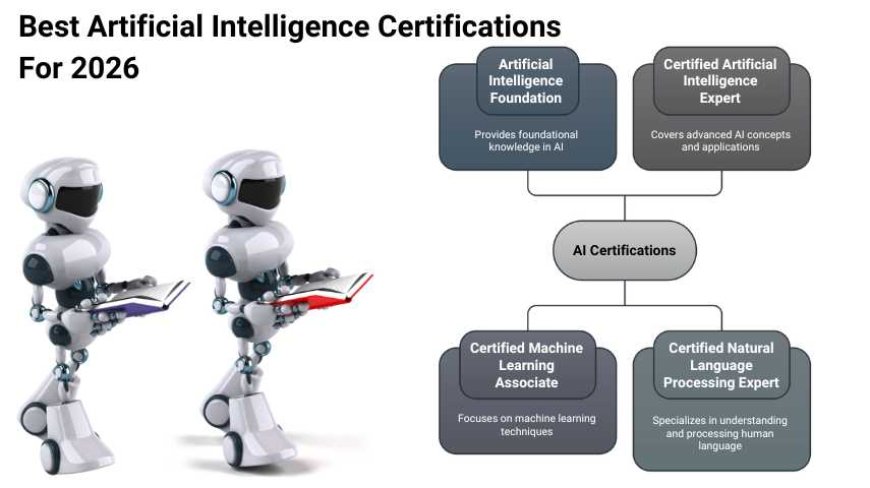
- Artificial Intelligence Foundation
- Focus Area: Basics of AI and its uses
- Suitable For: Students, Beginners
- Certified Machine Learning Associate
- Focus Area: ML algorithms and model training
- Suitable For: Analysts, Engineers
- Certified Artificial Intelligence Expert
- Focus Area: Advanced AI systems and applications
- Suitable For: AI Engineers, Developers
- Certified Natural Language Processing Expert
- Focus Area: Text and language AI
- Suitable For: NLP Developers, Researchers
Common Challenges in Building AI
While learning how to create artificial intelligence, you may face some difficulties such as:
- Poor Data Quality: Inaccurate or incomplete data can affect results.
- Ethical Issues: AI must be fair, transparent, and responsible.
- High Computing Requirements: Training large models needs strong hardware.
- Skill Gap: Many professionals are still learning AI techniques.
IABAC certification programs are designed to help professionals overcome these challenges and apply AI confidently in their careers.
The Future of Artificial Intelligence
In 2026 and beyond, AI will continue to grow and play a bigger role in our lives. Some key trends include:
- Generative AI: Tools that can create text, code, and visuals.
- Responsible AI: Systems built with ethics and fairness.
- Edge AI: AI working directly on smart devices for faster results.
- AI Regulations: New rules to ensure AI is used safely and transparently.
With IABAC training and certifications, learners can prepare for these upcoming changes and build meaningful careers in artificial intelligence.
Start Building Your Own AI Today
Learning how to create artificial intelligence is one of the most valuable skills in today’s world. It’s not just about coding — it’s about combining logic, data, and creativity to make smart systems that can solve real problems. Whether you begin with the Artificial Intelligence Foundation course or move toward becoming a Certified Artificial Intelligence Expert, each step brings you closer to building real-world AI applications.
Start your learning journey now with IABAC and take part in shaping the future of intelligent technology. Ready to begin your AI journey?
Join the IABAC Artificial Intelligence Certification programs and gain practical knowledge to create smart systems.
Visit www.iabac.org to get started today.