

























































How to Start Your Career in Jobs in Data Analytics
Start your career in data analytics with this beginner-friendly guide. Learn skills, tools, and steps to become a successful data analyst today.


Starting a career in data analytics is one of the best choices you can make in today's world. I've worked in this field for years, so I know how valuable and in-demand qualified analysts are across a range of sectors. I'll show you through every step of beginning your data analytics career, from learning essential skills to getting your first position.
Whether you're a worker or a student looking to switch industries, I'll provide helpful advice, practical methods, and reliable information to help you succeed in this fulfilling industry.
What is Data Analytics?
Data analytics is the process of collecting, cleaning, and analyzing data in order to identify trends, patterns, and insights that can be used to improve commercial decision-making.
For example:
-
A retail business analyzes the best-selling items.
-
To improve treatment, a hospital analyzes patient data.
-
In order to identify fraud, a bank looks at spending habits.
To get the answers to these questions, a data analyst uses data. To transform raw data into intelligible insights, they employ technologies like Excel, Python, SQL, and visualization tools (such as Power BI or Tableau).
Why Choose a Career in Data Analytics?
Data analytics is a great field to work in for several reasons:
-
High demand: Data is currently used to inform decisions in every business.
-
Job security: Businesses will always require knowledgeable people.
-
Good salary: Even for new hires, data analytics positions offer competitive pay.
-
Career growth: After beginning as a data analyst, you may pursue a career in machine learning, data science, or business intelligence.
-
Opportunities for flexibility: Many positions provide freelance employment and remote work.
One of the most future-proof professional pathways is analytics since data is getting more and more valuable.
Is Data Analytics a Good Career?
Absolutely, yes.
One of the most fulfilling and promising professions in today's job sector is data analytics. This is the reason:
-
Strong Job Growth: More data analysts are being hired than ever before by businesses in marketing, healthcare, finance, and education.
-
Transferable Skills: You can work in any field after learning analytics.
-
Career progression: From data analyst to senior analyst, data scientist, and analytics manager.
-
High Salary: Professional analysts receive high salaries, particularly for those with certifications and experience.
-
Impact in the Real World: Your observations have a direct impact on business plans and choices.
The only difficulty? You must continue to study. Data methods, tools, and technologies change quickly. But this is a great field to pursue if you enjoy learning and solving problems.
Step 1: Build a Strong Foundation
Before going into code or software tools, focus on the basics.
Learn Basic Mathematics and Statistics
Although you don't have to be an expert in mathematics, you should know:
-
Mean, median, and mode
-
Probability
-
Correlation and regression
-
Hypothesis testing
These are essential for interpreting data correctly.
Develop Logical and Analytical Thinking
Data analytics is about solving problems, not just about numbers. Ask yourself:
-
What is the problem?
-
What data do I need?
-
What patterns can I find?
-
What decisions can this data support?
Improve Communication Skills
As a data analyst, you will frequently present conclusions to those who struggle to understand data. Learn how to convey complex ideas using simple language and visuals.
Step 2: Learn the Essential Tools
After your foundation is complete, start studying the primary data analytics tools.
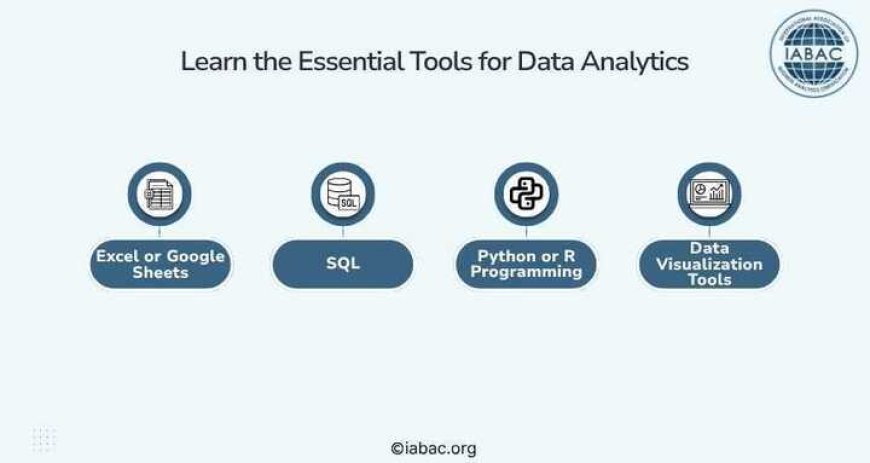
Excel or Google Sheets
-
Learn how to use pivot tables, charts, algorithms, and data cleaning methods.
-
In many companies, this is the first tool analysts use.
SQL (Structured Query Language)
SQL helps you retrieve data from databases.
Learn:
-
Basic commands (SELECT, WHERE, JOIN)
-
Grouping and filtering data
-
Writing queries for reports
Python or R Programming
Python is popular because it is simple and powerful.
Focus on:
-
Libraries like Pandas, NumPy, and Matplotlib
-
Cleaning and visualizing data
-
Basic automation and analysis
Data Visualization Tools
Data may be made into stories with the use of visualization. Find out:
-
Tableau or Power BI for dashboards
-
Excel charts for smaller projects
Step 3: Practice with Real Projects
Learning theory is insufficient; you must also have practical experience.
Do Personal Projects
Begin small. Choose to study free datasets from data.gov, Google Dataset Search, or Kaggle. Example projects:
-
Analyze COVID-19 data to look for patterns.
-
Study reviews of movies to predict trends.
-
Use Power BI to see worldwide sales data.
Build a Portfolio
Make a personal website or GitHub profile to show your work.
Include:
-
Project title and goal
-
Tools used
-
Visuals or dashboards
-
Insights and results
A portfolio helps employers see your real skills.
Step 4: Get Certified
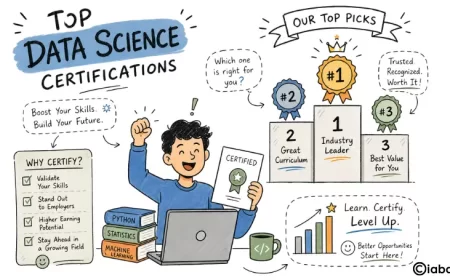
Certifications allow you increase your skills. They show for possible employers your dedication to structured learning.
Certification includes:
-
IABAC Certified Data Analyst (CDA): Globally recognized and aligned with industry standards.
Step 5: Apply for Jobs and Internships
Once you have skills and a few projects, it’s time to start applying for roles.
Entry-Level Job Titles
-
Junior Data Analyst
-
Data Analytics Intern
-
Business Analyst
-
Reporting Analyst
-
Marketing Analyst
How to Prepare
-
Make a neat, professional CV that highlights your successes, abilities, and certifications.
-
Start networking by updating your LinkedIn profile.
-
Practice providing a detailed explanation of your projects during interviews.
-
Prepare for questions about data interpretation, Python, SQL, and Excel.
Keep in mind that while your first job may not be your dream job, it serves as a platform. Each experience teaches you something new.
Step 6: Keep Growing and Upskilling
Continuous learning is essential after you're in the field.
Specialize Over Time
You can specialize in:
-
Business analytics
-
Marketing analytics
-
Financial analytics
-
Healthcare analytics
Learn Advanced Tools
Once you've gained experience, proceed to:
-
Machine Learning basics
-
Big Data tools
-
Cloud computing
-
Advanced visualization and dashboard design
Stay Updated
Participate in professional networks, take quick online courses, and read blogs about analytics.
A Simple 12-Month Roadmap
|
Month |
Focus |
|
1–2 |
Learn basic statistics and Excel |
|
3–4 |
Master SQL and simple data queries |
|
5–6 |
Learn Python and data visualization |
|
7–8 |
Work on personal projects |
|
9 |
Learn Tableau or Power BI |
|
10 |
Earn a certification (like IABAC CDA) |
|
11 |
Build your portfolio and LinkedIn profile |
|
12 |
Apply for internships or entry-level roles |
Although this roadmap provides structure, you can modify it to fit your schedule and pace.
Starting a career in data analytics is one of the smartest moves in today’s digital world. It doesn’t require a computer science degree, just curiosity, problem-solving, and a commitment to learning.
Data analytics is giving endless opportunities — whether you want to work in tech, healthcare, finance, or even sports. The world runs on data, and you can be the one to make sense of it.
Earning a Data Analytics Certification adds global credibility to your analytics skills and strengthens your resume in the eyes of employers.