























































Introduction of Data Science Learn the Future of Technology
Introduction to data science and its role in future technology covering data analysis machine learning AI applications and career opportunities.

Technology is changing the way people work, communicate, travel, shop, and even make daily decisions. Behind many of these modern systems is data science. Every time someone searches on Google, watches a movie suggestion on Netflix, or receives a product recommendation while shopping online, data science is quietly working in the background. Many people hear the term Introduction of Data Science and think it is something only mathematicians or coding experts understand. The truth is much simpler. Data science is about using data to understand patterns, make decisions, and solve real problems. Businesses, governments, healthcare organizations, banks, and technology companies all rely on data science to understand information and improve services.
The amount of data in the world is growing at an unbelievable speed. According to global technology reports, the world produces more than 328 million terabytes of data every day. That is a huge amount of information. Without proper tools and skilled professionals, this data would be useless. Data science turns this raw information into valuable insights.
This blog explains the Introduction of Data Science, why it matters, what people learn when starting in this field, and the key ideas that shape modern data science. It also explores how professional learning paths and programs like those offered through IABAC help people build strong careers in this exciting field.
What Is the Introduction of Data Science
The Introduction of Data Science explains the basic ideas behind working with data. It shows how data can be collected, cleaned, studied, and used to make better decisions.
At its core, data science combines several important areas:
- Mathematics
- Statistics
- Computer programming
- Business understanding
- Data analysis techniques
Imagine having a huge spreadsheet with millions of rows. Looking at it directly might feel like staring at a giant puzzle. Data science helps organize the pieces of that puzzle so meaningful patterns appear.
A simple example can explain this idea. Suppose a food delivery company wants to know why some restaurants receive more orders than others. Instead of guessing, the company can study customer behavior, delivery times, pricing, and ratings. Data science tools analyze the information and reveal patterns. Maybe faster delivery increases orders, or maybe discounts attract more customers. With this insight, the company can improve services and increase revenue.
In many ways, data science acts like a smart detective. It looks at clues hidden inside data and helps organizations understand what is really happening.
Because of its importance, many professionals now pursue Data Science Certifications to build strong skills and credibility in the field.
Why Is the Introduction of Data Science Important
The Introduction of Data Science is important because data now drives many decisions in the modern world. Companies no longer rely only on experience or guesswork. Instead, they use data to guide strategies and improve results.
Several major industries depend heavily on data science.
- Business and Marketing: Companies use data science to study customer behavior, track buying patterns, and predict future sales. Marketing teams analyze data to understand which advertisements attract the most attention.
- Healthcare: Hospitals use data science to analyze patient records, predict disease risks, and improve treatment plans. Some medical research teams use machine learning models to detect illnesses earlier than traditional methods.
- Finance: Banks and financial institutions rely on data science to detect fraud, manage risks, and analyze market trends.
- Transportation: Ride-sharing platforms and logistics companies use data science to find the fastest routes and reduce travel time.
- Technology and Artificial Intelligence: Artificial intelligence systems depend heavily on data science. Without data science, machine learning models would not function effectively.
According to the U.S. Bureau of Labor Statistics, data science jobs are expected to grow by around 35 percent between 2022 and 2032, which is much faster than many other professions. This demand shows how valuable data science skills have become across the global job market.
Many professionals who want leadership roles also pursue programs such as Data Science Certified Manager, which focus on managing data teams and guiding data-driven projects in organizations.
What Do You Learn in the Introduction of Data Science
A good Introduction of Data Science course or program explains the basic building blocks required to work with data. These concepts help beginners understand how information is processed and analyzed.
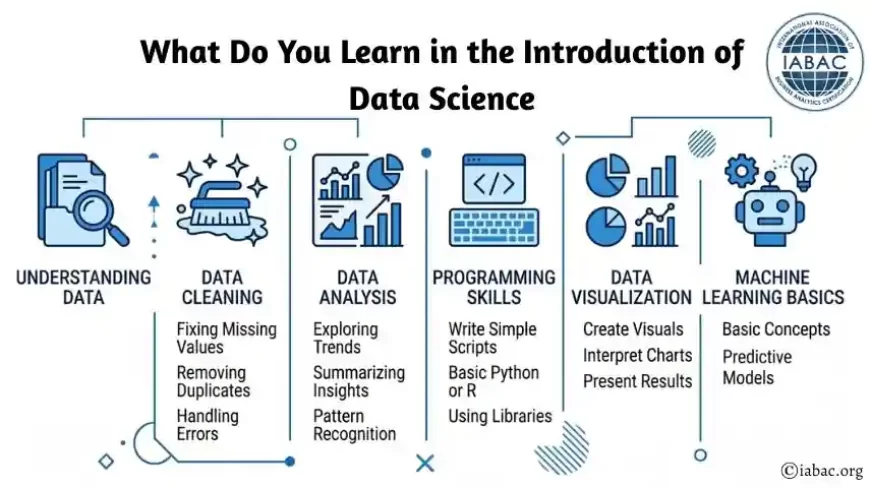
Understanding Data
The first step in data science is understanding different types of data. Data can appear in many forms, including:
- Numbers
- Text
- Images
- Videos
- Sensor information
Data scientists learn how to collect and organize this information so it can be analyzed properly.
Data Cleaning
Real-world data is rarely perfect. Some information may be missing, duplicated, or incorrect. Data cleaning involves fixing these issues so the data becomes reliable.
Many beginners are surprised to learn that data cleaning often takes nearly 70–80 percent of a data scientist’s time. While it may not sound glamorous, it is extremely important.
Data Analysis
Data analysis involves studying data to find patterns and relationships. This step often uses statistical methods and visualization tools.
Charts, graphs, and dashboards help transform raw numbers into meaningful insights that people can understand easily.
Programming Skills
Programming languages such as Python and R are widely used in data science. These tools help process large datasets and automate analysis.
Learning basic coding skills allows professionals to handle complex data problems efficiently.
Data Visualization
Data visualization is the art of presenting data through visual formats such as charts, graphs, and dashboards. Visualization makes complex data easier to understand for managers and decision-makers.
For example, a simple chart showing sales growth across months can communicate more information than thousands of spreadsheet rows.
Machine Learning Basics
Machine learning is closely connected with data science. In an introduction course, learners usually explore how machines can learn patterns from data and make predictions.
Examples include:
- Movie recommendation systems
- Email spam detection
- Fraud detection in banking
These systems improve as they receive more data.
Key Concepts in the Introduction of Data Science
The Introduction of Data Science includes several important concepts that help professionals work effectively with data.
Data Collection
Data must first be collected from different sources such as databases, websites, sensors, or surveys. Reliable data collection ensures accurate results.
Data Storage
Large datasets require proper storage systems. Technologies such as cloud storage and data warehouses help store massive amounts of information safely.
Data Processing
Data processing transforms raw data into usable formats. This process includes cleaning, organizing, and preparing data for analysis.
Statistical Analysis
Statistics help data scientists understand patterns, trends, and probabilities within datasets.
For example, statistical methods can answer questions like:
- What is the average customer spending?
- Which product sells the most?
- What percentage of users cancel subscriptions?
Machine Learning
Machine learning models study data patterns and make predictions automatically. These models improve over time as they receive more information.
Data Ethics
Working with data requires responsibility. Data scientists must protect user privacy and ensure information is used ethically.
Organizations must follow strict data protection regulations when collecting and analyzing personal data.
Why Many Professionals Choose Data Science Certifications
The demand for skilled professionals has increased interest in Data Science Certifications worldwide. These certifications help individuals build practical skills and demonstrate expertise to employers.
Professional certification programs usually include training in:
- Data analysis
- Machine learning fundamentals
- Python programming
- Data visualization tools
- Business intelligence
These programs also help professionals understand how to apply data science techniques in real-world situations.
Global certification bodies such as IABAC provide structured learning paths that support career development in data science and analytics. Information about programs and certifications can be found on www.iabac.org, where professionals explore options designed for both beginners and experienced individuals.
Career Opportunities After Learning Data Science
People who begin with the Introduction of Data Science often move into several exciting career paths.
Common roles include:
- Data Analyst
- Data Scientist
- Machine Learning Engineer
- Business Intelligence Analyst
- Data Engineer
- AI Consultant
Some professionals later transition into leadership roles where they manage analytics teams and guide business strategies. Certifications such as Data Science Certified Manager support this career growth by combining technical knowledge with management skills.
According to industry salary reports, data science professionals often earn competitive salaries due to high demand and specialized skills. In many global markets, experienced data scientists earn significantly higher salaries than many traditional technology roles.
Real-World Example of Data Science
To understand data science better, imagine a music streaming platform. Millions of people listen to songs every day. The company collects information such as:
- Songs people play
- Artists they follow
- Time spent listening
- Skipped tracks
Data science studies these patterns and builds recommendation systems. That is why many people feel like their music app somehow knows their mood perfectly.
Of course, sometimes it recommends a song that feels completely wrong. Even the smartest algorithms have their funny moments.
But overall, data science improves the experience for millions of users by understanding behavior patterns through data.
Learning Data Science Through Structured Programs
Learning data science alone can feel overwhelming at first. There are many tools, techniques, and concepts involved. Structured learning programs provide clear guidance and step-by-step progress.
Organizations like IABAC design programs that combine theory with practical experience. These programs help learners understand how to apply data science in real business situations.
Courses typically include projects, case studies, and real datasets so learners gain hands-on experience. This approach builds both technical knowledge and problem-solving ability.
The Global Future of Data Science
Data science is becoming one of the most influential areas in technology. Companies now collect more data than ever before, and they need skilled professionals who can interpret and analyze that information.
Reports from technology research firms suggest that the global data science market could exceed USD 300 billion within the next few years. This growth shows how essential data science has become for modern organizations.
From healthcare breakthroughs to smart city planning, data science helps shape the future of technology.
Even small businesses now rely on data insights to understand customers, improve services, and compete in global markets.
The Introduction of Data Science is the starting point for understanding how data powers modern technology. From online shopping recommendations to advanced medical research, data science plays a critical role in solving real-world problems. Learning the fundamentals helps people understand how data can be collected, analyzed, and transformed into useful insights. Concepts such as data analysis, machine learning, and visualization form the foundation of this powerful field. With growing demand for skilled professionals, many individuals now pursue Data Science Certifications to build practical knowledge and strengthen career opportunities. Leadership-focused programs like Data Science Certified Manager also support professionals who want to guide data-driven strategies in organizations.
Institutions such as IABAC offer globally recognized certification programs that help learners develop these skills and prepare for future technology roles. The world continues to generate enormous amounts of data every day. Those who understand how to interpret that data will help shape smarter systems, better decisions, and innovative solutions across industries.
And who knows—somewhere inside a massive dataset might even be the next idea that changes the world. The only question is whether someone curious enough is ready to find it.