




















































Key Trends Shaping Python on Data Science in 2026
Key trends in Python for data science in 2026 include automation, AI integration, faster analytics workflows, and advanced machine learning tools.


Python is still everywhere in Data Science in 2026. Seriously, this language just refuses to retire. Every year, people say, “Maybe another language will take over.” Then Python quietly shows up again like, “Hi, I’m still running half the internet.” From machine learning to AI tools, companies continue using Python on data science projects because it is simple, flexible, and beginner-friendly. Whether someone wants to become a data scientist, machine learning engineer, or data analyst, Python is usually the starting point.
And honestly? That is good news.
Python is much easier to read compared to many programming languages. You do not need to stare at your screen for three hours wondering why one missing semicolon destroyed your code and your happiness.
Let’s talk about the biggest trends shaping python data science in 2026 and why they matter.
Python Is Still the King of Data Science
Some things change every year.
Phones get thinner. Apps get weirder. Passwords get harder to remember.
But Python staying popular in Data Science? That never changes.
Companies love Python because it helps teams build things faster. Beginners love it because the code actually looks readable instead of ancient secret symbols.
Python is used for:
- Data analysis
- Machine learning
- AI tools
- Automation
- Dashboards
- Model deployment
- Cloud projects
At this point, if Python had a fan club, the membership would probably break the internet.
Popular Python Libraries for Data Science
Python libraries are collections of ready-made tools.
|
NumPy – |
Pandas – |
|
Matplotlib – |
Seaborn – |
|
SciPy – |
Scikit-learn – |
|
TensorFlow – |
PyTorch – |
AI Coding Tools Are Everywhere Now
In 2026, many developers use AI tools to help write code.
Tools from OpenAI and Anthropic can help explain errors, suggest code, and save time.
Sounds amazing, right?
Well… yes and no.
AI can help you write code faster, but it still makes mistakes. Sometimes it confidently gives broken code like a student finishing an exam with full confidence and absolutely zero correct answers.
That is why learning Python properly still matters.
If you understand coding basics, you can fix problems quickly instead of arguing with AI for 45 minutes.
Pandas are still everyone’s Favorite Library
Pandas continues to be one of the most important tools in Python for data science.
This library helps you work with tables, rows, columns, missing values, and messy datasets that look like they survived a tornado.
With Pandas, you can:
- Clean data
- Filter rows
- Combine datasets
- Analyze numbers
- Prepare machine learning inputs
Every beginner in Data Science eventually reaches the point where they say:
“Wow, Pandas can do that too?”
Yes.
Yes it can.
NumPy Still Runs Behind the Scenes
NumPy is another big part of Python data science.
Most machine learning tools depend on it for calculations and matrix operations. The funny thing is, many beginners use NumPy without fully realizing how important it is.
It is basically the quiet person in a group project doing all the work while everyone else gets the credit.
Charts and Graphs Matter More Than Ever
People love visuals.
If you show someone 5,000 rows of raw data, they panic immediately.
But show the same data in a colorful graph? Suddenly, everybody becomes interested.
That is why visualization tools like Matplotlib and Seaborn are still popular in Data Science.
Good charts help people:
- Understand trends
- Spot problems
- Explain results
- Make business decisions
Also, charts make presentations look smarter even when you made them at 2 AM.
Scikit-Learn Makes Machine Learning Easier
Scikit-learn is still one of the easiest ways to start machine learning.
It helps beginners train models without writing huge amounts of complicated code.
You can build:
- Classification models
- Prediction systems
- Clustering models
- Recommendation systems
Many Data Science Certifications also teach Scikit-learn because companies use it all the time.
PyTorch Keeps Growing Fast
PyTorch is becoming even bigger in AI and deep learning.
A lot of AI systems people use today are built with PyTorch.
The good thing about PyTorch is that it feels more flexible and beginner-friendly compared to older deep learning tools.
The bad thing?
Sometimes training models feels like waiting for your food delivery while checking the app every 30 seconds.
MLOps Skills Are Becoming Important
A few years ago, building a machine learning model was enough.
Now companies also want people who can deploy models, monitor them, and keep them running properly.
This is where tools like these come in:
- Docker Docker
- Kubernetes Kubernetes
- Amazon Web Services AWS
This part scares many beginners at first.
You start learning Python, thinking: “I will analyze some data.”
Then suddenly someone says, “Now deploy your model to the cloud.”
And your brain quietly leaves the chat.
Still, these skills are becoming more valuable every year.
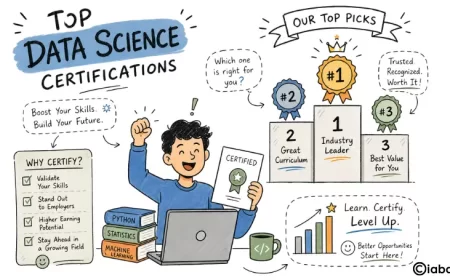
Data Science Certifications Are Getting More Attention
Many employers now care about practical skills and recognized Data Science Certifications.
Certifications help show that you understand:
- Python basics
- Data analysis
- Machine learning
- Statistics
- Visualization
They also help beginners follow a structured learning path instead of jumping between random tutorials every three days.
Because let’s be honest…
A lot of people spend more time organizing courses than actually learning.
Jupyter Notebook Is Still a Beginner Favorite
Jupyter Notebook is still one of the easiest ways to practice Python.
You can write code, test ideas, add notes, and create charts all in one place.
It is beginner-friendly and much less scary than giant developer tools with 400 buttons and menus.
Google Colab is also popular because you can use it online without installing anything.
This is perfect for beginners who somehow break their Python installation after watching one tutorial.
Projects Matter More Than Certificates Alone
Here is something many beginners do:
- Watch tutorials
- Buy courses
- Save 97 tabs
- Learn nothing
- Repeat
The fastest way to improve in python on data science is building projects. Projects teach you how to solve problems, debug errors, and think logically.
Good beginner project ideas include:
- Movie recommendation systems
- Stock market analysis
- Fitness trackers
- Sales dashboards
- AI chatbots
- Weather prediction tools
Your first project will probably look terrible.
That is completely normal.
Every experienced programmer has old projects they pray nobody finds online.
Coding Interviews Still Exist, Unfortunately
Yes, companies still ask coding questions during interviews.
No, nobody enjoys them.
Many companies test topics like:
- Arrays
- Hash maps
- Trees
- Graphs
- Binary search
This area is called DSA, short for Data Structures and Algorithms.
You may not use these topics daily in many jobs, but interviewers still love asking them anyway.
Think of it like school math.
You might not use every formula later, but the exam still shows up.
Python Jobs Continue to Pay Well
Python skills continue to open doors in:
- Data Science
- Machine learning
- AI engineering
- Analytics
- Automation
- Cloud systems
People with strong Python skills and solid Data Science Certifications can find opportunities in startups, tech companies, banks, healthcare companies, and many other industries.
The combination of practical projects plus certifications is especially powerful in 2026.
A Simple Learning Path for Beginners
If you want to learn Python for data science, keep things simple.
Step 1
Learn Python basics:
- Variables
- Loops
- Functions
- Lists
- Dictionaries
Step 2
Learn core libraries:
- NumPy
- Pandas
- Matplotlib
- Scikit-learn
Step 3
Build projects consistently.
Step 4
Learn Git and GitHub.
Step 5
Study cloud and deployment tools later.
Do not try to learn everything in one week.
Your brain is not a USB drive.
How Python Is Used in Data Science
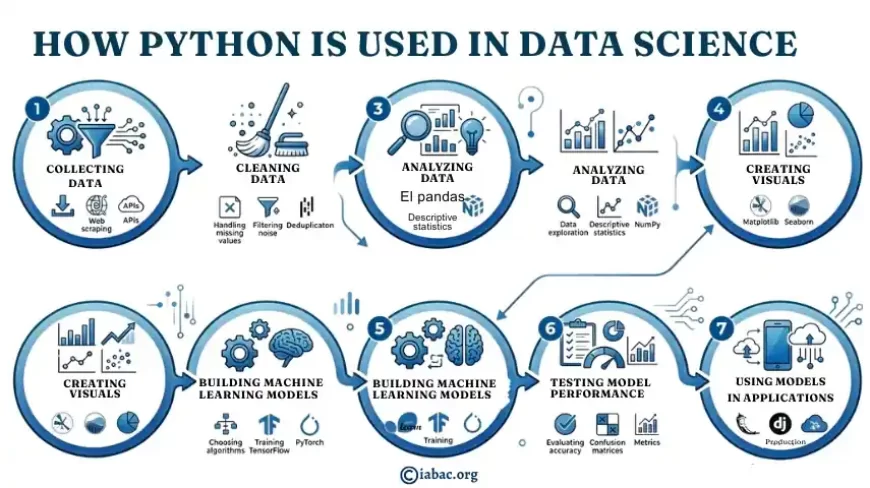
Python can be used in every step of a data science project.
1. Collecting Data: Python can load data from spreadsheets, databases, APIs, and websites.
2. Cleaning Data: Many datasets contain missing values, duplicate rows, and formatting errors. Python helps correct these issues.
3. Analyzing Data: Python can calculate averages, trends, relationships, and other useful statistics.
4. Creating Visuals: Python can generate charts and graphs that make patterns easier to understand.
5. Building Machine Learning Models: Python can train models to classify information, predict future values, and detect unusual patterns.
6. Testing Model Performance: Python provides tools to measure how well a model works.
7. Using Models in Applications: Python can be used to automate predictions and integrate models into software systems.
Simple Python Example
import pandas as pd
# Load a CSV file
data = pd.read_csv("sales.csv")
# Show the first five rows
print(data.head())
# Find the average sales value
print(data["Sales"].mean())
This code loads a dataset, displays the first few rows, and calculates the average value in the Sales column.
How Companies Use Python
Finance
- Detecting fraud
- Studying stock market trends
- Measuring risk
Healthcare
- Predicting diseases
- Studying medical images
- Estimating patient outcomes
Marketing
- Grouping customers
- Measuring campaign results
- Recommending products
Retail
- Forecasting demand
- Managing inventory
- Setting prices
Manufacturing
- Predicting equipment failures
- Improving product quality
Why Python Is Popular in Data Science
Python is widely used because it offers many benefits:
- Easy to learn
- Clear and readable code
- Large community support
- Thousands of useful libraries
- Strong machine learning and AI tools
- Used by many companies and universities
Tools Commonly Used with Python
Python is often used with:
|
Jupyter Notebook |
Google Colab |
|
Visual Studio Code |
Anaconda |
Typical Python Workflow in Data Science
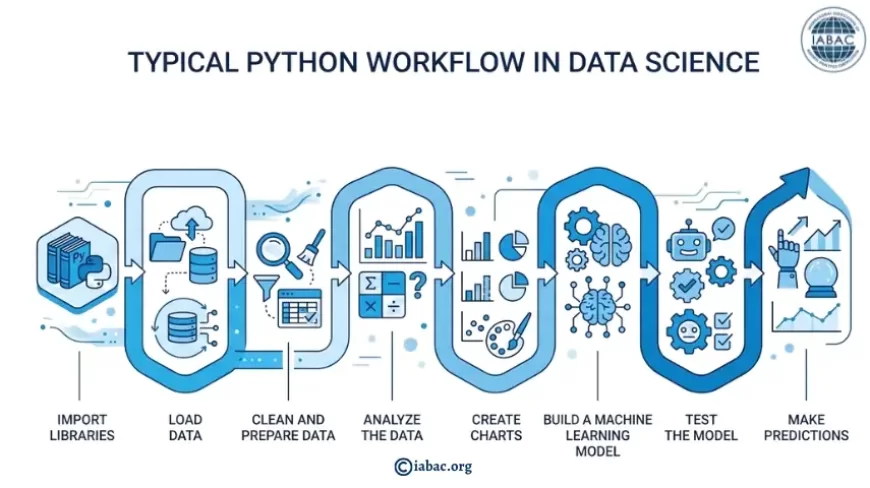
- Import libraries
- Load data
- Clean and prepare data
- Analyze the data
- Create charts
- Build a machine learning model
- Test the model
- Make predictions
Careers That Use Python
Python is an important skill for roles such as:
- Data Scientist
- Data Analyst
- Machine Learning Engineer
- Data Engineer
- MLOps Engineer
- Business Analyst
- AI Engineer
Is Python Important for Data Science?
Yes. Python is one of the most useful skills for anyone who wants to work in data science. It is used in almost every part of the process, from preparing data to building machine learning models.
Python continues to lead the world of Data Science in 2026 for one simple reason:
It works.
It helps beginners start quickly while also giving professionals the tools needed to build advanced systems. The biggest mistake people make is waiting for the “perfect” course, “perfect” roadmap, or “perfect” time to start learning.
Meanwhile, somebody else already started building projects and improving little by little.
If you want to grow in python, data science, focus on:
- Consistent practice
- Real projects
- Learning the basics properly
- Building problem-solving skills
- Earning useful Data Science Certifications
Progress in coding is weird. One week you feel completely lost. Then suddenly one day you fix a bug in 10 seconds and feel like a genius. That is part of the process. Keep coding.