

















































How Much Time Does It Take to Learn Artificial Intelligence?
Learn how long it takes to learn AI, the skills beginners need, and a practical 3-month roadmap to start Artificial Intelligence.

These days, artificial intelligence isn’t just for scientists or big tech firms anymore. Across fields like health care, banking, schools, online safety, ads, machine-driven tasks, and phone apps, it’s now part of daily operations. With such fast changes happening, learners and people already in jobs find themselves wondering the same thing:
“How much time does it take to learn Artificial Intelligence?”
The answer depends on your background, learning style, consistency, and career goals. However, the good news is that learning AI does not always take several years. With the right roadmap, dedication, and practical learning approach, beginners can build a strong foundation in AI within a few months.
Many people assume that AI is only for advanced programmers or mathematics experts. In reality, thousands of beginners start learning AI every year with little or no technical background. What matters most is consistency and following a structured learning path.
We will explain how long it realistically takes to learn Artificial Intelligence, what skills you need, what you can achieve in different timeframes, and how beginners can start their AI journey effectively.
What Does Learning Artificial Intelligence Actually Mean?
Before understanding the timeline, it is important to understand what learning AI actually includes.
Artificial Intelligence is a broad field that combines programming, data analysis, machine learning, automation, and problem-solving. Most beginners do not need to master every advanced concept immediately. Instead, they should focus on learning the fundamentals step by step.
AI learning usually includes:
-
Programming fundamentals
-
Data handling
-
Machine learning concepts
-
Building AI models
-
Working with datasets
-
Solving real-world problems
-
Using AI frameworks and tools
AI also includes multiple specialized areas such as:
-
Machine Learning
-
Deep Learning
-
Natural Language Processing
-
Computer Vision
-
Robotics
Because AI is such a large field, learning never completely stops. Even experienced AI professionals continue learning new tools and technologies regularly.
How Much Time Does It Take to Learn AI?
The time required to learn AI depends on several factors:
-
Your technical background
-
Daily practice time
-
Learning consistency
-
Career goals
-
Practical project experience
Some learners study AI part-time while working or studying, while others learn full-time through certifications or bootcamps. The speed of learning varies from person to person.
However, here is a realistic breakdown of what most beginners can achieve over time.
What Can You Learn in 1 Month?
In the first month, beginners usually focus on understanding the basics.
This stage is important because strong fundamentals make advanced AI concepts much easier later.
During the first month, learners can focus on:
-
Learning basic programming concepts
-
Understanding simple statistics
-
Working with beginner datasets
-
Writing basic Python programs
Most beginners start with Python because it is widely used in Artificial Intelligence and machine learning development.
Some commonly used beginner tools include:
-
Jupyter Notebook
-
Google Colab
At this stage, learners are mainly focused on understanding concepts rather than building advanced AI systems.
What Can You Learn in 3 Months?
Three months is one of the most important stages in the AI learning journey.
With consistent practice, beginners can build strong AI foundations within this period. While someone may not become an expert AI engineer in 90 days, they can definitely understand machine learning workflows and build beginner-level projects.
Within 3 months, learners can usually:
-
Learn Python fundamentals
-
Understand machine learning basics
-
Work with datasets
-
Train beginner machine learning models
-
Build mini AI projects
-
Create a beginner portfolio
This stage is where AI learning becomes practical and exciting because learners start building real applications instead of only studying theory.
Can You Learn Artificial Intelligence in 3 Months?
Yes, beginners can absolutely learn the fundamentals of Artificial Intelligence in 3 months with proper guidance and consistent practice.
The key is having realistic expectations.
Three months is enough to:
-
Understand AI concepts
-
Learn beginner machine learning
-
Build projects
-
Create a learning portfolio
However, mastery in AI takes continuous practice and real-world experience. AI is a constantly evolving field, and learning continues even after getting a job in the industry.
Instead of trying to become an expert immediately, beginners should focus on building strong foundations.
3-Month AI Learning Roadmap for Beginners
A structured roadmap makes AI learning faster and less confusing.
Here is a practical 3-month learning plan for beginners.
Month 1: Learn the Fundamentals
The first month should focus on programming and AI basics.
Topics to Learn
-
Python basics
-
Variables and functions
-
Loops and conditions
-
Data structures
-
Basic statistics
-
Introduction to AI and Machine Learning
Beginner Tools
Start learning tools such as:
-
Python
-
Google Colab
-
Jupyter Notebook
At this stage, focus more on practice than theory.
Month 2: Learn Machine Learning Basics
The second month should focus on understanding how machine learning models work.
Topics to Learn
-
Supervised learning
-
Regression
-
Classification
-
Data preprocessing
-
Model evaluation
-
Feature selection
Important Libraries
Beginners should start learning:
-
Scikit-learn
-
Pandas
-
NumPy
This is the stage where learners begin understanding how AI systems process and learn from data.
Month 3: Build Practical AI Projects
The third month should focus heavily on projects and implementation.
Building projects is one of the fastest ways to improve AI skills.
Beginner AI Projects
Some beginner-friendly projects include:
-
Spam email classifier
-
Movie recommendation system
-
Chatbot
-
Image recognition model
-
Fake news detector
Skills to Focus On
-
Problem solving
-
Model improvement
-
Portfolio building
-
GitHub project uploads
-
Practical experimentation
By the end of this stage, learners usually feel much more confident about AI concepts and workflows.
What Can You Learn in 6 Months?
After 6 months of consistent learning, many beginners move into intermediate AI concepts.
At this stage, learners may begin exploring:
-
Deep Learning
-
Neural Networks
-
Natural Language Processing
-
Computer Vision
-
AI deployment
-
Cloud AI platforms
Many learners also start participating in competitions on platforms like:
-
Kaggle
This stage is important for improving real-world problem-solving skills.
What Can You Achieve in 1 Year?
After one year of serious practice, learners can become job-ready for beginner and intermediate AI roles.
At this stage, learners often:
-
Build advanced projects
-
Create professional portfolios
-
Work with real datasets
-
Apply for internships
-
Understand deployment workflows
Many learners also start exploring advanced frameworks such as:
-
TensorFlow
-
PyTorch
Factors That Affect How Fast You Learn AI
Not everyone learns AI at the same speed.
Several factors influence the learning timeline.
Technical Background
Someone with programming experience may learn faster than a complete beginner.
However, beginners without coding experience can still learn AI successfully with patience and consistent practice.
Daily Practice Time
Learning for 1 hour daily is very different from learning 5 hours daily.
Consistency is more important than studying for long hours occasionally.
Learning Method
AI can be learned through:
-
Self-learning
-
Online courses
-
Certifications
-
Bootcamps
-
College programs
Structured learning often helps beginners avoid confusion.
Best Tools Beginners Should Learn for AI
AI learners should become familiar with popular industry tools and platforms.
Some important tools include:
-
TensorFlow
-
PyTorch
-
Scikit-learn
-
Kaggle
-
Hugging Face
These tools are widely used in real-world AI applications.
Common Mistakes Beginners Make While Learning AI
Many beginners slow down their progress because of common learning mistakes.
Learning Too Many Tools at Once
Beginners often try to learn every AI framework immediately. This creates confusion and reduces focus.
Start with fundamentals first.
Watching Tutorials Without Practice
Watching videos alone is not enough.
AI learning improves through coding, experimentation, and project building.
Ignoring Python Basics
Strong programming fundamentals make AI learning much easier later.
Avoiding Projects
Projects help learners understand real-world implementation.
Without projects, AI knowledge remains theoretical.
Expecting Instant Results
AI is a long-term skill. Progress happens gradually through regular practice.
Tips to Learn Artificial Intelligence Faster
Learning AI becomes easier with the right strategy.
Practice Regularly
Consistency matters more than speed.
Even daily practice of one hour can create strong improvement over time.
Build Real Projects
Projects improve confidence and practical understanding.
Focus on Fundamentals
Strong basics in Python and machine learning are extremely important.
Learn Step by Step
Avoid jumping directly into advanced deep learning topics too early.
Join AI Communities
Learning with communities helps beginners stay motivated and solve problems faster.
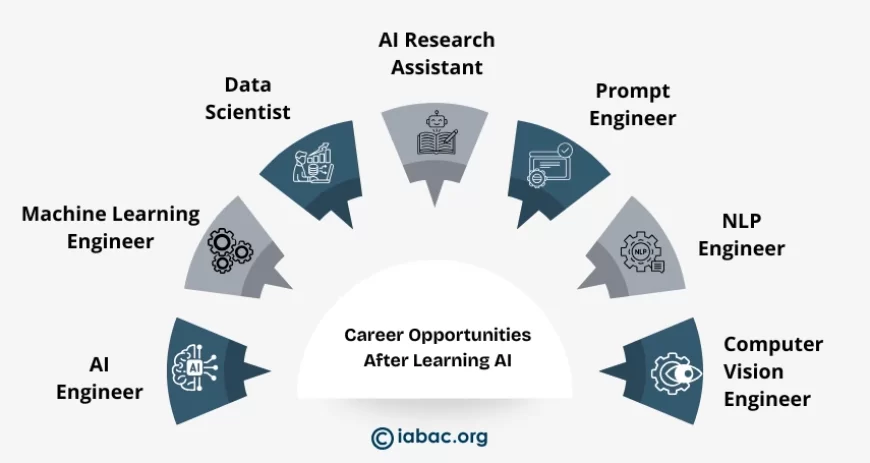
Career Opportunities After Learning AI
Artificial Intelligence creates opportunities across multiple industries.
Some popular AI-related roles include:
-
Machine Learning Engineer
-
Data Scientist
-
AI Research Assistant
-
Prompt Engineer
-
NLP Engineer
-
Computer Vision Engineer
As AI adoption continues growing globally, demand for AI professionals is increasing rapidly.
Is Artificial Intelligence Difficult to Learn?
AI can feel difficult initially because it combines programming, mathematics, and problem-solving.
However, it becomes much easier when learned step by step.
Many beginners fail because they try to learn everything at once. A structured roadmap, consistent practice, and project-based learning make AI much more approachable.
The goal should not be learning everything immediately. The goal should be making continuous progress.
So, how much time does it take to learn Artificial Intelligence?
The answer depends on your goals and learning consistency.
Beginners can build strong AI foundations within 3 months, develop intermediate skills within 6 months, and become job-ready with continuous practice over time.
The most important thing is not learning quickly — it is learning consistently.
Artificial Intelligence is one of the most valuable skills in today’s digital world, and anyone willing to learn step by step can start building a successful AI career.
If you are just beginning your journey, start with the fundamentals, build projects regularly, and stay consistent with practice. Over time, your skills and confidence will grow naturally.