





















































How Computer Vision is Transforming Industries in the USA
Learn how computer vision is revolutionizing industries in the USA, from healthcare to retail, by improving automation, efficiency, and decision-making.


Artificial Intelligence (AI) is now part of many industries, helping businesses work faster, make better decisions, and handle complex tasks more easily. One of the most exciting parts of AI is Computer Vision (CV).
Computer vision allows machines to “see” and understand the world around them by recognizing objects, detecting patterns, and making decisions based on what they see. In the USA, this technology is creating new possibilities in manufacturing, healthcare, agriculture, logistics, and retail. It’s improving accuracy, saving time, and opening the door to new ways of working. This blog explains what computer vision is, how it’s changing industries in the USA, the top certifications you can take if you want to work in this field, and who can benefit from learning it.
What is Computer Vision?
Computer Vision (CV) is a branch of AI that helps computers process and understand visual information, like images and videos, similar to how humans use their eyes and brain.
With the help of machine learning and deep learning, computer vision can now do things like:
- Detect objects in images
- Track movement
- Recognize faces and expressions
- Identify problems in machinery or products
- Predict future events based on visual patterns
This isn’t just about looking at pictures — it’s about finding meaning in them and making useful decisions. Computer vision is already used in self-driving cars, security systems, healthcare, and more.
How Computer Vision is Changing Industries in the USA
1. Manufacturing: Faster and Better Quality Production
In manufacturing, every second counts. Mistakes can cost money and affect the company’s reputation. Computer vision in USA factories is making production smoother, safer, and more reliable.
- Quality Control: Instead of relying only on human inspection, computer vision systems can quickly find defects like cracks, scratches, or color differences that are hard to see.
- Automation: Robots with computer vision can assemble products, pack items, and handle materials faster and more accurately than humans.
- Predictive Maintenance: Cameras and sensors can check machinery for signs of damage before it breaks, preventing costly downtime.
2. Healthcare: Better Diagnosis and Treatment
Healthcare in the USA is using computer vision to improve patient care and make work easier for doctors.
- Medical Imaging: Computer vision can look at X-rays, MRIs, and CT scans to detect early signs of diseases like cancer or bone fractures.
- Remote Monitoring: Wearable devices with computer vision can track a patient’s health, movements, and even facial expressions for early warning signs.
- Surgical Support: Surgical robots guided by computer vision give doctors more precision during operations, which helps patients recover faster.
3. Agriculture: Smarter and More Efficient Farming
Farming in the USA is becoming more advanced with the help of computer vision.
- Precision Farming: Drones and robots scan fields to check crop health, detect pests or diseases, and identify areas that need water or fertilizer.
- Yield Prediction: By studying images of crops, computer vision can help farmers predict how much they will harvest and plan better for the season.
4. Logistics: Smoother Supply Chain Operations
The logistics sector is also benefiting from computer vision in USA.
- Smart Warehouses: Robots can identify items, pick and pack them, and keep track of stock without human error.
- Autonomous Delivery: Self-driving trucks and drones with computer vision can safely deliver packages without human drivers.
- Package Tracking: Barcodes and QR codes can be scanned instantly to track goods and ensure on-time delivery.
5. Retail: Better Shopping Experience
Retail stores are using computer vision to make shopping faster and easier.
- Smart Shelves: Cameras check stock levels and notify staff when products run low.
- Checkout-Free Shopping: Customers can pick items and walk out of the store, while the system automatically charges them — no waiting in line.
Top Computer Vision Certifications in the USA (2025)
If you want a career in computer vision, earning the right certification can help you get noticed by employers. Here are some top options:
- Certified Data Scientist – Professional (CDSP™) by IABAC – Covers computer vision, AI, and machine learning applications in real-world projects.
- AI and Machine Learning Certification by Stanford University (Coursera) – Teaches AI concepts, including computer vision techniques.
- Deep Learning Specialization by Andrew Ng (Coursera) – Focuses on deep learning, CNNs, and computer vision applications.
- Microsoft Azure AI Engineer Associate – For integrating computer vision into cloud-based platforms.
- Artificial Intelligence Certification Programs by IABAC – Includes practical training in computer vision and natural language processing.
Who Should Learn Computer Vision?
Computer vision skills are useful for many types of professionals:
- AI Learners – People who want to work with visual data in AI projects.
- Data Scientists – Those looking to add image and video analysis to their skills.
- Engineers and Developers – Especially in robotics, automation, or software development.
- Healthcare Professionals – Doctors and researchers who work with medical imaging.
- Agriculture Experts – Farmers who want to use technology for better crop management.
Applications of Computer Vision in USA and Around the World
Computer vision is part of our daily lives, even if we don’t always notice it. From helping doctors read scans to making shopping easier, this technology is changing how we work, travel, and interact with the world. Let’s look at some of the most common and important uses of computer vision in USA and beyond, explained in a simple way.
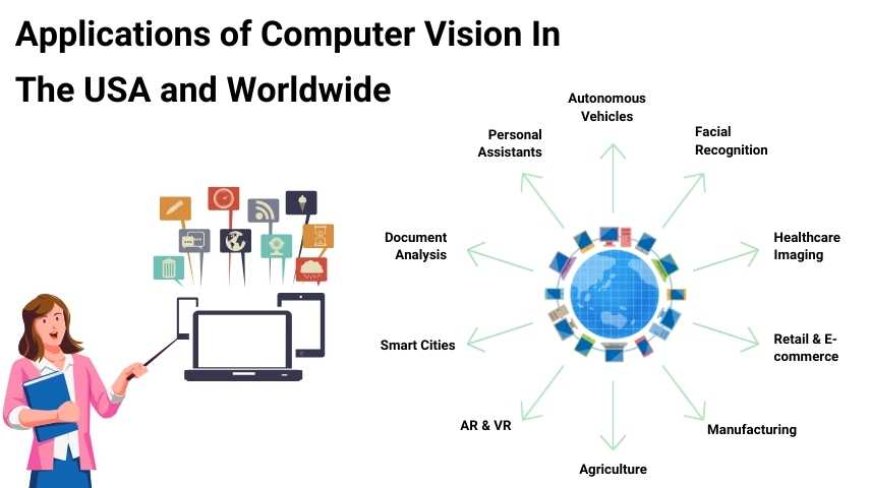
1. Autonomous Vehicles
- What it does: Helps cars see and understand their surroundings by identifying objects, lanes, and traffic signs.
- Why it matters: This is what makes self-driving cars possible. Companies like Tesla and Waymo use computer vision to help vehicles move safely without human control.
2. Facial Recognition and Security
- What it does: Recognizes people’s faces for things like unlocking phones or checking identity at airports.
- Why it matters: It makes security checks faster and more accurate, although it also brings up privacy concerns that need to be addressed carefully.
3. Healthcare Imaging
- What it does: Helps detect problems like tumors in scans such as MRIs, CT scans, and X-rays.
- Why it matters: Doctors can find diseases earlier, which can lead to better treatment and recovery for patients.
4. Retail and E-commerce
- What it does: Lets customers search for products using images, supports cashier-free stores like Amazon Go, and analyzes shopping behavior.
- Why it matters: Makes shopping easier, faster, and more enjoyable for customers, while helping businesses work more efficiently.
5. Manufacturing and Quality Control
- What it does: Finds defects in products and guides robots in production lines.
- Why it matters: Helps companies make better-quality products with fewer errors and less waste.
6. Agriculture
- What it does: Uses drone images to check crop health, find pests, and estimate harvest size.
- Why it matters: Farmers can grow healthier crops, reduce costs, and improve sustainability.
7. Augmented Reality (AR) and Virtual Reality (VR)
- What it does: Recognizes objects and maps surroundings to create immersive experiences.
- Why it matters: Used in gaming, online learning, remote training, and virtual meetings to make interactions more engaging.
8. Smart Cities
- What it does: Monitors traffic, detects pedestrians, and improves public safety through cameras and sensors.
- Why it matters: Helps cities manage traffic, plan infrastructure, and respond to emergencies more effectively.
9. Document Analysis and OCR (Optical Character Recognition)
- What it does: Reads and converts handwritten or printed documents into digital format.
- Why it matters: Saves time, reduces manual data entry, and makes information easier to store and share.
10. Personal Assistants and Smartphones
- What it does: Helps your phone camera understand scenes, apply AR filters, and recognize gestures.
- Why it matters: Makes mobile devices smarter and more fun to use.
Computer vision in USA is making industries smarter, faster, and more efficient. From manufacturing and healthcare to farming, logistics, and retail, this technology is improving how businesses operate and how people work. If you’re thinking about a career in AI or computer vision, getting certified through programs like those from IABAC can give you the skills and credibility you need. With the demand for computer vision professionals growing, now is the perfect time to start learning and take advantage of the opportunities this technology offers.