

























































What is a Business Analyst Certification
Learn about Business Analyst certification, its benefits, types, and how it can boost your career, skills, and job opportunities in the business world.


Getting a Business Analyst Certification can be a real game-changer for your career. It’s not just an impressive addition to your resume; it’s a way to truly develop the skills that make you valuable in any industry. This certification, especially an E-Business Analyst Certification, confirms your abilities in analyzing, planning, and improving business processes. It helps boost your analytical skills and gives employers confidence in your abilities, showing them that you’re committed to doing high-quality work in the business analysis field.
What is a Business Analyst Certification
A Business Analyst Certification is an official qualification that shows a person’s skills and knowledge in business analysis. Having this certification means that a professional can understand business needs, define requirements, and help find solutions to improve an organization
Key Points About Business Analyst Certifications:
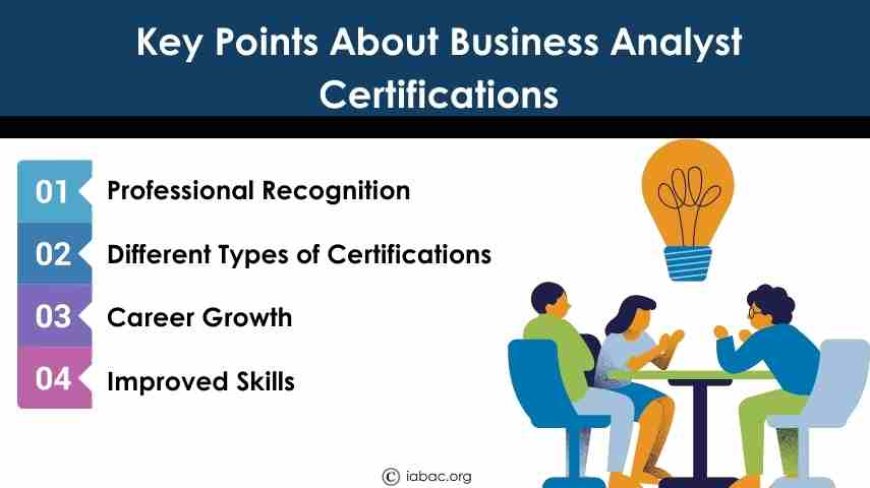
- Professional Recognition: It gives business analysts credibility and shows employers that they have a proven level of expertise in business analysis.
- Improved Skills: These certifications help candidates learn essential skills, like gathering requirements, analyzing stakeholders, reviewing data, assessing solutions, and improving business processes.
- Career Growth: With a Business Analyst Certification, professionals can qualify for better positions, higher pay, and more responsibilities in their field.
- Different Types of Certifications: There are various certifications to suit different experience levels, including:
- Entry Certificate in Business Analysis (ECBA): Aimed at beginners or those just starting in the field.
- Certified Business Analysis Professional (CBAP): Designed for experienced professionals.
- PMI-PBA (Professional in Business Analysis): A certification for those focused on business analysis within project management.
To earn a Business Analyst Certification, you usually need to meet certain requirements, pass an exam, and keep up with ongoing learning to maintain the certification. This credential is valuable for those working in project management, data analysis, product development, operations, and related areas.
Why Pursue Business Analyst Certifications
Business analyst certifications don’t just validate skills; they also signal dedication to professional growth. Here are the main benefits of certification:
- Skill Confirmation: Certifications prove your expertise with business analysis tools and techniques.
- Better Career Opportunities: Certified professionals often have access to more job opportunities and can command higher salaries.
- Updated Knowledge: Certification programs cover the latest methods in data analytics and industry-specific applications.
- Specialized Training: Certifications allow you to focus on specific industries like healthcare, finance, or logistics, which can expand your expertise.
- Professional Connections: Many programs connect certified individuals, helping you network with others in the field.
Top Business Analyst Certifications by IABAC
The International Association of Business Analytics Certification (IABAC) is known worldwide for its focus on business analytics certifications. IABAC offers a range of certifications, suitable for both newcomers and experienced professionals. Here are some popular options:
- Business Analytics Foundation: Aimed at beginners, this certification introduces the essentials of business analysis. It covers methods, data interpretation, and reporting, making it ideal for those just starting in the field.
- Certified Business Analytics Expert (CBAE): Designed for those wanting in-depth knowledge of business analysis with a focus on data-driven decision-making, this certification covers advanced analytics, predictive modeling, and business intelligence.
- Certified Business Analytics for Manager (CBAM): This certification is tailored for managers who want to use business analytics in strategic decisions. It’s useful for team leaders and project managers looking to integrate data insights into their business plans.
- Certified Visual Analytics Expert: For those interested in data visualization, this certification focuses on creating impactful visualizations to communicate complex data effectively, a key skill in modern analytics.
- Business Analytics Specialist Certifications: IABAC offers certifications for those who want expertise in specific industries:
- Banking: Focuses on understanding financial data, managing risks, and optimizing customer relations.
- Agriculture: Covers analytics for improving crop yields, managing resources, and increasing profitability in agribusiness.
- Healthcare: Teaches patient data management, predictive analytics for health outcomes, and optimizing resources.
- Logistics: Emphasizes supply chain optimization, inventory management, and logistics efficiency.
- Insurance: Covers analytics for risk assessment, customer analysis, and claims optimization.
- Retail: Helps retail professionals use analytics to understand customer behavior, manage inventory, and improve sales strategies.
IABAC’s Approach to Business Analyst Certifications
IABAC provides a structured, globally recognized curriculum aligned with international industry standards. Its programs help professionals build key skills, whether they’re just starting out or looking to specialize in a particular area. The emphasis on analytics, data visualization, and industry-specific applications gives IABAC-certified professionals an edge, as these skills are highly valued by employers worldwide.
Benefits of Business Analyst Certifications
An IABAC certification offers both immediate and long-term advantages. Here’s why it’s a smart investment:
- Enhanced Professional Credibility: Certifications show employers that you’re serious about keeping your skills current and have met the high standards of a global certification body.
- Career Flexibility: IABAC certifications open doors to a wide range of industries, allowing you to move into sectors like banking, healthcare, and logistics.
- Specialized Knowledge: IABAC’s industry-specific certifications help you develop expertise in certain fields, making you a highly valued specialist.
- Higher Earning Potential: Certified professionals often earn more due to their specialized skills and the value they bring to their organizations.
- Global Recognition: IABAC certifications are respected worldwide, allowing certified professionals to pursue job opportunities across borders.
Who Should Consider Business Analyst Certifications
Business analyst certifications are beneficial for a variety of professionals:

- Aspiring Business Analysts: People looking to start a career in business analysis can use certifications like the Business Analytics Foundation to build a strong base.
- Current Business Analysts: Experienced professionals can expand their knowledge and career options by specializing in specific industries.
- Managers and Team Leaders: Leaders in organizations can benefit from certifications like the Certified Business Analytics for Manager (CBAM), which teach the skills needed to use analytics in decision-making.
- Industry-Specific Professionals: Individuals in banking, healthcare, logistics, agriculture, insurance, and retail can develop industry-relevant skills through specialist certifications.
How to Pursue an IABAC Business Analyst Certification
If you’re ready to pursue an IABAC certification, here’s a general guide to getting started:
- Select the Right Certification: Choose a certification that aligns with your career goals. If you’re a beginner, the Business Analytics Foundation is a great start, while advanced professionals may benefit from certifications like the Certified Business Analytics Expert.
- Check Prerequisites: Ensure you meet any requirements, like prior experience or foundational knowledge.
- Complete Training Programs: IABAC offers training and study materials to prepare you for the exam.
- Prepare for the Exam: Study the relevant materials carefully, focusing on the content specific to your certification.
- Take the Certification Exam: Most certifications require you to pass an exam to show your competency.
- Maintain Certification: Some certifications may require ongoing education or renewal to stay current.
An IABAC business analyst certification is a valuable investment in your career, offering both foundational skills and specialized knowledge in areas like healthcare, retail, and more. Whether you’re starting your career, looking to specialize, or aiming for a management role, an IABAC certification can set you apart in the data-driven world of today.
By choosing an IABAC certification, you gain global recognition, industry-aligned skills, and a professional network to support your growth in the field of business analytics. Take the step to advance your career and become a leader in business analysis with an IABAC business analyst certification.